LiDAR vs. Camera Robot Vacuums: 10 Best Models Compared (2026)
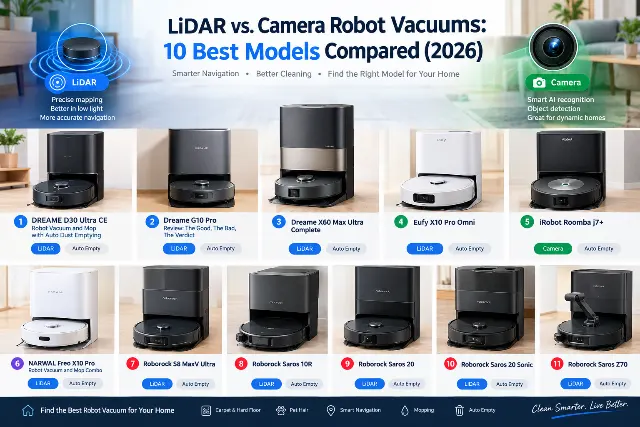
The Fast Answer: LiDAR vs. Camera Navigation
The real question isn't which technology is newer, it's which one will stop you from coming home to a robot vacuum tangled in a phone charger or stuck under a chair. For most people, the answer is LiDAR. Its laser-based mapping is brutally efficient and reliable, especially in the dark. Camera-based (vSLAM) navigation is catching up, particularly at identifying small, specific obstacles, but its performance still depends heavily on good lighting and can raise privacy questions. The decision hinges on a simple tradeoff: do you want near-perfect mapping reliability (LiDAR) or potentially better small-object recognition in well-lit rooms (camera)?
How They Differ at a Glance
This isn't a simple spec-sheet comparison. The technology your robot uses to see the world directly impacts how well it cleans, how often it gets stuck, and how much you have to babysit it. Here’s the breakdown.
How LiDAR Navigation Works: Precision Mapping with Lasers
LiDAR (Light Detection and Ranging) is the gold standard for a reason. A spinning turret on top of the vacuum shoots out a harmless, invisible laser, measuring the distance to surrounding objects thousands of times per second. This creates an incredibly precise, 360-degree map of your home. It’s the same core technology used in self-driving cars. Its key strength is spatial awareness. It doesn't need to *see* your couch; it knows exactly where the couch *is* in 3D space, day or night. This results in methodical, grid-like cleaning patterns and an almost uncanny ability to navigate complex layouts without bumping into walls. This is why models like the Roborock S8 MaxV Ultra can create a detailed floor plan on their first run, allowing you to set no-go zones immediately.
How Camera (vSLAM) Navigation Works: Seeing Its Way Around
Camera-based navigation, often marketed as vSLAM (Visual Simultaneous Localization and Mapping), uses a camera—typically a single, wide-angle lens—to identify landmarks and features on your walls and ceiling. It builds a map by triangulating its position relative to these visual points, much like you would navigate by remembering a specific painting or window. This approach has one major advantage: object recognition. A camera can be trained to identify specific items like shoes, power cords, and pet waste, a feat LiDAR alone cannot accomplish. The iRobot Roomba j7+ built its reputation on this, promising to avoid pet messes. The downside? It needs light to see. Performance degrades significantly in dim conditions or darkness, and it can be confused by reflective surfaces or rooms with sparse, uniform walls.
Head-to-Head Comparison: LiDAR vs. Camera
Accuracy & Mapping: Which Creates a Better Floor Plan?
LiDAR wins. It’s not even close. A LiDAR-based robot creates a near-perfect, to-scale map of your home that remains consistent. You can move a chair, and the robot will simply update that small part of the map on its next run. This makes setting up room-specific cleaning schedules and virtual walls incredibly reliable. vSLAM maps are more like sketches. They can be good enough, but owners frequently report issues where the map gets corrupted or the robot gets lost if a door is closed or significant furniture is moved, often requiring a full re-mapping run. For large or multi-level homes, the accuracy of LiDAR mapping is a non-negotiable feature for frustration-free use.
Obstacle Avoidance: Which is Better for Cluttered Homes?
This is where it gets complicated. For large obstacles—walls, furniture, people—LiDAR is flawless. It knows they are there and navigates around them perfectly. But for small, low-profile clutter like a stray sock, a phone cable, or pet waste, LiDAR can be blind. It sees them as part of the floor. This is camera navigation's home turf. A modern vSLAM robot with good AI, like the Eufy X10 Pro Omni, can actively identify and steer around these specific hazards. This is why the industry is moving towards hybrid systems.
Performance in Low Light: Can It Clean in the Dark?
LiDAR cleans in total darkness as effectively as it does in broad daylight. The laser provides its own illumination. If you want to schedule cleanings overnight or while you’re away at work without leaving lights on, LiDAR is the only truly reliable option. Camera-based vacuums struggle mightily here. Forum discussions for camera-only models are filled with complaints about the robot getting lost or cleaning inefficiently in the evening. Some newer models incorporate an LED headlight to compensate, but it's a patch, not a fundamental solution.
Best for Pets: Navigating Toys, Bowls, and Unexpected Messes
For most pet owners, a hybrid system is best, but if you have to choose one, LiDAR provides more consistent navigation. A pet suddenly running past can confuse a camera, but a LiDAR bot just sees a temporary obstacle and carries on. While a camera is better at spotting a potential poop-ocalypse, LiDAR's superior mapping means it’s less likely to get trapped in a pile of dog toys or repeatedly bump into the water bowl. Its methodical cleaning is more predictable in a dynamic pet-filled environment.
The Privacy Question: What Data Does Your Vacuum Collect?
This is a legitimate concern and a clear win for LiDAR. LiDAR systems map with spatial laser data points—a cloud of dots representing your floor plan. They don't capture images. Camera-based vacuums, by definition, are taking pictures of the inside of your home. While manufacturers like iRobot and Eufy emphasize on-device processing and data encryption, the fact remains that a camera is roaming your house. For many, the potential for that data to be stored on a server or accessed is a dealbreaker. If you are remotely uncomfortable with a camera mapping your private spaces, choose LiDAR.
The Rise of Hybrid Systems: Getting the Best of Both Worlds
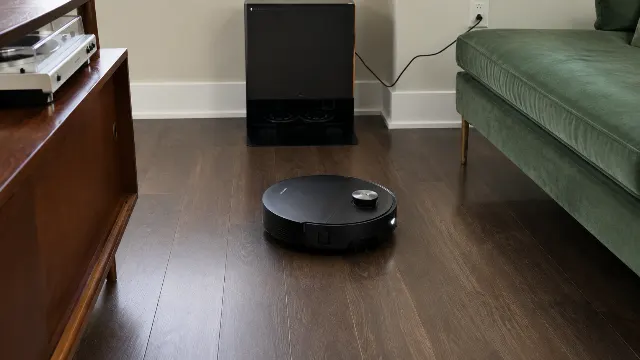
The debate is becoming academic. The best robot vacuums of 2026 don't force a choice. Flagship models from Dreame, Roborock, and Narwal now use hybrid navigation. They pair a primary LiDAR sensor for fast, accurate mapping and low-light navigation with a front-facing RGB camera and/or structured light sensors for AI-powered obstacle identification. The Dreame X60 Max Ultra Complete is a prime example: its LiDAR builds the core map, while its AI camera and 3D sensors spot and identify over 70 different types of obstacles, from cables to slippers. This dual approach solves the core weakness of each individual technology. You get the reliable mapping of LiDAR and the intelligent object avoidance of a camera. The only drawback is cost—these hybrid systems command a premium.
The Picks We Recommend
The Top Choice
Roborock S8 MaxV Ultra
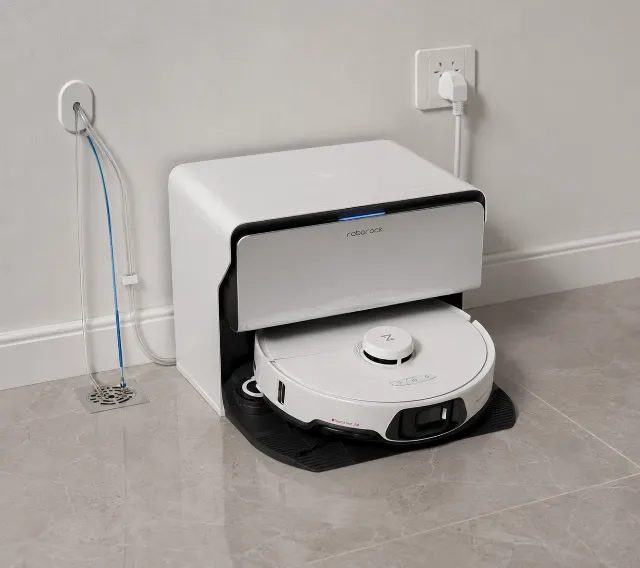
The Roborock S8 MaxV Ultra is the pinnacle of the hybrid approach and our top recommendation. It combines LiDAR for flawless mapping with a front-facing RGB camera and structured light for what Roborock calls "ReactiveAI 2.0" obstacle avoidance. In practice, this means it creates a perfect map of your home and then intelligently dodges the clutter you left on the floor. It rarely gets stuck. The S8's mopping system, with its vibrating sonic pad and automatic mop lifting on carpets, is also best-in-class. Its self-sufficient dock empties the dustbin, washes and dries the mop, and refills the water tank, making it a truly automated cleaning system.
Buy this if: You want the most reliable and intelligent navigation available and are willing to pay for a machine that almost never needs rescuing. It's the best option for complex, cluttered homes.
Skip this if: The price is a barrier, or you have a smaller, simpler home where its advanced features would be overkill. Also, be aware that its dock is enormous and requires significant space.
Best Bang for the Buck
Eufy X10 Pro Omni
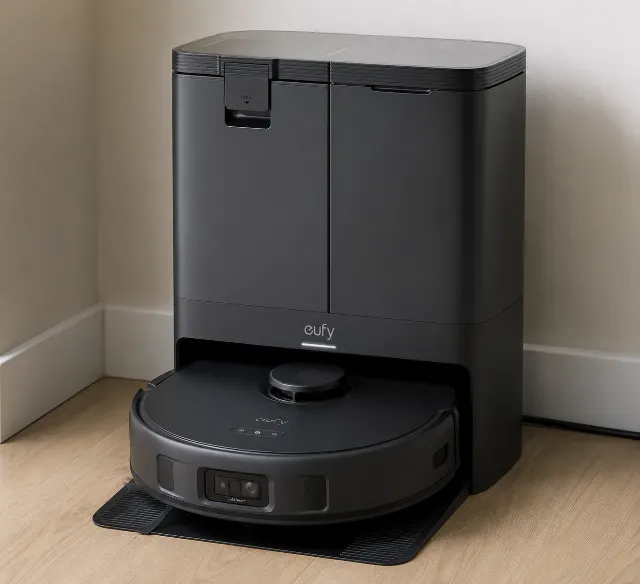
Eufy has consistently delivered strong performance at a more accessible price point, and the Eufy X10 Pro Omni is no exception. It leverages a hybrid system with AI-powered camera avoidance that performs surprisingly close to the premium flagships. It's particularly good at identifying and avoiding common household objects. While its LiDAR mapping might be a half-step behind Roborock's in terms of initial speed, it's more than accurate enough for reliable room-by-room cleaning. The Omni station provides self-emptying, mop washing, and drying, covering all the key automation features for hundreds less than top-tier competitors.
Buy this if: You want premium hybrid navigation and a full-featured dock without the absolute highest price tag. It's the smart-money choice for most families.
Skip this if: You have a very large, multi-level home where the fractional mapping advantages of a Roborock or Dreame might be more noticeable. Some users report the app can be less intuitive than the competition's.
Best for Less
Shark AV2501AE AI Robot Vacuum
If you need reliable, methodical cleaning and don't care about mopping, the Shark AV2501AE AI Robot Vacuum is a workhorse. It uses LiDAR for precise, grid-based navigation that is vastly superior to older bump-and-run or camera-only models in this price range. It maps your home, cleans in straight lines, and reliably returns to its self-emptying base. You give up the advanced AI object avoidance and mopping of more expensive models, but you get the core benefit of LiDAR navigation: it doesn't get lost. For the price, its performance and reliability are outstanding.
Buy this if: You primarily have carpets or don't need a mop, and your main priority is a vacuum that cleans your whole home efficiently without getting stuck. It's perfect for a first-time robot vacuum owner who values reliability over bells and whistles.
Skip this if: Your floors are littered with cables, pet toys, or other small obstacles. It will get tangled. Also, if you have extensive hard floors, a robot with a mopping function is a better investment.
The Ones to Pass On
The biggest issue in 2026 is paying a premium for outdated technology. Avoid any robot vacuum that uses simple gyroscopic or "random bounce" navigation; LiDAR is now affordable enough that there's no excuse. We would also be cautious about camera-only (vSLAM) models without a stellar reputation for object avoidance, like the iRobot Roomba j7+. While it was a pioneer in camera-based AI, newer hybrid systems from Roborock and Dreame now offer more reliable all-around navigation and better cleaning performance for a similar price. Its reliance on light and less precise mapping make it feel a generation behind the best hybrid competitors.
Real-World Problems Nobody Mentions
Here’s what gets annoying after the first few cleanings. The most common complaint about LiDAR vacuums is the turret on top. It makes the robot taller—often around 9.5-10 cm (3.7-3.9 inches)—preventing it from getting under low-clearance couches or bed frames. Measure your furniture before you buy. Some newer models like the NARWAL Freo X10 Pro Robot Vacuum and Mop Combo are specifically designed with a lower profile to address this. For camera-based systems, the recurring frustration is performance in dim light. Owners consistently report their vSLAM vacuum getting lost or cleaning inefficiently in the evening, a problem LiDAR users never face. Another common vSLAM issue is trouble with dark-coloured rugs and furniture, which the camera can misinterpret as a drop-off or an obstacle, leading it to avoid areas that need cleaning.
| Product | Dried-stain removal | Hard-floor finish | Mopping pressure | Carpet mop-lift | Self-wash / self-dry dock | Navigation & mapping | Verdict |
|---|---|---|---|---|---|---|---|
| Dreame X60 Max Ultra Complete | Excellent | Excellent | Very good | Excellent | Excellent | Excellent | A top-tier contender with unique edge-mopping capabilities. |
| Roborock S8 MaxV Ultra | Excellent | Excellent | Excellent | Excellent | Excellent | Excellent | The smartest and most reliable navigator, setting the standard for the category. |
| Eufy X10 Pro Omni | Very good | Very good | Good | Very good | Very good | Very good | Delivers 90% of the flagship experience for significantly less money. |
| NARWAL Freo X10 Pro Robot Vacuum and Mop Combo | Very good | Excellent | Very good | Good | Very good | Good | Innovative tangle-free brush and strong mopping, but navigation isn't quite as polished. |
| iRobot Roomba j7+ | Fair | Good | Weak | Weak | Fair | Good | Pioneering object avoidance, but now outclassed by hybrid systems. |
| Shark AV2501AE AI Robot Vacuum | Weak | Fair | Weak | Weak | Good | Very good | Excellent value for reliable, vacuum-only cleaning with precise LiDAR mapping. |
Editorial assessments from aggregated owner feedback and manufacturer specifications — not independent lab tests.
Final Verdict: Which Navigation Technology Is Right For Your Home?
In 2026, the best robot vacuums use hybrid navigation systems, pairing LiDAR with an AI-powered camera. This combination delivers the best of both worlds: the unshakeable mapping and low-light performance of LiDAR, plus the intelligent, small-object recognition of a camera. If your budget allows for a model like the Roborock S8 MaxV Ultra or Dreame X60 Max Ultra Complete, get one. You are paying for a machine that simply works with less supervision.
If you have to choose just one technology, LiDAR is the more robust and reliable foundation. For homes without significant floor clutter, a LiDAR-only vacuum like the Shark AV2501AE AI Robot Vacuum provides methodical, efficient cleaning that camera-only systems can't match for consistency. Camera-only vSLAM systems still have a place for those whose primary concern is avoiding specific obstacles like pet waste in a well-lit home, but they are increasingly becoming a compromise rather than a first choice.
Amazon Prime Membership
Get More From Your Amazon Shopping With Prime
Amazon Prime combines eligible shopping, delivery, entertainment, and other membership benefits. Available features, prices, and eligibility depend on your location and membership plan.
Fast, Eligible Delivery
Get available delivery benefits on qualifying orders, subject to item and location eligibility.
Movies and TV Shows
Explore Prime Video titles and benefits available with your membership.
Exclusive Shopping Offers upto 50% off
Discover eligible member-only deals and shopping events.
Additional Benefits
Depending on your plan, other benefits may include selected music, reading, gaming, and more.
Is Prime worth it? Compare the membership price with the delivery, entertainment, and shopping benefits you expect to use before signing up.
Explore Amazon Prime Membership →
Affiliate disclosure: We may earn a commission if you sign up through this affiliate link and your referral qualifies, at no additional cost to you. Membership fees, free-trial eligibility, benefits, and offers may vary. Check Amazon's current terms before joining.
Frequently asked questions
Are LiDAR-based robot vacuums more expensive than vSLAM ones?
Yes, models with LiDAR navigation are typically more expensive due to the cost of the laser sensor hardware. This price difference reflects LiDAR's superior mapping accuracy and reliability, a worthwhile investment for homes with complex layouts or frequent furniture changes.
Can LiDAR robot vacuums fit under furniture?
It depends entirely on the model and your furniture. Many LiDAR vacuums have a top-mounted turret making them around 10 cm (3.9 inches) tall, which is too high for some low sofas. Newer designs like the NARWAL Freo X10 Pro are specifically built with a lower profile to address this common complaint.
Does LiDAR work better than cameras for navigation?
For core mapping and navigating in all light conditions, LiDAR is unequivocally better. It creates more precise, stable maps and works perfectly in complete darkness. Cameras are better only at identifying specific small objects on the floor, which is why the best systems now combine both technologies.
Which navigation technology is better for homes with pets?
A hybrid system with both LiDAR and a camera is the ideal choice for pet owners, as it combines reliable mapping with the ability to spot and avoid pet waste. If choosing only one, LiDAR's precise navigation is less likely to be confused by scattered toys or a moving pet, making it more consistent.
Is privacy a factor when choosing between LiDAR and camera navigation?
Absolutely. Camera-based (vSLAM) systems capture and process visual data of your home's interior, which is a significant privacy concern for many users. LiDAR systems map using invisible lasers to measure distance, not images, making them an inherently more private and secure option.
How does LiDAR technology affect the battery life of a robot vacuum?
The LiDAR sensor itself uses minimal power. Its real impact is positive: the highly efficient, direct cleaning paths enabled by precise LiDAR mapping reduce overall runtime compared to less methodical systems. This efficiency can often save more battery life than the sensor itself consumes.
Products in this guide
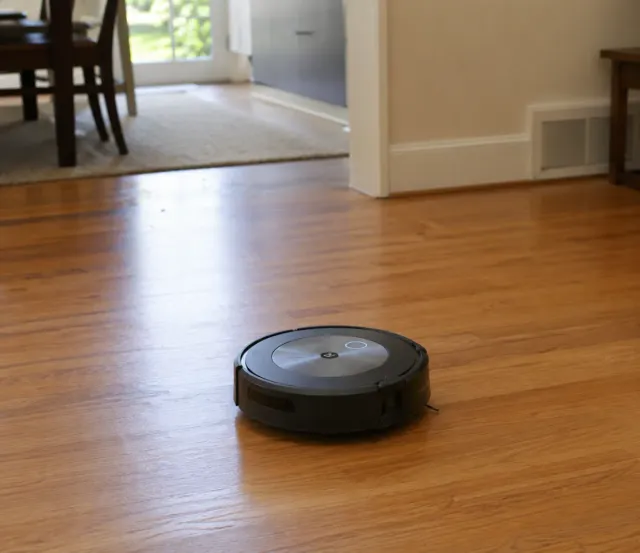
iRobot Roomba j7+
★★★★★ ★★★★★ 4.2The Roomba j7+ excels at hands-free daily cleaning in pet homes, but its app reliability and bag costs add friction over time.
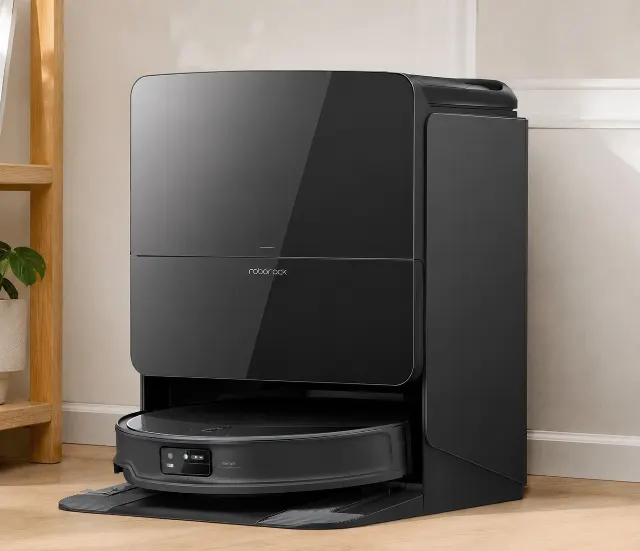
Roborock Saros 10R
★★★★★ ★★★★★ 4.2The Saros 10R trades flawless navigation for an ultra-slim 3.14-inch profile, solving under-furniture cleaning while demanding occasional app troubleshooting.
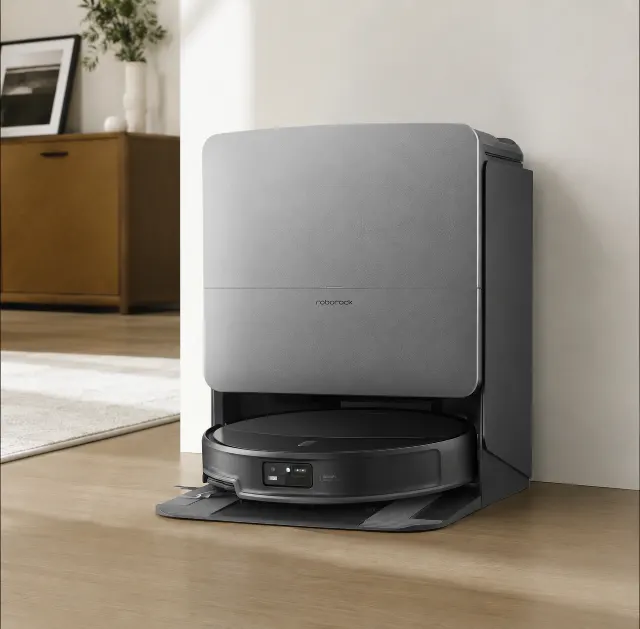
Roborock Saros 20
★★★★★ ★★★★★ 4.2The Roborock Saros 20's threshold-clearing chassis and hot-water mop wash are genuinely impressive, but its complex app can be a source of initial frustration.
Roborock Saros Z70
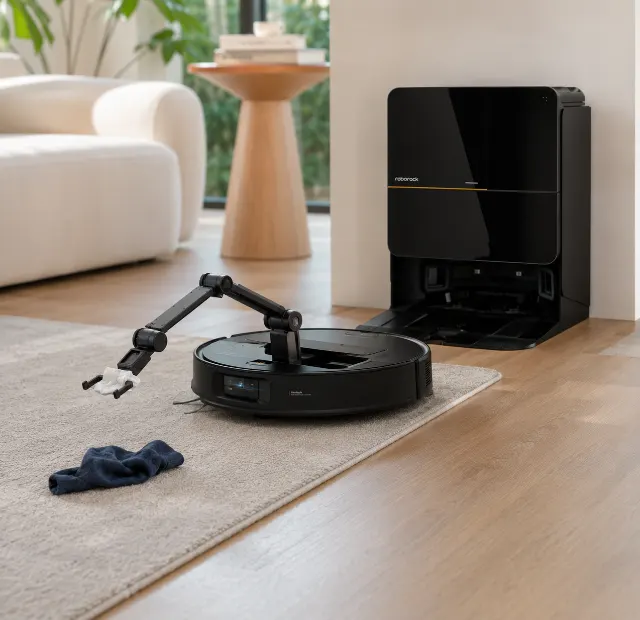
★★★★★ ★★★★★ 4.2The Roborock Saros Z70's mechanical arm solves robot vacuums' oldest problem—dirty corners—but its long-term cost of ownership demands a close look.
Roborock S8 MaxV Ultra
★★★★★ ★★★★★ 4.4The Roborock S8 MaxV Ultra delivers unmatched 10000Pa suction and corner-reaching mopping, but demands significant floor space and ongoing maintenance.
Eufy X10 Pro Omni
★★★★★ ★★★★★ 4.2The Eufy X10 Pro Omni delivers powerful, hands-off cleaning with impressive pet hair suction and mop-lifting, but its app can be finicky and long-term costs for consumables are a real factor.
Dreame X60 Max Ultra Complete
★★★★★ ★★★★★ 4.2The Dreame X60 Max Ultra Complete delivers immense suction and a truly automated mop, but its object avoidance isn't flawless and the base station is demanding.
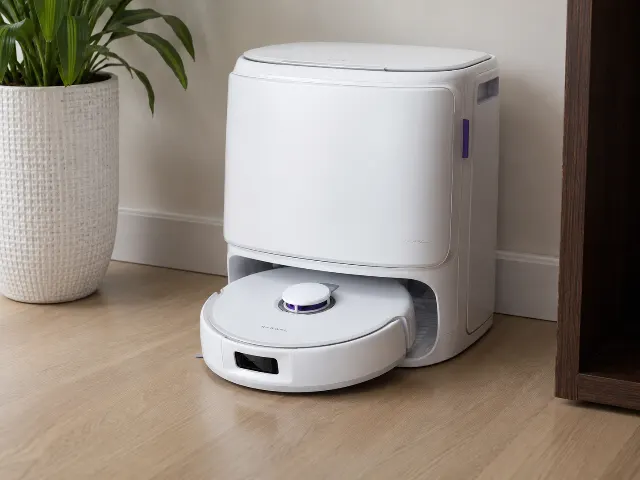
NARWAL Freo X10 Pro Robot Vacuum and Mop Combo
★★★★★ ★★★★★ 4.1The Narwal Freo X10 Pro delivers exceptional mopping and edge cleaning for hard floors, but its high-pile carpet performance and large dock footprint demand careful consideration.
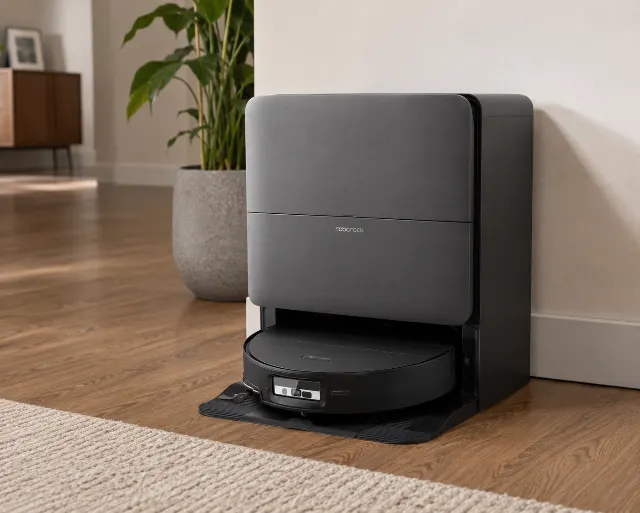
roborock Saros 20 Sonic Robot Vacuum and Mop
★★★★★ ★★★★★ 4.2The Roborock Saros 20 Sonic delivers exceptional hard-floor mopping and automation, but its carpet performance and high-maintenance dock are significant tradeoffs.
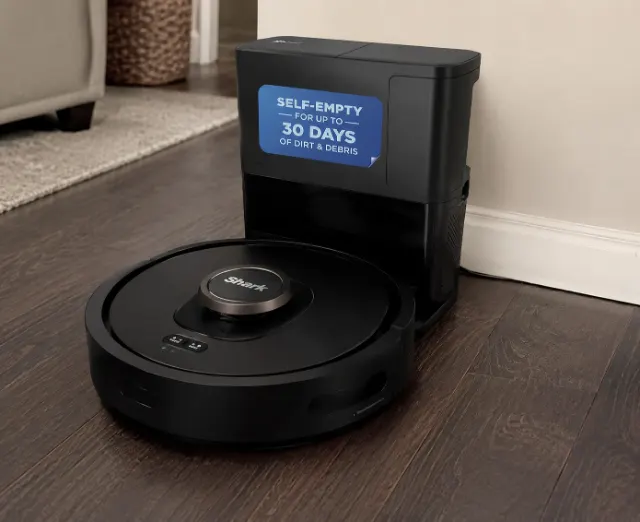
Shark AV2501AE AI Robot Vacuum
★★★★★ ★★★★★ 4.1The Shark AV2501AE is a powerful vacuum with an excellent self-empty base, but its 'AI' navigation fails to avoid common household obstacles like cords.
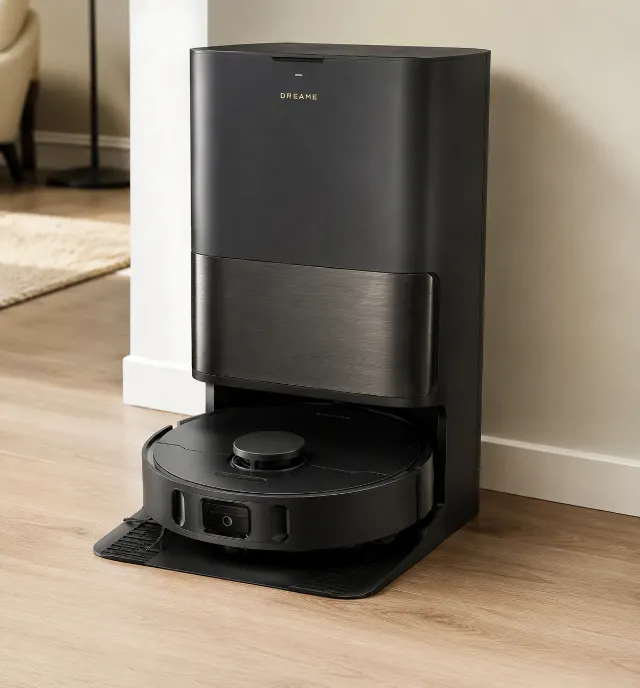
DREAME D30 Ultra CE Robot Vacuum and Mop with Auto Dust Emptying
★★★★★ ★★★★★ 4.2The Dreame D30 Ultra CE delivers elite-tier suction and a competent self-washing dock, but its long-term reliability hinges on diligent base station maintenance.
Dreame G10 Pro Review: The Good, The Bad, The Verdict
★★★★★ ★★★★★ 4.1The Dreame G10 Pro delivers impressive edge cleaning and self-drying, but its real-world battery life on max power is a significant constraint for larger homes.
More guides
Robot Vacuum Trends 2026: What Changed This Year
Our expert 2026 guide to robot vacuum trends, technology, and top models. We name the best robot vacuums from Roborock, Dreame, and Narwal, and what to skip.
Best Robot Vacuum for Hardwood Floors
We researched the best robot vacuums for hardwood in 2026. Our top pick is the Roborock Saros 20 Sonic, but we also have picks for value, premium features, and beginners.
Best Robot Vacuum for High-Pile Carpet
We researched the best robot vacuums for thick, high-pile carpet. After analyzing owner reviews and specs, the Roborock Saros 10R is our top pick for 2026.