Robot Vacuum Trends 2026: What Changed This Year
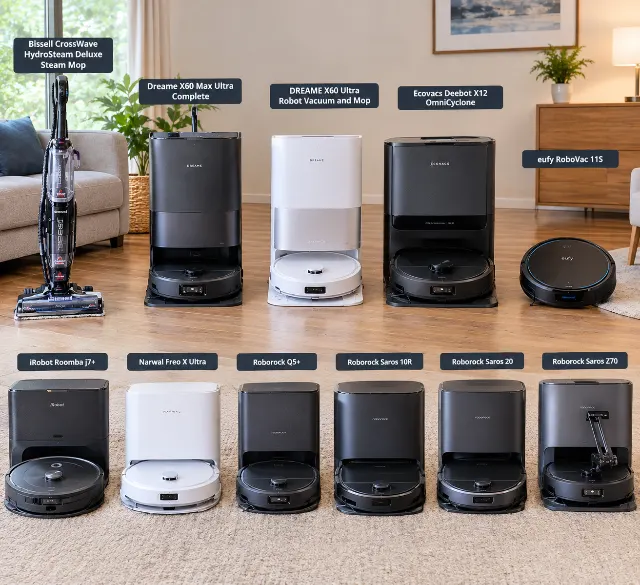
Robot Vacuum Trends 2026: What Changed This Year
Is this the year a robot vacuum can finally, truly replace your upright? That’s the only question that matters. After synthesizing a year’s worth of owner feedback, forum arguments, and manufacturer spec sheets, our answer is a qualified yes. For the right home, 2026 models are astonishingly capable. But the right answer depends entirely on your tolerance for the remaining, very real compromises in mopping, corner cleaning, and app-based babysitting.
Quick picks: jump to what you need
- For the best all-around performance: The Roborock Saros 10R
- For premium features without the flagship price: The Narwal Freo X Ultra
- For powerful, smart vacuuming on a budget: The Roborock Q5+
- For simple, no-fuss cleaning: The eufy RoboVac 11S
Smarter Navigation: The Rise of AI Obstacle Avoidance
The single biggest leap in robot vacuum technology for 2026 isn't suction power; it's brains. Early LiDAR mapping was a huge step up from random-bounce bots, but it still struggled with small, low-lying objects. This year, the best robot vacuum models combine LiDAR for room structure with a front-facing RGB camera and AI-driven image processing. This is what allows a machine like the iRobot Roomba j7+ to famously promise to avoid pet waste, or the new Roborock Saros 10R to identify and detour around a dropped sock or a charging cable. It’s not perfect—dim lighting can still fool the cameras, and owners report that very thin cables are a persistent challenge—but it dramatically reduces the need to “pre-clean” your floors before the robot runs. This is the feature that transforms a robot vacuum from a finicky gadget into a reliable appliance.
All-in-One Stations: Beyond Self-Emptying
The self-emptying robot vacuum base is now standard on any model. The real innovation for 2026 is the all-in-one “ultra” dock. These behemoths don't just empty the dustbin; they also wash the robot's mop pads with clean water, scrub them, dry them with heated air to prevent mildew, and refill the robot's onboard water tank. Models like the Dreame X60 Max Ultra Complete and Ecovacs Deebot X12 OmniCyclone represent the peak of this trend. The convenience is undeniable, turning daily floor maintenance into a weekly or monthly task of refilling water tanks and changing bags. The trade-off is size and complexity. These docks are mini-appliances that require their own dedicated floor space and plumbing connections in the most advanced cases, like the Roborock Saros Z70. They are absolutely worth the extra cost if your primary goal is automation, but a complete waste if you live in a small apartment.
Enhanced Mopping: From Wet Wipes to Pressurized Scrubbing
For years, “mopping” was a joke. Robots dragged a damp cloth around, smearing dirt more than cleaning it. That’s over. 2026’s best robot vacuum and mop combos use one of two superior technologies: spinning dual mop pads or sonic vibrating pads. The Narwal Freo X Ultra uses dual spinning pads with downward pressure to actively scrub stains, a method many owners find superior for tile grout and sticky spills. Roborock, with its VibraRise system in models like the Roborock Saros 20, uses high-frequency sonic vibration to agitate and lift dried-on grime. Both are light-years ahead of passive wet pads. Some dedicated wet-dry vacuums, like the Bissell CrossWave HydroSteam Deluxe Steam Mop, are even incorporating steam for sanitation, a feature trickling into the robotic space with models like the Tineco Floor One S9 Artist Steam. For homes with mostly hard floors, these advanced systems are a legitimate time-saver.
Eco-Friendly Designs and Sustainable Materials
As the smart home matures, manufacturers are facing more scrutiny over electronic waste and repairability. In 2026, we’re seeing a welcome, if overdue, trend toward more eco-friendly vacuum cleaners. This includes using more recycled plastics in the robot and dock construction, smaller packaging, and a greater emphasis on replaceable parts. iRobot has long offered a solid repair program, and brands like Roborock are making batteries, wheels, and brushes more easily user-replaceable. While the complex electronics of an all-in-one dock are still a black box for most users, the ability to swap a battery instead of trashing a machine is a significant step forward for long-term value and sustainability.
The standouts
The all-round winner: Roborock Saros 10R
The Roborock Saros 10R is the model that gets almost everything right in 2026. It combines top-tier AI obstacle avoidance that genuinely works on cables and pet toys with a powerful vacuum system using dual rubber brushes that resist hair tangles. Its VibraRise 2.0 mopping system both scrubs effectively and lifts high enough (10mm) to clear medium-pile carpet, making it a true set-and-forget cleaner for mixed-floor homes. The dock is comprehensive—it self-empties, washes the mop, dries it with warm air, and refills the tank—without being as gargantuan as some rivals.
Its real strength is the software. Roborock’s app is mature, allowing for granular control over cleaning routines, no-go zones, and suction levels on a room-by-room basis. Setup is straightforward, and unlike some competitors, connectivity issues are rare once it’s on your Wi-Fi network. It hits the sweet spot of advanced technology that actually solves problems instead of creating new ones.
The catch: It’s expensive. While not the priciest model on the market, it’s a significant investment. And like all camera-based systems, its obstacle avoidance is less reliable in pitch-black rooms. The mop is great for maintenance cleaning but won’t scrub a week-old dried ketchup stain on the first pass. It still needs a human for deep cleaning.
Buy this if: You want a single, highly automated device to handle 90% of your daily floor cleaning in a home with mixed carpet and hard floors. Skip this if: You have a smaller home with all hard floors, where a less expensive mop-focused model would suffice, or if you’re on a tighter budget.
The value champion: Narwal Freo X Ultra
Narwal made its name by focusing on mopping, and the Freo X Ultra continues that legacy while dramatically improving its vacuuming. This is the best robot vacuum and mop of 2026 for anyone whose home is primarily hard floors. Its triangular, spinning mop pads with 12N of downward pressure are relentlessly effective on grime and can clean edges better than Roborock’s single flat pad. The “DirtSense” feature, which detects how dirty the mops are and re-cleans an area if needed, sounds like a gimmick but actually works, according to extensive owner feedback.
The value proposition is strong. It delivers a premium, self-washing, self-drying mopping experience that rivals or beats flagship models from Roborock and Dreame, often for several hundred dollars less. The vacuum also features an innovative zero-tangle brush design and impressive 8,200Pa suction, making it a legitimate contender for homes with pet hair.
The catch: While the vacuum is powerful, the mop pads don't lift as high as Roborock's, making it less ideal for homes with plush, high-pile carpets where it might drag a damp mop. The app, while functional, is considered by many to be less intuitive than Roborock's, with a steeper learning curve for setting up complex schedules.
Buy this if: Your home is at least 70% hard floors and you prioritize mopping performance over carpet vacuuming. Skip this if: You have lots of medium-to-high pile carpet or you value a polished, easy-to-use app above all else.
Best on a tight budget: Roborock Q5+
If you want the core benefits of modern robot vacuums—smart LiDAR mapping, app control, and a self-emptying dock—without the four-figure price tag, the Roborock Q5+ is the answer. It forgoes the fancy AI obstacle avoidance and mopping of its premium siblings, focusing entirely on being a reliable, powerful vacuum. Its navigation is methodical and efficient, and the auto-empty dock provides weeks of hands-off cleaning. For apartments or homes with mostly carpet, it's a workhorse.
This is a smart buy because it uses the same mature app and reliable LiDAR system as Roborock’s top-end models. You get the premium mapping experience without paying for features you may not need. It’s a huge upgrade over older, dumber robots that just bounce off walls, and it’s powerful enough to be a legitimate solution for pet hair on low-pile carpet and hardwood.
The catch: No mopping. And without a front camera, you absolutely must pick up cables, shoelaces, and other small items before it runs. It will get stuck. It’s a vacuum, and only a vacuum. The single rubber brush is also more prone to hair tangles than the dual-brush systems on newer, more expensive models.
Buy this if: You want a smart, self-emptying vacuum for a great price and don't need mopping. Skip this if: Your home has many hard floors that need regular mopping or you can't be bothered to tidy up before the robot runs.
Best for beginners: eufy RoboVac 11S
Sometimes you don't need an app, a map, or a giant dock. You just want a machine to suck up crumbs while you're out. The eufy RoboVac 11S remains our pick for this. It has no Wi-Fi, no LiDAR, no camera. It uses a simple remote control. You press a button, and it cleans until its battery runs low, then it finds its way back to its small charging base. Its slim profile lets it get under furniture that bigger, LiDAR-equipped bots can't.
It’s a recommendation with a big asterisk: this is a “dumb” bot. It navigates using infrared sensors and bump-and-turn logic, meaning its cleaning path is random and inefficient. It will miss spots. But for a single room or a small apartment, it’s often good enough. It’s quiet, inexpensive, and dead simple to operate, with no risk of Wi-Fi connectivity headaches or confusing software updates.
The catch: It gets stuck more often than smart robots. Its random navigation means it can take a very long time to clean a space and may never get to certain areas. The dustbin is small and needs to be emptied manually after almost every run. This is not a whole-home cleaning solution for most people.
Buy this if: You want a simple, affordable robot for a small space or supplemental cleaning and are allergic to apps and complex setups. Skip this if: You have a home larger than 800 square feet or expect systematic, predictable cleaning.
Comparison of 2026 Robot Vacuum Features
| Product | Dried-stain removal | Hard-floor finish | Mopping pressure | Carpet mop-lift | Self-wash / self-dry dock | Navigation & mapping | Verdict |
|---|---|---|---|---|---|---|---|
| Roborock Saros 10R | Very good | Excellent | Good | Excellent | Excellent | Excellent | The best all-rounder for mixed flooring. |
| DREAME X60 Ultra | Excellent | Excellent | Excellent | Good | Excellent | Excellent | A premium mopping specialist with a unique extendable mop. |
| Narwal Freo X Ultra | Excellent | Excellent | Very good | Fair | Excellent | Very good | Exceptional mopping for hard-floor homes at a great value. |
| Ecovacs Deebot X12 OmniCyclone | Very good | Very good | Very good | Good | Excellent | Very good | A feature-packed flagship that competes at the highest level. |
| iRobot Roomba j7+ | Weak | Fair | Weak | N/A | Good | Good | Best-in-class object avoidance, but vacuuming and mopping are average. |
| Roborock Q5+ | N/A | N/A | N/A | N/A | Good | Very good | Excellent value for smart, hands-off vacuuming. |
Editorial assessments from aggregated owner feedback and manufacturer specifications — not independent lab tests.
2026 Showdown: Roborock vs. Dreame vs. Narwal
The robot vacuum market in 2026 is a three-way race. Roborock is the established leader, known for polished software, reliable all-around performance, and iterative innovation. They are the safe, smart bet. Dreame, once a budget alternative, now competes at the highest end with aggressive technology, often debuting features first. Their flagship, the DREAME X60 Ultra, features a wild, extendable robotic arm for its mop to clean edges, a feature no one else has. Narwal remains the mopping specialist, offering the best scrubbing performance for hard floors, often at a more competitive price. Choosing between them comes down to your priorities: Roborock for balanced reliability, Dreame for the absolute newest tech, and Narwal for mopping-first households.
What we would not buy
The biggest pitfalls in 2026 are buying last year's hype or overpaying for a brand name. We would skip any robot vacuum without LiDAR mapping unless it’s a sub- budget model like the eufy. The difference in cleaning efficiency is too vast. We'd also be wary of first-generation models from new brands that appear after CES 2026; forum discussions are often littered with complaints about buggy apps and poor support in the first six months. Finally, while the iRobot Roomba j7+ has excellent object avoidance, its core vacuuming and mopping performance now lag behind similarly priced competitors from Roborock and Dreame. Its premium price no longer matches its cleaning power in a very competitive market.
Are Robot Vacuums Powerful Enough for Whole-Home Cleaning?
Yes, but with an asterisk. The suction power (measured in Pascals, or Pa) of top-tier 2026 robot vacuums (7,000-10,000 Pa) is now strong enough to deep-clean low and medium-pile carpets effectively, pulling up embedded pet hair and dust. They can absolutely serve as the primary vacuum for many homes. However, they cannot replace a powerful upright or stick vacuum like the Dyson V15 Detect for certain tasks. Robots still struggle with deep cleaning high-pile shag rugs, cleaning stairs, vacuuming upholstery, or getting into tight corners and along baseboards with precision. The best setup for a truly clean home in 2026 is a quality robot vacuum for daily maintenance and a powerful cordless stick vacuum for weekly deep cleaning and spot tasks.
What gets annoying: The real-world problems
Listings promise automated bliss, but owners live a different reality. These are the most common complaints we see. Getting stuck: Even with AI, robots get wedged under furniture with the exact wrong clearance height or high-centered on the edge of a thick rug. Poor edge and corner cleaning: Round robots can't clean square corners. Period. Models with edge-extending mops help, but baseboards will always need a pass with a real vacuum. App and Wi-Fi issues: The most frequent support request is “my robot won’t connect to Wi-Fi.” This is often a user's router issue (especially on 5GHz vs 2.4GHz networks), but confusing app interfaces don't help. Mop streaks: On dark, glossy hardwood, even the best mops can leave faint streaks if the water isn't perfectly clean or the floor isn't prepped. Hair tangles: Dual rubber brushes are a huge improvement, but long human hair will eventually wrap around the axles and need to be cut away. Cost of consumables: Replacement bags, filters, brushes, and cleaning solution for the docks add up. This isn't a one-time purchase. These aren't dealbreakers, but they are the daily reality of ownership that marketing photos conveniently ignore.
Looking after it
A robot vacuum is not a zero-maintenance appliance. To ensure it lasts and performs well, plan on a 10-minute service routine every couple of weeks. Pull the main brush out and clear any wrapped hair from the ends and bearings—this is the number one cause of premature motor failure. Wipe down the sensors (cliff sensors, camera lens, LiDAR turret) with a dry microfiber cloth so it can navigate properly. For mopping models, even with self-cleaning docks, you should periodically remove the mop pads and deep clean them by hand. Finally, empty and rinse the dirty water tank in the dock promptly. Letting dirty water sit for a week creates a smell you will not enjoy. A little preventative care goes a long way toward avoiding troubleshooting headaches and ensuring a long life for your expensive machine.
Amazon Prime Membership
Get More From Your Amazon Shopping With Prime
Amazon Prime combines eligible shopping, delivery, entertainment, and other membership benefits. Available features, prices, and eligibility depend on your location and membership plan.
Fast, Eligible Delivery
Get available delivery benefits on qualifying orders, subject to item and location eligibility.
Movies and TV Shows
Explore Prime Video titles and benefits available with your membership.
Exclusive Shopping Offers upto 50% off
Discover eligible member-only deals and shopping events.
Additional Benefits
Depending on your plan, other benefits may include selected music, reading, gaming, and more.
Is Prime worth it? Compare the membership price with the delivery, entertainment, and shopping benefits you expect to use before signing up.
Explore Amazon Prime Membership →
Affiliate disclosure: We may earn a commission if you sign up through this affiliate link and your referral qualifies, at no additional cost to you. Membership fees, free-trial eligibility, benefits, and offers may vary. Check Amazon's current terms before joining.
More guides
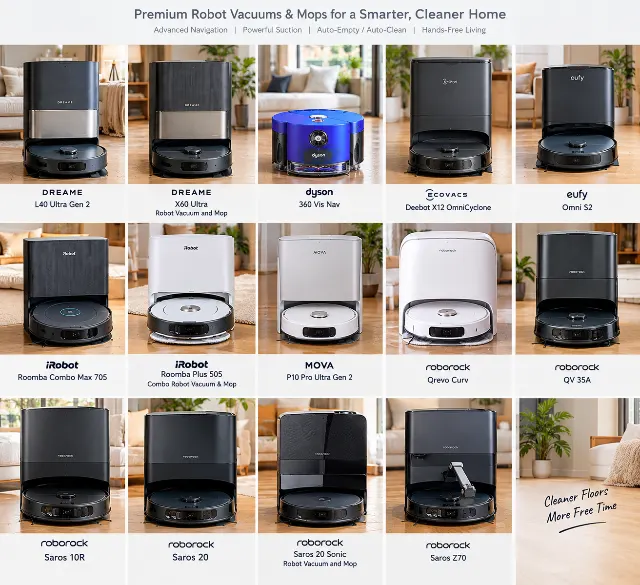
Best Robot Vacuum for Hardwood Floors
We researched the best robot vacuums for hardwood in 2026. Our top pick is the Roborock Saros 20 Sonic, but we also have picks for value, premium features, and beginners.
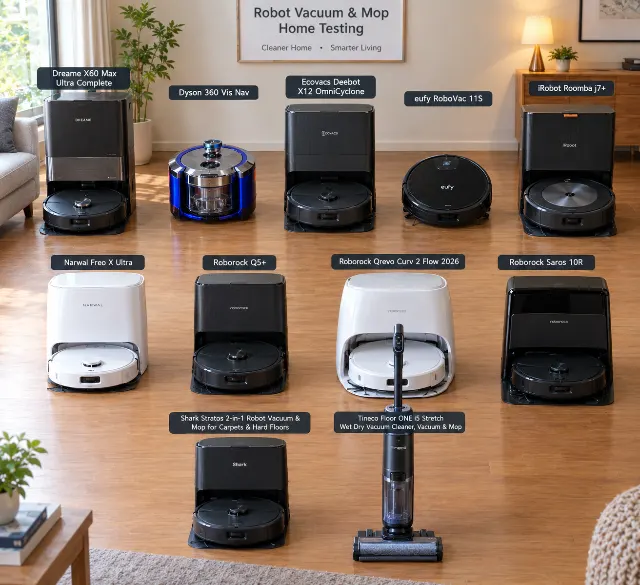
Best Robot Vacuum for High-Pile Carpet
We researched the best robot vacuums for thick, high-pile carpet. After analyzing owner reviews and specs, the Roborock Saros 10R is our top pick for 2026.
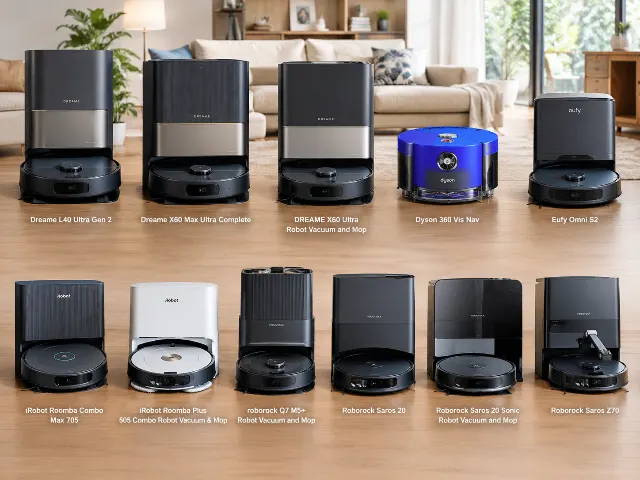
Best Robot Vacuum for Pet Hair
Tired of pet hair tumbleweeds? We researched dozens of models to find the best robot vacuums that actually handle fur, avoid pet waste, and don't get stuck.