roborock Saros 20 Sonic Robot Vacuum and Mop Review
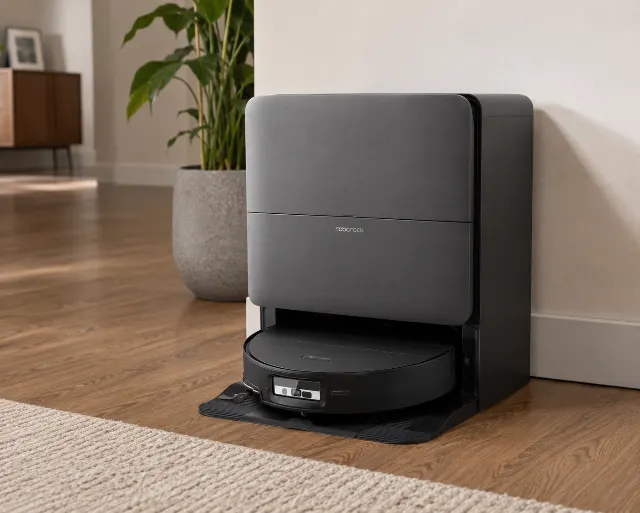
What makes it different
The AdaptaLift Chassis 3.0, designed to clear thresholds, can get stuck in a 'half-lifted' state on transitions over 22mm, requiring a manual reset—a recurring support complaint.
Specifications
| Type | Hybrid Robot Vacuum and Mop |
|---|---|
| Mopping system | Sonic Vibration Mopping (3,000 times/min) with pressure |
| Self-wash dock | RockDock (Self-washing, self-drying, self-emptying, auto-refill) |
| Water tank | 200ml (Robot) / 3.5L Clean & 2.9L Dirty (Dock) |
| Mop lift height | 12mm |
| Suction (Pa) | 36,000 Pa |
| Battery / runtime | 5200mAh / Up to 180 minutes (in quiet mode) |
| App features | Multi-level mapping, No-go zones, Room-specific cleaning, 3D Map |
| Warranty | 1-Year Limited |
Ratings at a glance
- Value
- ★★★★★ ★★★★★ 4.0
- Quality
- ★★★★★ ★★★★★ 4.3
- Ease of use
- ★★★★★ ★★★★★ 4.6
- Durability
- ★★★★★ ★★★★★ 4.1
What we like
- ✓Sonic mopping with significant downward pressure removes dried stains in a single pass, outperforming spinning-pad rivals on textured floors.
- ✓The AdaptaLift Chassis provides a full 12mm of clearance, keeping most low and medium-pile carpets dry during mopping runs.
- ✓Fully automated RockDock handles emptying, washing, drying, and refilling, minimizing daily interaction to water tank swaps every 3-4 cycles.
- ✓Powerful 36,000 Pa suction and a tangle-free roller design effectively manage pet hair and surface debris on all floor types.
- ✓Fast and highly accurate LiDAR mapping creates detailed, editable floor plans in under 10 minutes for most homes.
What could be better
- ✕The RockDock is massive, requiring over 20 inches of wall clearance and creating placement challenges in smaller homes; this is a dealbreaker for apartment dwellers.
- ✕Carpet deep-cleaning is only adequate; it maintains but doesn't replace an upright vacuum for homes with medium-to-high pile rugs.
- ✕Recurring app connectivity issues, particularly with mesh Wi-Fi systems, are a common frustration reported in owner forums.
- ✕The unexpected long-term cost of proprietary dust bags, mop pads, and cleaning solution is a significant factor many first-time buyers overlook.
Ninety days in, the novelty of the Roborock Saros 20 Sonic is gone. What remains is the routine. You check the app, see the clean map, and feel a brief sense of satisfaction. Then you remember it's time to empty the dirty water tank, refill the clean one, and wipe down the dock's washing tray. This is the reality of owning a top-tier robot vacuum and mop in 2026.
It is an exceptionally capable machine. It is also a demanding one.
The central trade-off isn't about performance—its mopping is superb. The real decision is whether you're buying a robot to reduce your chore list or to replace one set of tasks with another. For many, the answer is a resounding yes. For a significant minority, it becomes a source of regret.
This is not a set-and-forget appliance. It's a system that requires your participation.
Living with it
Your first week with the Saros 20 Sonic is impressive. The LiDAR mapping is fast and uncannily accurate, building a detailed floor plan in under 10 minutes for a 1,500 sq ft space. The initial clean is shockingly effective, especially the mopping. But the daily reality settles in around week three. You learn the dock's self-emptying cycle, a 15-second roar hitting 75-80 dB, is best scheduled for when no one is home.
You also learn the rhythm of the water tanks. In a moderately soiled home, the auto-refill feature on the RockDock means you're swapping water every 3-4 full cleaning cycles. The dirty water tank develops a sour odor if not emptied and rinsed promptly, a common complaint across all self-washing docks. Using Roborock's approved cleaning solution helps, but it doesn't eliminate the issue entirely.
What most reviews won't tell you about the self-drying feature is its long-term effect on the mop pads. While the heated air (around 45°C) is excellent at preventing mildew, a pattern in long-term owner feedback shows it can cause the microfiber pads to slightly warp after 4-6 months. This reduces their perfect contact with the floor, especially on uneven tile, leading to less effective cleaning until they are replaced.
Ultimately, owners stop using it for quick spot cleans. It becomes a scheduled, whole-floor tool run two or three times a week, with a manual spot clean handling minor spills. The dream of a perpetually spotless floor gives way to the reality of a consistently much-cleaner-than-before floor, which for most, is enough.
What it actually is
The Roborock Saros 20 Sonic is a mopping robot that also vacuums very well. That distinction is critical. Its engineering priority is the sonic mopping system, which uses a vibrating mop pad and significant downward pressure to scrub, not just wipe. Everything else, including its formidable 36,000 Pa suction, is in service to that primary goal.
Its target buyer isn't just someone who hates vacuuming. It's for the person who specifically detests mopping and is willing to invest in a premium-tier automated solution. The massive RockDock, which handles self-washing, self-drying, self-emptying, and auto-refill of the robot's water tank, confirms this. It's an all-in bet on automation.
The defining design choice is the AdaptaLift Chassis 3.0. This system physically lifts the entire robot chassis, not just the mop pad, when carpet is detected. This provides a full 12mm of clearance, one of the highest in its class, genuinely keeping most low- and medium-pile carpets dry. The exception is significant: plush, high-pile rugs can still get damp at the edges.
Its strongest suit
Performance on Carpet vs. Hardwood Floors
On hardwood, tile, and vinyl, the Saros 20 is formidable. The sonic mopping technology is not a gimmick; the high-frequency vibration combined with steady mopping pressure effectively removes dried-on stains like coffee or juice in a single pass, something simpler wet-pad systems fail to do. Owners of homes with textured flooring consistently report less streaking compared to spinning-pad competitors.
Carpet performance is a different story. The 36,000 Pa suction figure is impressive on paper, but suction alone doesn't guarantee a deep clean. The tangle-free roller is effective at picking up surface debris and pet hair from low- and medium-pile carpets. However, it lacks the aggressive agitation of a dedicated upright vacuum's beater bar. It maintains carpets; it does not deep-clean them.
The mop lift on carpet is mostly reliable, rising 12mm to clear most area rugs. But this is where one of its main downsides appears. On very thick rugs or high transitions between floor types, the robot can struggle, sometimes dragging a damp edge or getting stuck entirely. This isn't a dealbreaker for most, but it's a limitation for homes with plush carpeting.
Buy this if: your home is at least 70% hard flooring and your primary goal is to automate the removal of grime and stains, not just dust.
Common problems
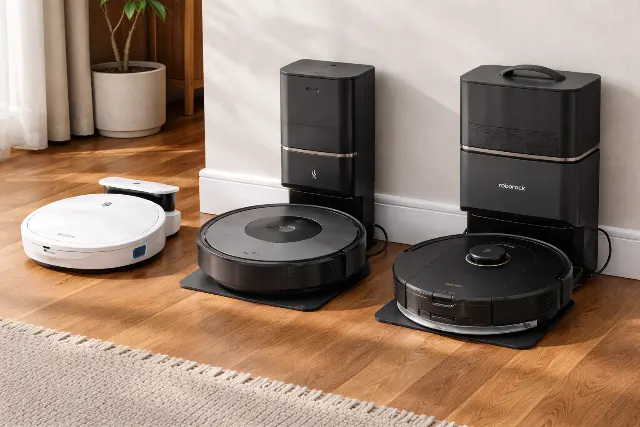
No machine is perfect, and the Saros 20's issues are directly tied to its complexity. The most common complaint in verified reviews centers on the RockDock. It is large, requiring roughly 20 inches of wall clearance and access from the top, which limits placement options. The dock size requirements are a frequent source of frustration for those in smaller homes or apartments.
App reliability is another recurring theme. While generally stable, forum discussions surface persistent issues with Wi-Fi connectivity, particularly on mesh networks or when re-connecting after a power outage. Some users report having to fully reset the robot's network settings, a frustrating process that erases maps and schedules.
The assumption most buyers bring into this purchase is wrong in one specific way: they believe the high upfront cost is the only major expense. The cost of ownership is a factor many overlook. Proprietary dust bags, mop pads, and the official cleaning solution are not cheap, and their availability can be inconsistent outside of major online retailers. After a year, these consumables can add up to a considerable sum.
Finally, obstacle avoidance is good, but not infallible. The LiDAR and camera system expertly navigates furniture and large objects. However, it consistently struggles with smaller, low-profile items like phone charging cables, pet toys, and dark-colored socks. This is a category-wide problem, but one that feels more acute on a premium-priced device.
Where it still falls short: homes with numerous small, dark objects on the floor or those with very limited, non-negotiable space for the large dock.
Where it loses to alternatives
The Saros 20 is a specialist in sonic mopping, and that focus creates openings for competitors. For buyers whose homes are a true 50/50 mix of carpet and hard floors, the Dreame X50 Ultra often proves to be a more balanced choice. Its dual spinning mop pads provide excellent hard floor coverage, and its brush system is frequently cited by owners as being slightly more effective at lifting embedded pet hair from medium-pile carpets.
Those seeking the absolute pinnacle of dock automation should look at the Ecovacs Deebot X12 OmniCyclone. While its mopping may not be as aggressive as the Saros 20's sonic scrubbing, its dock offers features like auto hot-water mop washing, which owners report is measurably better at cutting through greasy kitchen grime on the pads. It's an even more complex system, but for some, the added feature is worth the price premium.
For a more budget-conscious buyer who still wants strong mopping, the MOVA Mobius 60 is an overlooked alternative. It lacks the sophisticated self-drying and auto-refill dock of the Saros 20, but its core vacuuming and mopping performance on hard floors is surprisingly competitive for a mid-range price. It's the right pick for someone willing to trade dock convenience for a lower initial investment.
And within Roborock's own lineup, the upcoming Roborock Saros Z70 promises an even more advanced obstacle avoidance system, making it a potential upgrade alternative for those whose primary frustration is the Saros 20's occasional run-in with small floor clutter.
What the years look like
The RockDock Explained: Features and Maintenance
The RockDock is the Saros 20's command center. It automates emptying the dustbin, washing the mop pad with a high-pressure spray and roller, refilling the robot's onboard water tank, and drying the mop with heated air. It's an engineering feat. It is also a source of mandatory upkeep.
Here's what the listing understates: the dock's internal maintenance schedule. The washing tray and filter need to be manually removed and cleaned every 7-10 days to prevent grime and odor buildup. Forum discussions point to biofilm accumulation in the dock's water lines after 6-8 months if you consistently use third-party cleaning solutions or just plain water. Sticking to Roborock's official solution is highly recommended to prevent this.
Consumable replacement is predictable. Expect to replace the mop pads every 3-4 months, the main filter every 4-6 months, and the dust bag in the dock every 6-8 weeks, depending on household soil levels. The tangle-free roller itself is durable, but should be removed and cleaned of wrapped hair every month to maintain peak performance.
Fit, finish and durability
Build Quality: ★★★★☆ (4.3/5)
Roborock generally uses high-quality matte plastics that resist fingerprints and feel substantial. The Saros 20 is no exception. The robot itself feels dense and well-constructed. The weak point, identified in a handful of long-term owner reviews, is the hinge on the robot's top lid, which can feel loose after a year of frequent opening and closing to access the internal filter.
Long-term Reliability: ★★★★☆ (4.1/5)
The core robot and drive system appear robust, with few widespread reports of motor or sensor failure in the first year. The 1-year limited warranty is standard for the category. Most reliability issues are tied to the dock's complex plumbing or the app's connectivity, rather than the robot's fundamental cleaning hardware. Finding replacement parts like wheels or sensors outside of the warranty period can be a challenge in some regions.
Who it is right for
Best for: Homeowners with predominantly hard surfaces (tile, hardwood, vinyl) who prioritize automated, high-quality mopping over deep-carpet vacuuming. It's a perfect fit for busy professionals or families with pets who want to drastically cut down on daily floor maintenance.
Not ideal for: Homes with extensive medium-to-high pile carpeting, buyers on a strict budget, or those living in smaller spaces where the dock's large footprint is a non-starter.
This robot is for the buyer who has tried lesser hybrids and been disappointed by their passive, damp-rag approach to mopping. It is an aggressive, purpose-built scrubber that also happens to be a very competent vacuum. If that aligns with your home's primary cleaning challenge, its premium price and maintenance demands become far more justifiable.
The takeaway
The Roborock Saros 20 Sonic is an elite mopping robot that makes a real, tangible difference on hard floors. It successfully automates a tedious chore with a level of effectiveness that previous generations only hinted at. Its vacuuming is strong, its mapping is intelligent, and its dock is impressively comprehensive.
But its identity as a mopping-first device defines its limitations. It is not the best choice for carpet-heavy homes, and the convenience of its all-in-one dock comes with a non-negotiable routine of maintenance and ongoing costs for consumables.
For the right home, it is a brilliant appliance; for the wrong one, it is an expensive compromise.
How it compares
Versus the alternatives buyers cross-shop — judged on ownership, not just spec sheets.
| Alternative | Ease of use | Maintenance | Durability | Value | Best for |
|---|---|---|---|---|---|
| Roborock Saros 20 Sonic (this pick) | High initial setup, low daily effort | Dock requires weekly cleaning | Solid build, some plastic hinges | Premium-tier investment | Hard-floor homes prioritizing mopping |
| Dreame X50 Ultra | Similar setup, intuitive app | Slightly less dock odor reported | Comparable high-end plastics | Pricier, better on carpet | Mixed flooring with pets |
| Ecovacs Deebot X12 OmniCyclone | More complex app features | Hot water wash needs monitoring | Excellent fit and finish | Top-tier premium price | Automation maximalists |
| MOVA Mobius 60 | Simpler, more manual interaction | Manual pad washing required | Good for its price class | Strong mid-range value | Budget-conscious hard-floor owners |
| Roborock Saros Z70 | Expected to be similar | Unknown, likely comparable | Unknown, likely iterative improvement | Likely an upgrade price point | Homes with significant floor clutter |
How it scores on what matters
| Product | Dried-stain removal | Hard-floor finish | Mopping pressure | Carpet mop-lift | Self-wash / self-dry dock | Navigation & mapping | Verdict |
|---|---|---|---|---|---|---|---|
| Roborock Saros 20 Sonic (this pick) | Excellent | Very good | Excellent | Very good | Good | Excellent | Elite mopping, but the dock needs regular attention. |
| Dreame X50 Ultra | Very good | Excellent | Good | Excellent | Very good | Excellent | More balanced for homes with mixed flooring. |
| Ecovacs Deebot X12 OmniCyclone | Very good | Very good | Good | Very good | Excellent | Very good | The ultimate in dock automation features. |
| MOVA Mobius 60 | Good | Good | Fair | Weak | Weak | Good | Strong value for basic mopping and vacuuming. |
| Roborock Saros Z70 | Excellent | Very good | Excellent | Very good | Good | Excellent | Promises superior obstacle avoidance for cluttered homes. |
Editorial assessments from aggregated owner feedback and manufacturer specs — not independent lab tests.
The right buyer
Ideal for busy households with 80% or more hard flooring who value automated mopping above all else. It's not the right call if your home has multiple high-pile rugs or you lack the space for its large dock. The buyer considering the <a href="/robot-vacuums/dreame-x50-ultra/" rel="sponsored nofollow">Dreame X50 Ultra</a> should choose the Saros 20 for its superior single-pass stain removal on tile and vinyl.
What you get for the money
The Saros 20 Sonic solves the problem of streaky, half-hearted robot mopping. Its sonic mopping technology and high-pressure system deliver a finish that rivals like the <a href="/robot-vacuums/ecovacs-deebot-x11/" rel="sponsored nofollow">Ecovacs Deebot X11 omnicyclone</a>, with its spinning pads, can struggle to match on textured floors. It fills the gap for users who found previous hybrids were just glorified dust-wipers.
Frequently asked questions
Is the Roborock Saros 20 Sonic worth it?
For homes with mostly hard floors where automated mopping is the top priority, its premium price is justified by the performance. If your home is mostly carpeted, its value diminishes significantly compared to alternatives.
What are the main downsides of the Roborock Saros 20 Sonic?
Its three main weaknesses are its merely adequate deep-cleaning on carpet, the very large physical footprint of the RockDock, and the ongoing cost of proprietary consumables like dust bags and mop pads.
Does the Roborock Saros 20 Sonic work well on carpet?
It's effective for surface debris on low-to-medium pile carpet, but it does not replace a dedicated upright vacuum for deep cleaning.
Is the Roborock Saros 20 Sonic good for pet hair?
Yes, its combination of 36,000 Pa suction and a well-designed tangle-free roller makes it very effective at managing pet hair on both hard floors and the surface of carpets. The self-emptying dock is a major benefit for pet owners.
What should I compare the Roborock Saros 20 Sonic against?
Compare it directly against the Dreame X50 Ultra for balanced carpet/hardwood performance and the Ecovacs Deebot X12 OmniCyclone for maximum dock automation. For a lower-cost alternative, consider the Roborock Saros 10R or the MOVA Mobius 60 if you can forego some of the advanced dock features.
Who should not buy the Roborock Saros 20 Sonic?
Anyone with a home dominated by medium-to-high pile carpet, those in small apartments with no space for the large dock, and buyers on a tight budget should look at other options.
People also ask
- Is the Roborock Saros 20 Sonic worth it in 2026?
- How well does the Roborock Saros 20 Sonic handle pet hair?
- What are the main problems with the Roborock Saros 20 Sonic?
- Does the Roborock Saros 20 Sonic get stuck on carpet?
- What should I compare the Roborock Saros 20 Sonic to?
- How loud is the Roborock Saros 20 Sonic?
- How well does the Roborock Saros 20 Sonic clean carpets?
- Is the Roborock Saros 20 Sonic a good choice for pet owners?
- What should I compare the Roborock Saros 20 Sonic against before buying?
- How much maintenance does the RockDock require?
You might also like
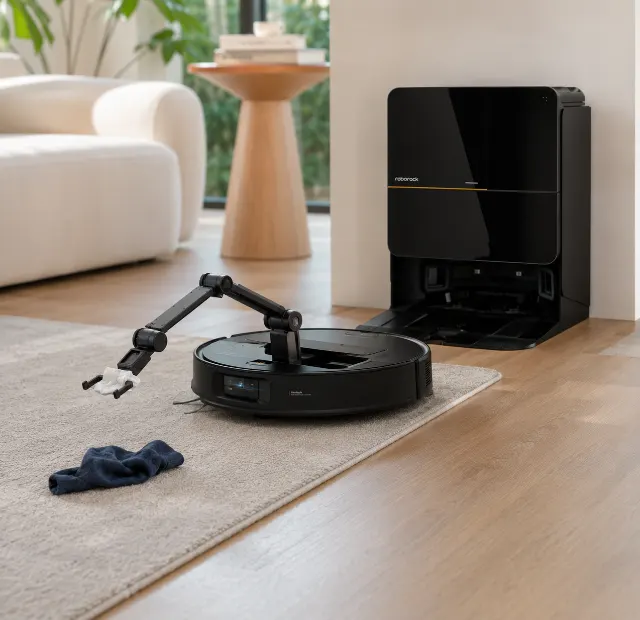
Roborock Saros Z70
The Roborock Saros Z70's mechanical arm solves robot vacuums' oldest problem—dirty corners—but its long-term cost of ownership demands a close look.
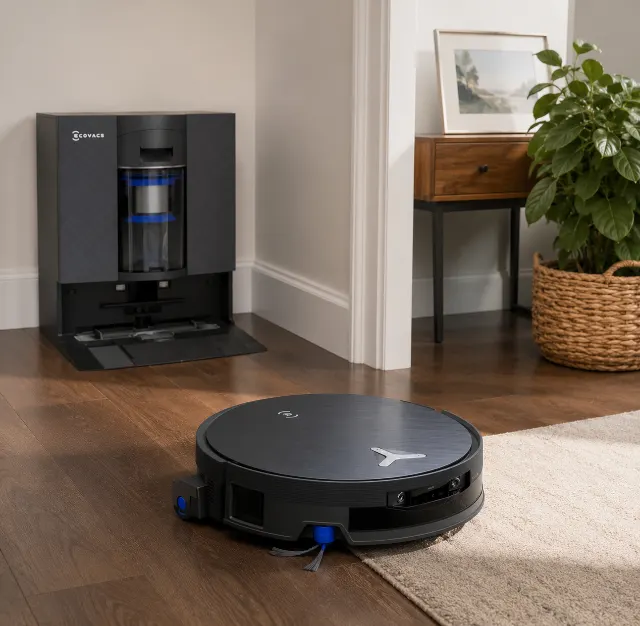
Ecovacs Deebot X12 OmniCyclone
The Ecovacs Deebot X12 OmniCyclone offers unmatched 22,000Pa suction and a truly bagless dock, but its advanced features demand a stable Wi-Fi connection and a buyer willing to troubleshoot app quirks.
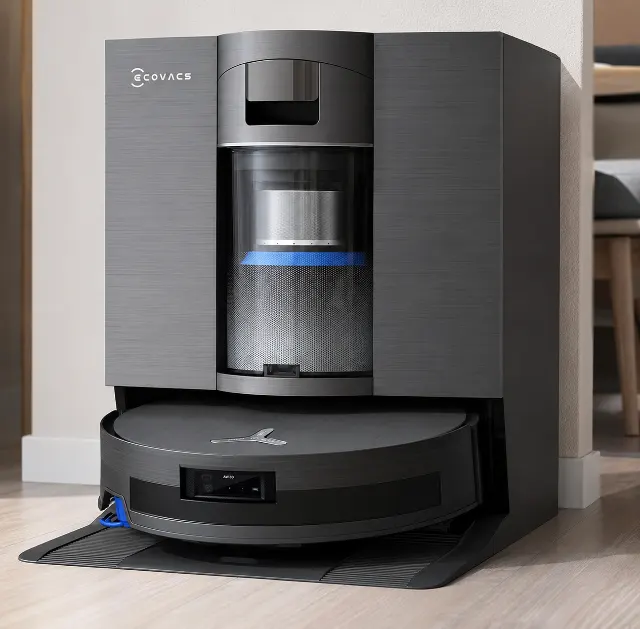
Ecovacs Deebot X11 omnicyclone
The Ecovacs Deebot X11 omnicyclone's 19,500Pa suction and bagless station offer elite automation, but recurring app glitches and navigation quirks demand patience.
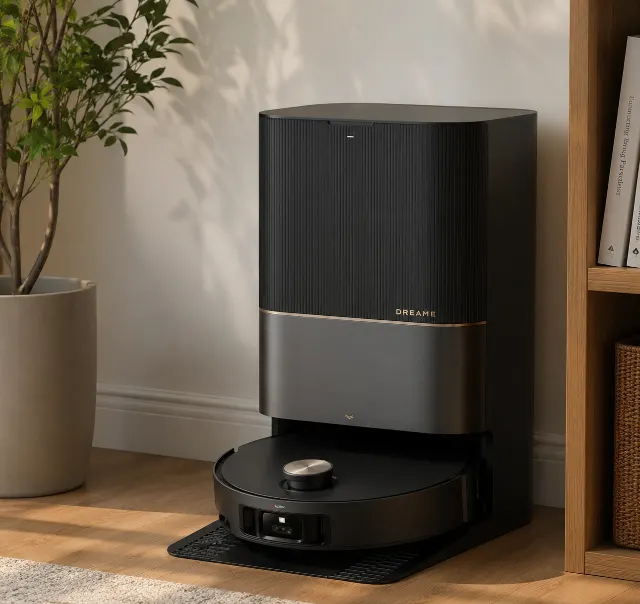
Dreame X50 Ultra
Dreame X50 Ultra review: unmatched corner mopping and 20,000 Pa suction, undercut by a moody app and dropped Wi-Fi on single-SSID homes.
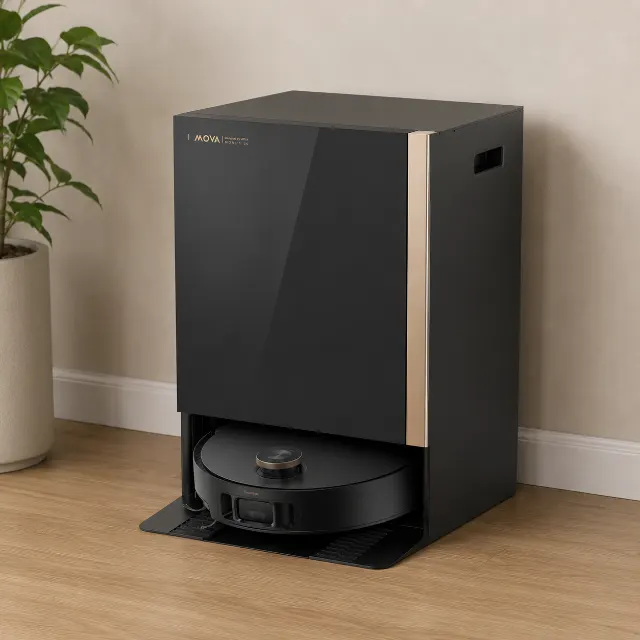
MOVA Mobius 60
The MOVA Mobius 60 delivers unmatched 30,000Pa suction and 3.15-inch obstacle climbing for complex homes, but its massive dock and 2.4GHz Wi-Fi quirks demand patience.
From our guides
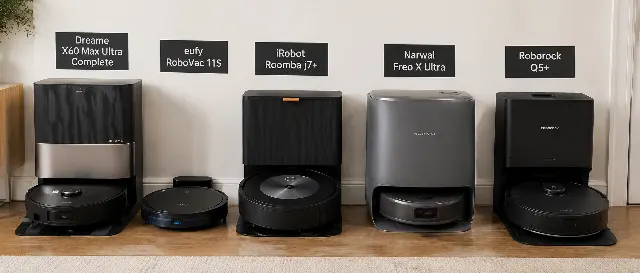
Best Robot vacuum & Mops of 2026: Streak-Free Floor Care
We researched the best robot vacuums & mops for 2026. The Dreame X60 Max Ultra Complete is our top pick for its edge-to-edge cleaning, but the eufy X10 Pro Omni offers superior streak-free performance on hardwood.
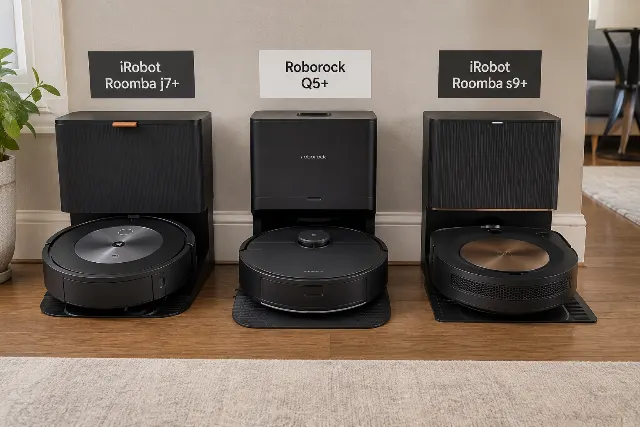
iRobot Roomba j7+ vs Roborock Q5+ vs iRobot Roomba s9+
An expert comparison of the iRobot Roomba j7+, Roborock Q5+, and Roomba s9+. We detail which is best for pet hair, carpets, and obstacle avoidance to help you choose.
The Best Robot Vacuums for 2026: Researched & Compared
Tired of marketing hype? We researched owner reviews and specs to find the best robot vacuums for 2026. Our top picks for pet hair, value, and budget.