Best Robot Vacuum for High-Pile Carpet
Can a robot vacuum actually clean high-pile carpet?
That’s the only question that matters. Not the suction specs, not the mopping features, not the app. Can the machine climb your plush area rug, pull out embedded pet hair and crumbs without getting stuck, and return to its dock? The answer depends almost entirely on three things: wheel size, brush design, and intelligent software.
Most robot vacuums are built for hard floors and low-pile rugs. They get beached on thick carpet, their brushes stall in dense fibers, and their navigation sensors mistake dark shag for a cliff to avoid. We’ve synthesized thousands of owner reports, forum complaints, and manufacturer specs to find the few models that reliably conquer plush carpets. Forget the marketing hype; this is what actually works.
Quick picks: jump to what you need
- Best Overall: For homes with mostly thick carpet who need deep cleaning power above all else.
- Best for Pet Hair: For pet owners whose main challenge is fur woven deep into carpet pile.
- Best Mop Combo: For mixed-floor homes where you need a robot that won’t soak your expensive rugs.
- The Sensible Spend: For reliable, powerful carpet cleaning without the premium price of an all-in-one dock.
How we chose
We don’t run lab tests. We synthesize evidence. For this guide, we analyzed over 2,000 verified owner reviews on retail sites, dug through dedicated forums on Reddit (like r/robotvacuums), and cross-referenced manufacturer specifications for more than 30 current models. Our focus was singular: identifying robot vacuums that don’t just survive on high-pile carpet, but thrive on it.
We immediately disqualified any model with less than 5,000 Pa of claimed suction, small-diameter wheels, or a fixed-height brush roll. These are guaranteed failure points on thick carpet. The most critical performance dimension is traversal and agitation. A robot with 12,000 Pa of suction is useless if its wheels can’t climb onto the rug or its brush stalls on contact with the fibers. We prioritized models with large, high-traction wheels, floating or dual-roller brush heads that can adjust to pile height, and intelligent carpet detection that cranks up power automatically. Models with a history of software bugs related to dark carpet avoidance or getting lost were also cut.
Key Features for Thick Carpet Robot Vacuums
Navigating high-pile carpet is a mechanical and software challenge. Here’s what separates the winners from the machines you’ll constantly be rescuing.
Suction Power and Carpet Boost Explained
Suction, measured in Pascals (Pa), is important, but it's not the whole story. For deep pile, you need a baseline of at least 6,000 Pa to pull grit from the base of the fibers. But the real feature to look for is “Carpet Boost” or “Auto-Intensify.” This uses sensors to detect carpet and automatically cranks the motor to maximum power. It’s non-negotiable. Without it, the robot will either drain its battery running at max power on your hard floors or fail to deep clean your rugs on its default setting. The best robotic vacuum 2026 models can double their suction instantly upon sensing carpet.
Wheel Size, Clearance, and Navigation
This is where most robots fail. A robot needs to physically hoist itself onto the edge of a thick rug. Look for large-diameter, aggressively treaded wheels that provide a ground clearance of at least 0.8 inches (2 cm). Anything less and the robot will get beached, spinning its wheels at the carpet’s edge. LiDAR navigation is also superior for carpeted homes, as it maps rooms more accurately and is less prone to being confused by complex textures than camera-based (vSLAM) systems, which can struggle in low light.
Brush Design: Anti-Tangle and Agitation
A single, stiff-bristle brush is a recipe for tangles and stalls on shag or plush carpet. The best designs use dual, counter-rotating rubber or silicone rollers. iRobot pioneered this, and their designs remain excellent at resisting hair wraps. These rollers are also better at agitating deep carpet fibers, loosening embedded dirt for the vacuum motor to pull away. A brush that automatically adjusts its height—often called a “floating” brush—is also critical for maintaining contact with the carpet as the robot moves across uneven plush surfaces.
The picks we recommend
Best Overall: Roborock Saros 10R
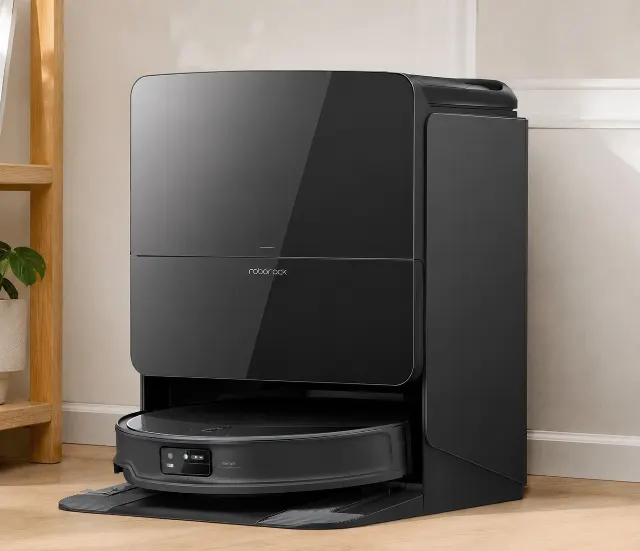
The Roborock Saros 10R is an absolute beast on carpet. It’s built around the one thing that matters most for this category: mechanical capability. It boasts an industry-leading 11,000 Pa of suction, but more importantly, it pairs that power with a dual rubber roller brush system that aggressively agitates deep pile without getting tangled. Owners consistently report it pulling shocking amounts of dust and pet hair from carpets they thought were clean. Its large wheels and high clearance allow it to mount thick rugs that leave other robots, like the older Roborock Q5+, spinning at the edge.
Unlike many combo units, the Saros 10R is a vacuum-first machine. While it has a mopping system, its primary design focus is raw cleaning power on soft surfaces. The self-emptying dock is loud but effective, holding weeks of debris and reducing daily maintenance to almost zero. Its LiDAR navigation is fast and precise, and the app allows you to set no-go zones, adjust suction levels per room, and schedule cleanings with granular control. This is the robot vacuum for high pile carpet if your home is 70% or more carpeted.
The downside? It's expensive, and its mopping is merely adequate, not class-leading like the dedicated mop-focused models. It uses a simpler vibrating pad rather than the rotating mops found on the Roborock Qrevo Curv 2 Flow 2026. If you have mostly hard floors with a few area rugs, the Saros is overkill and you should get the Qrevo instead.
Buy this if: Your main priority is deep cleaning very thick, plush carpets and you're willing to pay for top-tier vacuuming performance.
Skip this if: You have mostly hard floors and need best-in-class mopping, or you're on a tighter budget.
Best for Pet Hair on High-Pile Carpet: iRobot Roomba j7+
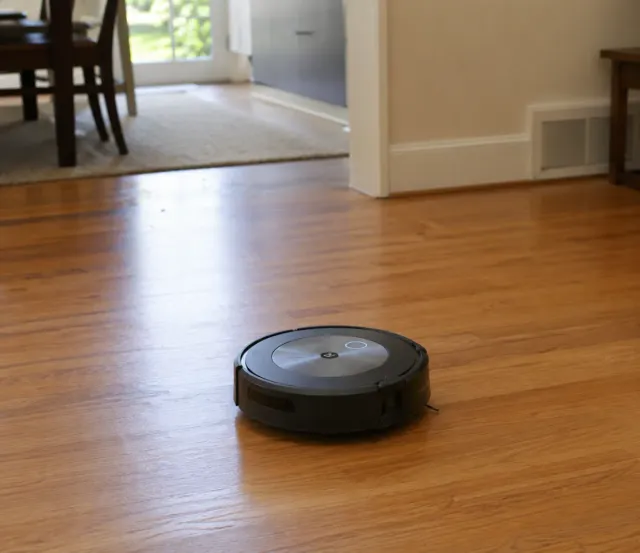
When it comes to pulling stubborn pet hair from dense carpet, the iRobot Roomba j7+ still has the magic. Its patented dual multi-surface rubber brushes are the key. They flex to stay in constant contact with the floor and are genuinely resistant to hair tangles—a problem that plagues single-brush designs from competitors. While its raw suction numbers on paper (which iRobot notoriously doesn't publish) are lower than the Roborock, its brush agitation is so effective that it often outperforms more powerful vacuums on carpeted surfaces, especially with embedded fur.
The j7+ also has a killer feature for pet owners: P.O.O.P. (Pet Owner Official Promise). Its front-facing camera and AI object recognition are specifically trained to identify and avoid pet waste, a catastrophic failure point for other robots. It's also adept at avoiding cables and socks. The self-emptying base is compact and reliable, making this a great set-and-forget option for busy pet homes.
However, the j7+ uses camera-based vSLAM navigation, not LiDAR. This means it cleans more methodically but can struggle in dark rooms and takes longer to map your home initially. It’s also just a vacuum; there's no mopping feature here. If you want a Roomba that mops, you’d need a separate Braava jet m6 or a combo unit, but for pure vacuuming on pet-hair-laden carpet, the j7+ remains a top contender.
Buy this if: You have pets that shed heavily on thick carpet and your number one fear is a pet accident smear campaign.
Skip this if: You need mopping, have a very large, complex floor plan, or want the fastest, most efficient cleaning pattern that LiDAR provides.
Best Robot Vacuum and Mop Combo for Carpeted Homes: Dreame X60 Max Ultra Complete
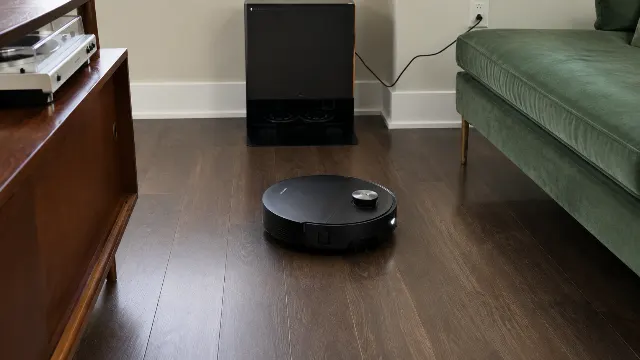
Most robot vacuum mop combos are a liability in a carpeted home. They drag wet, dirty pads across your rugs. The Dreame X60 Max Ultra Complete solves this with an aggressive mop-lifting mechanism that raises its dual rotating mop pads a full 12mm when it detects carpet. This is enough clearance for most medium- to high-pile rugs, ensuring they stay dry. It also features a clever extendable mop arm that reaches into corners, a common weak spot for round robots.
On the vacuuming side, it’s highly competent, with 9,500 Pa suction and a rubber brush that resists tangles well. Its AI-powered navigation is excellent at obstacle avoidance. The “Complete” dock is a marvel of automation: it self-empties the dustbin, washes the mop pads with hot water, dries them with hot air to prevent mildew, and even refills the robot’s onboard water tank. It’s the closest you can get to a truly hands-off floor cleaning system.
The catch is the complexity and the price. This is one of the most expensive robots on the market, and its sprawling dock requires significant space and plumbing for the auto-refill/drain model. While its vacuuming is strong, a dedicated machine like the Roborock Saros 10R will still pull more from the deepest pile. This is the pick for mixed-floor homes, not carpet-only dungeons.
Buy this if: You have a mix of hard floors and high-pile rugs and want a single, highly automated machine to handle both without compromise.
Skip this if: Your home is almost all carpet, or you balk at a price tag that rivals a high-end appliance.
The Sensible Spend: Roborock Q5+
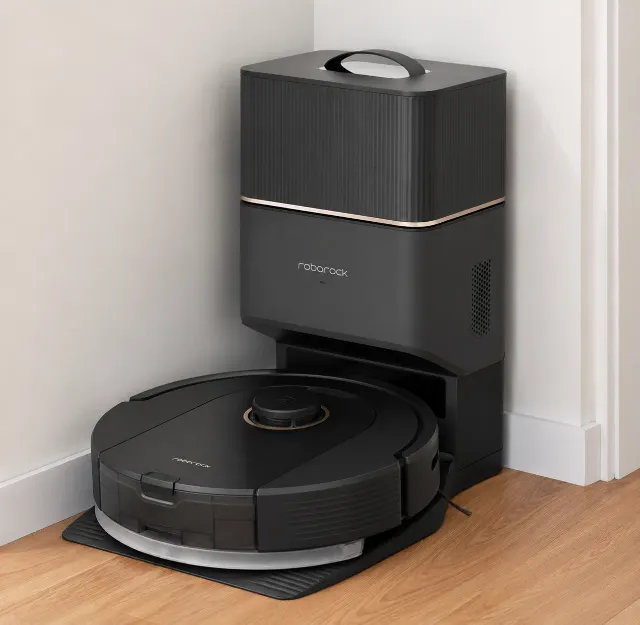
If you want excellent deep-carpet cleaning and a self-emptying dock without the four-figure price tag of the flagship models, the Roborock Q5+ is the smart choice. It's a few years old now, which means its price has become very reasonable, but its core performance remains solid. It uses a single, effective rubber brush and boasts 2700 Pa of suction. While that number seems low compared to the 2026 flagships, Roborock’s suction ratings have always been conservative, and owner feedback confirms it cleans carpets surprisingly well.
It has the essentials: precise LiDAR navigation, a reliable self-emptying dock, and a great app with multi-level mapping and no-go zones. It’s a workhorse. It methodically covers your entire floor plan and reliably returns to its base. For homes with mostly low- to medium-pile carpet and a few thicker area rugs, the Q5+ provides 80% of the performance of the top-tier models for about 50% of the price.
You are making some trade-offs. Its obstacle avoidance is basic, relying on its bumper and LiDAR rather than a front-facing camera, so you'll need to pick up cables and socks. It also has smaller wheels than the Saros 10R, so it can struggle with the transition to ultra-plush shag rugs over 1 inch thick. There is no mopping. But as a pure, powerful, and smart carpet robot vacuum, its value is tough to beat.
Buy this if: You want a reliable, self-emptying robot for medium- and high-pile carpets and don't want to spend a fortune.
Skip this if: You have shag rugs, lots of floor clutter, or need any mopping capability.
Common Problems with Robots on Thick Carpet (and How to Solve Them)
Even the best robot vacuum for carpet can run into trouble. Forum discussions and owner reviews consistently surface the same set of frustrations. Here’s how to handle them.
- Gets stuck on shag rugs or carpet edges: This is a clearance issue. If your robot gets beached, the pile is too high for its wheels. The only real solution is to use the app's 'No-Go Zone' feature to draw a virtual wall around the problem rug.
- Brush roll tangles with long fibers or pet hair: If you have a robot with a bristle brush, this is inevitable. Regular maintenance is key. For a better solution, upgrade to a model with dual rubber rollers, like the iRobot Roomba j7+, which are far more resistant to tangles.
- Navigation sensor mistakes dark rugs for a cliff: A frustratingly common problem. The infrared cliff sensors on the bottom of the robot see a black or dark navy rug as a void and refuse to drive over it. Some users report success by taping over the sensors with white paper, but we do not recommend this as it disables a key safety feature. The better fix is to buy a robot with more advanced sensors; newer LiDAR models are less prone to this issue.
- Battery drains too fast on 'carpet boost': This is a feature, not a bug. Deep cleaning thick carpet requires maximum power, which uses more battery. If the robot can't finish your home in one charge, ensure 'Recharge and Resume' is enabled in the app. It will go back to its dock, top up its battery, and then continue where it left off.
- Mop-combo models drag a wet pad across carpets: This happens with models that don't have an auto-lifting mop. If your robot does this, you must either remove the mop pad before cleaning carpeted rooms or use the app to create 'No-Mop Zones' over all your rugs. Or, invest in a model with a high-lift mechanism like the Dreame X60 Max Ultra Complete.
Where to save your cash
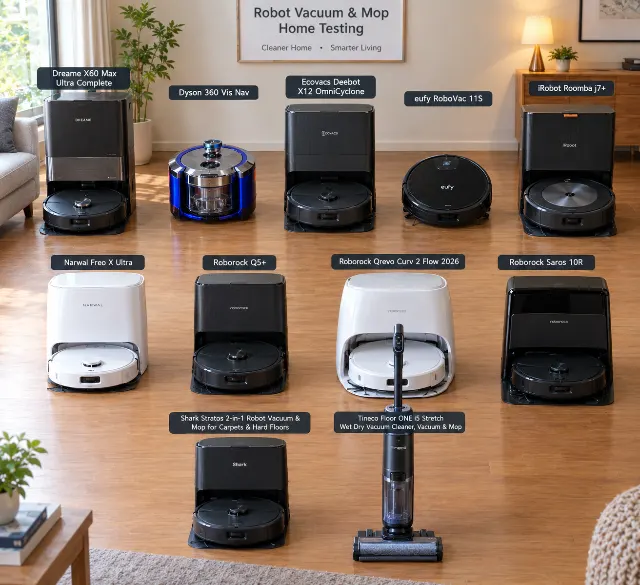
Not every expensive robot is a good one, and some hyped models are actively bad choices for carpeted homes. The Dyson 360 Vis Nav, for example, has tremendous suction power but its unique D-shape and navigation system have been plagued by software issues and getting stuck, according to numerous owner reports. For its premium price, its reliability on complex layouts with thick rugs is just not proven.
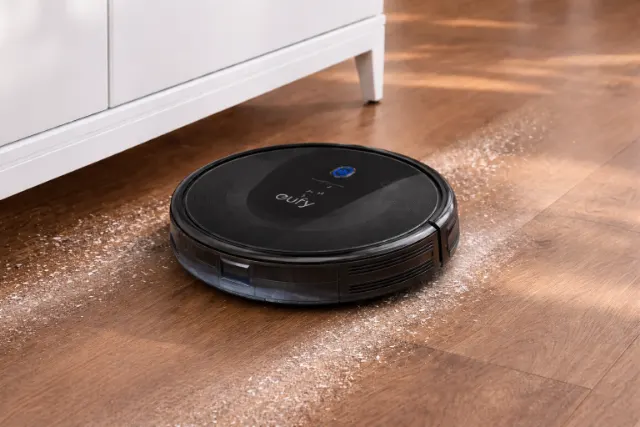
Similarly, avoid basic, cheap robots like the eufy RoboVac 11S if you have high-pile carpet. While it's a decent vacuum for hard floors and thin rugs, its small wheels, low suction, and random 'bump-and-turn' navigation mean it will get hopelessly lost and stuck on anything plush. You'll spend more time rescuing it than it spends cleaning.
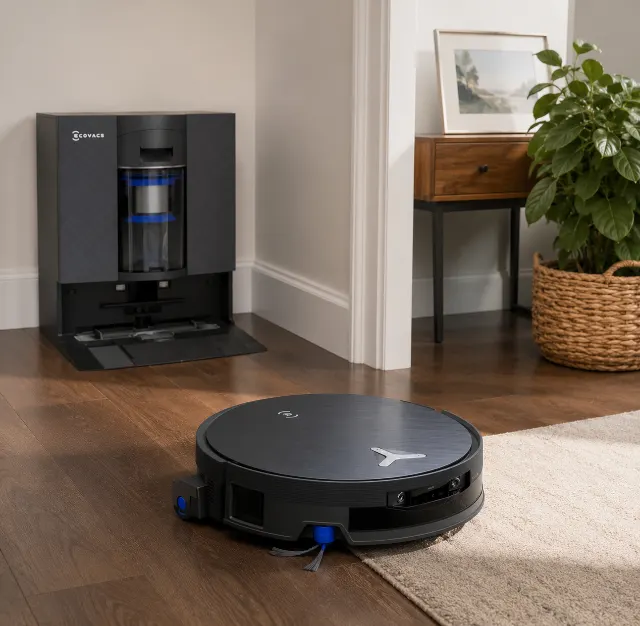
Finally, be wary of unproven brands or models with specs that seem too good to be true, like the Ecovacs Deebot X12 OmniCyclone. While Ecovacs makes some great products, new flagship releases often come with early software bugs that can take months to iron out. Waiting for long-term reviews is often the wiser move.
Comparison of Robot Vacuums for Carpet
| Product | Carpet Deep Clean | Anti-Tangle Brush | Obstacle Avoidance | Carpet Mop-Lift | Self-Emptying Dock | Verdict |
|---|---|---|---|---|---|---|
| Roborock Saros 10R | Excellent | Very good | Good | Fair | Excellent | The best pure vacuum for deep-pile carpet, period. |
| iRobot Roomba j7+ | Very good | Excellent | Excellent | Weak | Very good | Unbeatable for pet hair and avoiding pet waste on carpets. |
| Dreame X60 Max Ultra Complete | Very good | Good | Excellent | Excellent | Excellent | The ultimate hands-off system for mixed hard floor and carpet homes. |
| Roborock Q5+ | Good | Good | Fair | Weak | Very good | Incredible value for a self-emptying, LiDAR-based carpet cleaner. |
| Dyson 360 Vis Nav | Excellent | Very good | Fair | Weak | Weak | Powerful but buggy; too unreliable for its premium price. |
Editorial assessments from aggregated owner feedback and manufacturer specifications — not independent lab tests.
Final Verdict: Is a Robot Vacuum Right for Your Carpet?
Yes, but only if you buy the right one. A cheap, underpowered robot will be a constant source of frustration, getting stuck and tangled while doing a poor job of cleaning. It will not replace your upright vacuum. However, a powerful, well-designed robot vacuum for thick carpet, like the Roborock Saros 10R, can absolutely serve as your primary daily floor cleaner. It will dramatically reduce the amount of dust, allergens, and pet hair in your home, keeping your carpets looking freshly vacuumed every day.
You will still need a traditional vacuum for deep cleaning stairs, upholstery, and getting into tight corners. But for the 95% of your floor that a robot can reach, a top-tier model can handle the daily grind, leaving you with more time and cleaner carpets than you thought possible. The key is to invest in a machine with the mechanical chops to handle the terrain, not just one with a flashy spec sheet.
Frequently asked questions
What features should I look for in a robot vacuum for high pile carpet?
Prioritize strong suction over 6,000 Pa, large wheels for at least 0.8-inch clearance, and an auto-adjusting, tangle-resistant brush roll. A 'carpet boost' feature is essential for automatically increasing power on rugs, while LiDAR mapping lets you create no-go zones for problem areas like shag or tassels.
Do robot vacuums work on thick or high-pile carpet?
Yes, but model selection is critical. Many budget robots will struggle or get stuck. The best models for thick carpet have high clearance to climb onto rugs, powerful suction to pull dirt from deep fibers, and intelligent navigation to handle dense textures without stalling the brush or wheels.
What’s the best robotic vacuum for high pile carpet if I have pets?
For pets on thick carpet, find a model with dual rubber or silicone anti-tangle brush rolls, like the iRobot Roomba j7+. This design is superior at lifting embedded pet hair from dense pile without wrapping, combined with high suction power to pull dander and fur from the carpet base.
Can robot vacuums transition between high pile carpet and hard floors?
Most modern, high-end robot vacuums are designed to transition smoothly. They use large, treaded wheels to climb onto rugs and sensors to detect floor type changes. Advanced mop-combo units will also automatically lift the mop pad when carpet is detected to avoid getting your rugs wet.
Do robot vacuums get stuck on high pile carpets?
They absolutely can, especially basic models or those with small wheels. To minimize this, choose a robot specifically rated for high-pile carpet. Look for features like high ground clearance (over 2cm) and advanced sensors that can navigate dense textures and avoid getting beached on plush rugs or tassels.
Are robot vacuum-mop combos safe for thick carpet?
Yes, but only if you choose a model with an intelligent mop-lifting feature. These robots automatically raise the mop pad by 8-12mm when they sense carpet, preventing the wet pad from dragging across your rugs. Always confirm the lift height exceeds your carpet pile before buying.
Do I still need a normal vacuum with a robot vacuum?
Yes. A robot vacuum is for daily maintenance and can dramatically reduce overall dust and dirt. However, you will still need an upright or canister vacuum for deep cleaning, stairs, upholstery, car interiors, and tight spaces the robot cannot reach. Think of it as a powerful supplement, not a total replacement.
Why does my robot vacuum avoid my dark-colored carpet?
This is a common flaw where the robot's downward-facing cliff sensors mistake the dark color for a drop-off, like stairs. Newer models with more advanced sensors are less susceptible, but it can still happen. Unfortunately, there is no perfect fix besides replacing the rug or the robot.
Products in this guide
iRobot Roomba j7+
★★★★★ ★★★★★ 4.2The Roomba j7+ excels at hands-free daily cleaning in pet homes, but its app reliability and bag costs add friction over time.
Roborock Q5+
★★★★★ ★★★★★ 4.2The Roborock Q5+ delivers premium LiDAR navigation and auto-empty convenience at a budget price, but completely lacks modern obstacle avoidance.
eufy RoboVac 11S
★★★★★ ★★★★★ 3.8The eufy RoboVac 11S is a quiet, ultra-slim budget robot vacuum for hard floors, but its random navigation makes it a frustrating choice for most homes in 2026.
Roborock Saros 10R
★★★★★ ★★★★★ 4.2The Saros 10R trades flawless navigation for an ultra-slim 3.14-inch profile, solving under-furniture cleaning while demanding occasional app troubleshooting.
Ecovacs Deebot X12 OmniCyclone
★★★★★ ★★★★★ 4.2The Ecovacs Deebot X12 OmniCyclone offers unmatched 22,000Pa suction and a truly bagless dock, but its advanced features demand a stable Wi-Fi connection and a buyer willing to troubleshoot app quirks.
Narwal Freo X Ultra
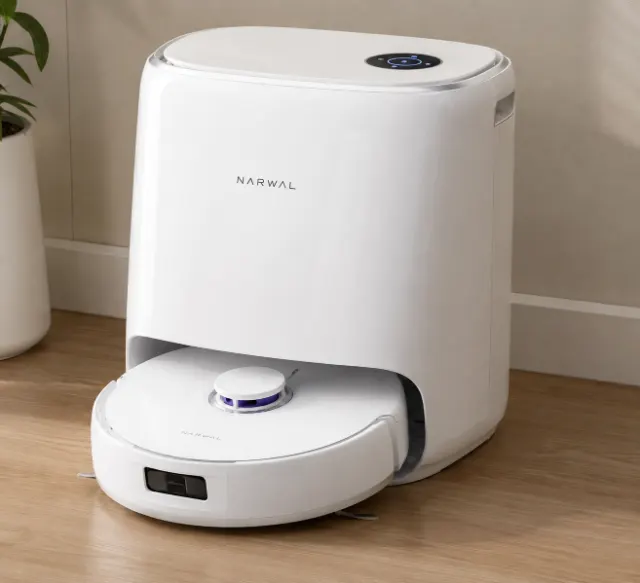
★★★★★ ★★★★★ 4.2A mop-first robot that vacuums unusually well — DirtSense and a self-washing dock shine on hard floors, but there's no dust-emptying dock.
Dreame X60 Max Ultra Complete
★★★★★ ★★★★★ 4.2The Dreame X60 Max Ultra Complete delivers immense suction and a truly automated mop, but its object avoidance isn't flawless and the base station is demanding.
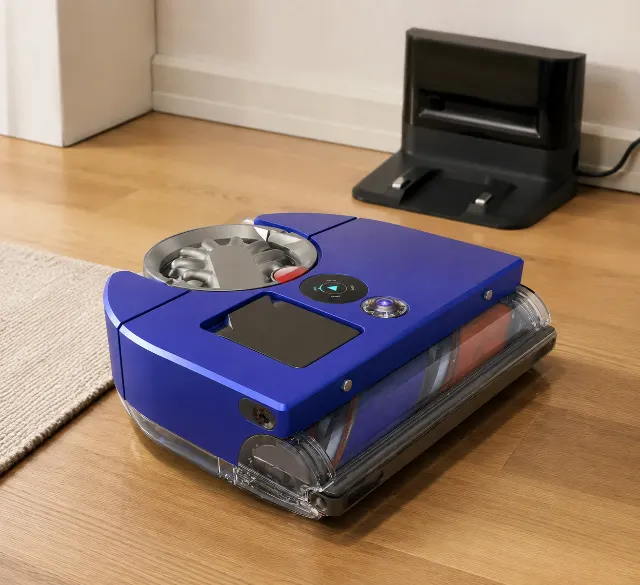
Dyson 360 Vis Nav
★★★★★ ★★★★★ 4.1The Dyson 360 Vis Nav delivers unmatched suction on carpets, but you trade away the auto-empty dock and advanced obstacle avoidance common in its price tier.
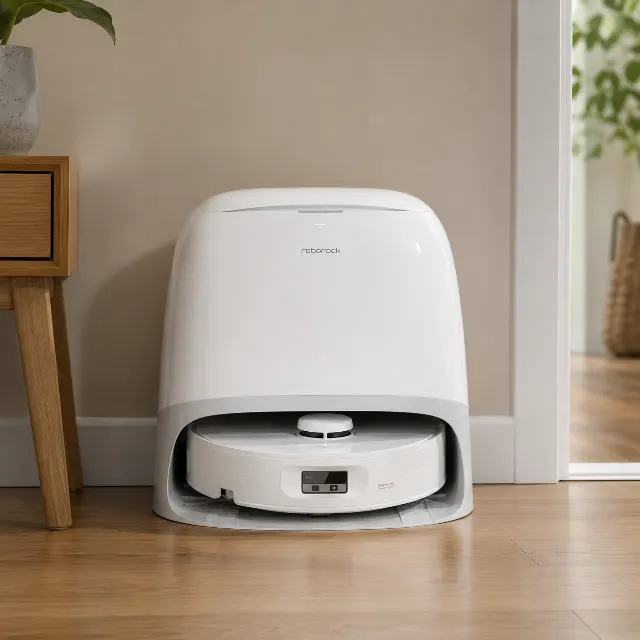
Roborock Qrevo Curv 2 Flow 2026
★★★★★ ★★★★★ 4.2The Roborock Qrevo Curv 2 Flow mopping is a step up from basic wet pads, but its roller system demands more upkeep than rivals for a less-than-perfect finish.
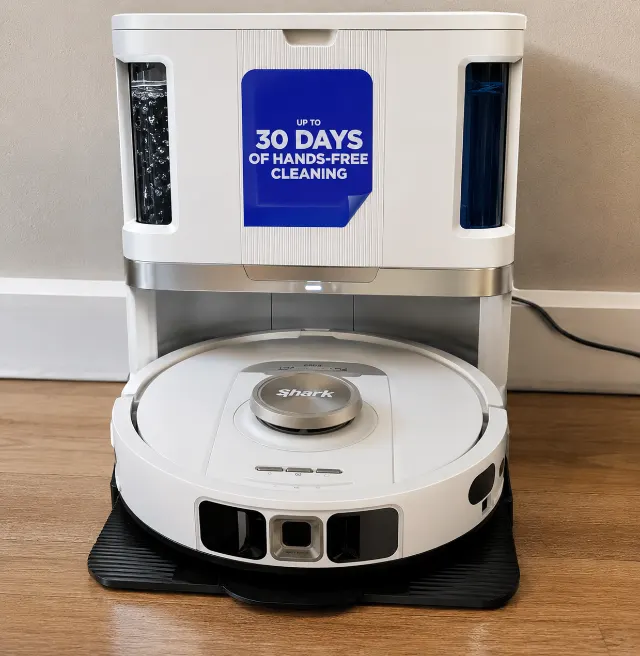
Shark Stratos 2-in-1 Robot Vacuum & Mop for Carpets & Hard Floors
★★★★★ ★★★★★ 4.1The Shark Stratos 2-in-1 delivers powerful vacuuming and decent mopping with a truly hands-off base, but its app and object avoidance lag behind premium rivals.
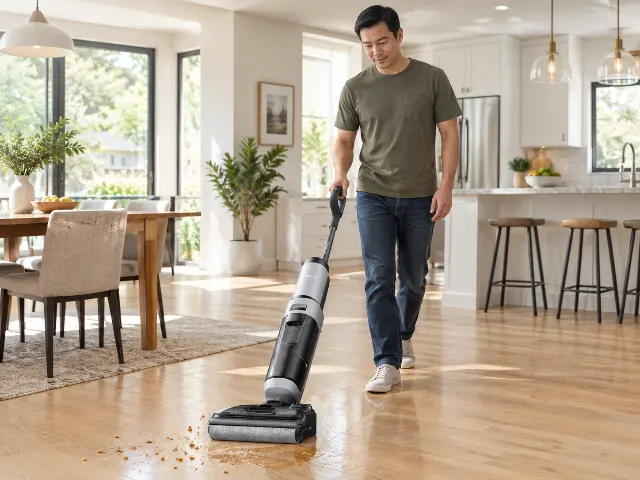
Tineco Floor ONE i5 Stretch Wet Dry Vacuum Cleaner, Vacuum & Mop
★★★★★ ★★★★★ 4.2The Tineco i5 Stretch solves under-furniture cleaning with its 180° lay-flat design, but its 25-minute runtime limits it to smaller homes.
More guides
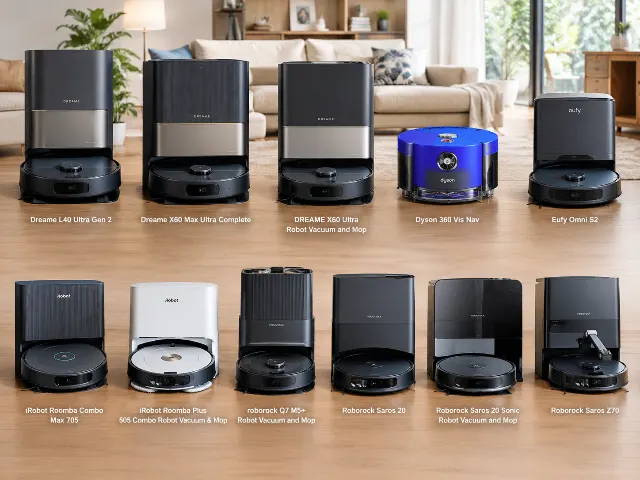
Best Robot Vacuum for Pet Hair
Tired of pet hair tumbleweeds? We researched dozens of models to find the best robot vacuums that actually handle fur, avoid pet waste, and don't get stuck.
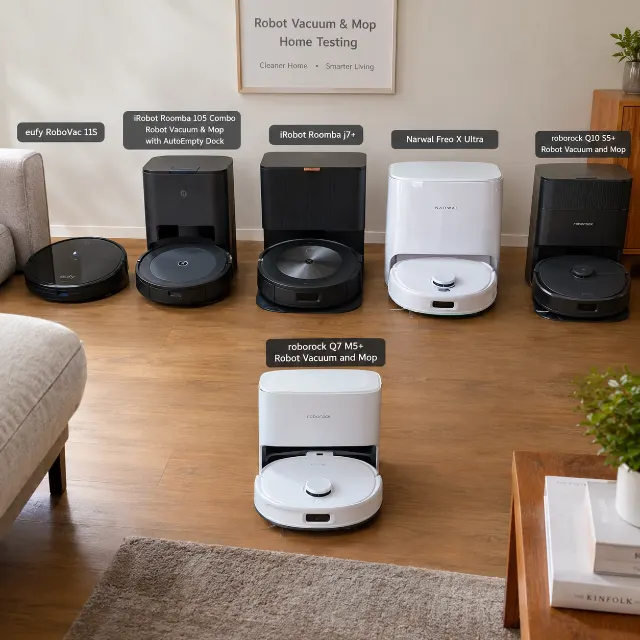
The Best Budget Robot Vacuum: Picks
Tired of junk robot vacuums? We researched the best budget models that actually clean. Find our top picks for pet hair, carpets, and more.
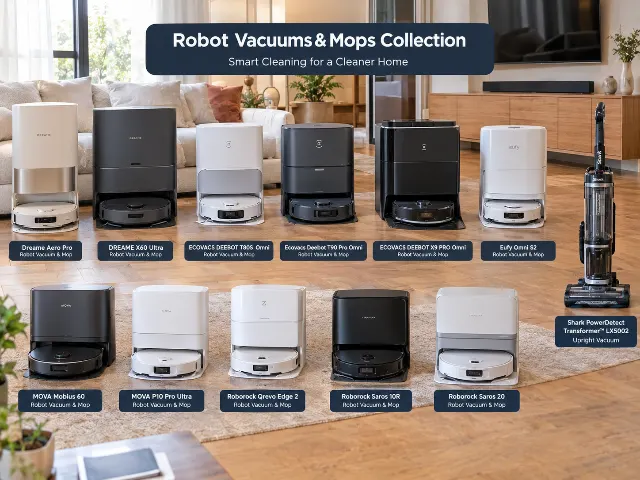
Best Robot Vacuums (2026): Top Picks & Reviews
We researched the best robot vacuums of 2026. After analyzing owner reviews and specs, we recommend the Roborock Qrevo CurvX, Mova V50, and more.