Roborock Saros 10R Review
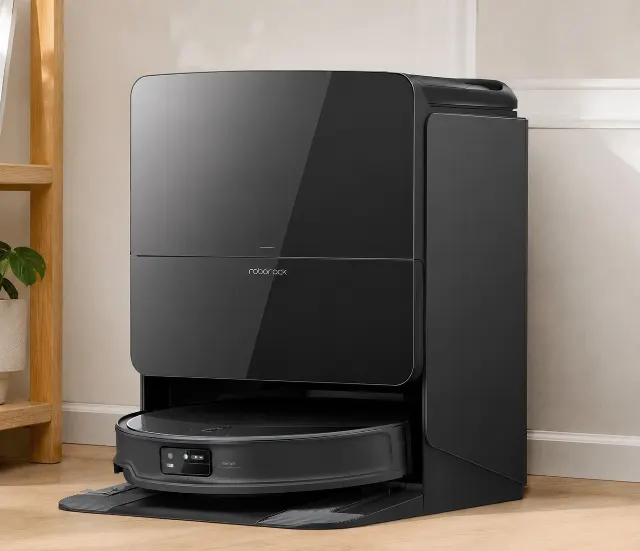
You buy a robot vacuum to stop thinking about your floors.
Then you spend the next three months rescuing it from under the living room sofa, cursing the spinning laser turret that wedged itself against the upholstery.
The Roborock Saros 10R exists to solve exactly this geometry problem. By ditching the traditional top-mounted periscope, it shrinks down to an ultra-slim 3.14 inches. It finally clears the low-slung furniture that traps older models.
But physics demands a tradeoff. Losing that elevated vantage point means the solid-state navigation has to work harder to map your home. It packs a massive 22,000 Pa suction motor to compensate for its compact frame.
The real story is how it balances raw power against occasional navigational confusion. What owners discover after a few weeks is that the hardware is spectacular, but the software sometimes forgets where the kitchen is.
The core of it
This is a premium floor-cleaning machine built for crowded, low-clearance homes.
If your house is mostly open space, the ultra-slim design is wasted on you. The Saros 10R targets buyers who are tired of moving couches and beds just to clear out the dust bunnies underneath.
It uses a solid-state LiDAR system embedded in the bumper rather than a periscope on top. This fundamental shift in architecture changes how the machine sees your rooms.
Roborock Saros 10R: The 2026 In-Depth Review
The spec sheet is aggressive. You get a 5200 mAh battery, a zero-tangling main brushroll, and an auto-empty dock that washes and dries the mop pads.
The design choice that defines it is that aggressive 8 cm height limit. Everything else—the water tank size, the internal dustbin capacity—was shrunk to serve that single dimension.
You are trading onboard storage for vertical clearance. The internal dustbin holds just 400 ml of debris, forcing the robot to return to the dock frequently during heavy cleaning sessions.
This constant back-and-forth extends the total cleaning time for larger homes. The battery easily provides 120 minutes of runtime, but the small bin dictates the actual pace.
The day-to-day reality
Your daily routine shifts from vacuuming to managing the robot's environment.
Initial setup is rarely flawless. You will likely need to map your house twice before the solid-state sensors accurately capture every hallway and threshold.
App Usability and Smart Mapping Features
The app interface is dense. Finding the specific toggle to adjust water flow for the kitchen tile takes three taps too many.
Reddit threads on this product surface a pattern of initial mapping bugs where the robot creates phantom rooms or refuses to cross perfectly flat thresholds.
Once the map is locked in and no-go zones are established, the daily execution improves drastically. You can schedule specific rooms for specific times, adjusting suction based on the floor type.
Real-World Problems: What Owners Complain About
The self-empty dock is jarringly loud. When the vacuum returns to base and the 60 dB evacuation cycle kicks in, you will pause your television.
It sounds like a shop vac starting up in your living room. The hot air drying cycle runs at 140 °F to prevent mildew on the mop pads.
This drying feature works brilliantly, but it adds a low hum to the background noise for two hours after every run. You learn to schedule cleanings for when you are out of the house.
You also learn to pick up loose cables. The obstacle avoidance is decent for large objects, but it will absolutely attempt to eat a rogue phone charger.
Where it performs
This machine excels at extracting heavy debris from medium-pile rugs.
Performance on Hardwood, Tile, and Carpet
The sheer mechanical force applied to carpets is impressive. It agitates carpet fibers aggressively, pulling up dirt that has settled deep into the weave.
On hardwood and tile, the performance is equally reliable. The side brush sweeps debris into the main suction path without scattering lighter particles across the room.
How Good Is the 22,000 Pa Suction?
The jump to 22,000 Pa is not just marketing math. It pulls embedded pet dander out of carpet fibers that older units merely groom.
On hard floors, the difference is less stark, but the sheer velocity prevents heavy particles like cat litter from scattering off the side brush.
Corner & Edge Cleaning: Does FlexiArm Riser Work?
The FlexiArm Riser physically extends the side brush and a mini-mop pad outward to trace baseboards. It is remarkably effective.
It reaches deep into corners that circular robots mathematically cannot clean. What most reviews miss is how this mechanical arm handles transitions.
It retracts instantly when it detects an obstacle, preventing the fragile extension from snapping against door frames or heavy furniture legs.
The multi-floor mapping is also a strong point. Once you move the robot to a second floor, it recognizes its location within seconds and loads the correct map.
Buy this if you have shedding pets, low-clearance furniture, and a mix of hard floors and medium-pile area rugs that require deep daily cleaning.
Where it frustrates
The mopping system struggles with dried, sticky spills.
Mopping Test: Streaks, Stains, and Water Usage
It drags a vibrating pad across the floor, which is fine for surface dust, but it lacks the downward pressure of dual-spinning mops.
If you drop syrup on the kitchen floor, the Saros 10R will smear it rather than scrub it away. You still need a manual mop for serious messes.
Navigation can be erratic in complex environments. If you move a chair while it is cleaning, it sometimes spins in confusion before recalculating its path.
Verified buyers note that it occasionally struggles to climb onto very thick, high-pile rugs, treating the height difference as an impassable wall.
The solid-state LiDAR simply lacks the sweeping 360-degree view required to instantly recognize sudden environmental changes, forcing the robot to rely on bump navigation.
The cliff sensors also trigger false positives on very dark or black carpets. The robot will refuse to clean these areas, assuming it is about to fall down a set of stairs.
Skip this if your home consists entirely of plush, deep-pile carpeting or if you frequently leave USB cords and small items scattered across the floor.
How well it holds together
Build Quality: ★★★★☆ (4.3/5)
The matte black plastic shell resists scuffs better than glossy alternatives. The bumper mechanism feels substantial, and the water tanks lock into place with a reassuring click. The only physical weak point is the hinge on the auto-empty dock lid, which feels slightly flimsy given the premium positioning.
Long-term Reliability: ★★★★☆ (4.1/5)
Long-term owners report that the core motors and battery hold up well. After a year, the battery degradation is minimal, still easily clearing 120 minutes on standard settings. The zero-tangling brush actually works. Hair over 12 inches might occasionally wrap around the end caps, but the main roller stays clear. The primary failure points are the small water pump in the dock and the software updates that occasionally break established maps.
What the years look like
The true cost of ownership becomes apparent after 6 months.
Maintenance and Long-Term Costs
You will burn through official replacement dust bags and HEPA filters faster than anticipated. The proprietary bags are expensive.
While third-party alternatives exist, they often compromise the seal, leading to dust buildup inside the dock motor. This is a hidden cost you must factor into your budget.
Not on the spec sheet is the manual cleaning required for the dock's baseplate. Mud and dirty water accumulate in the washing tray.
You must scrub this out bi-weekly, or the hot air drying cycle will bake the smell of wet dog into your living room.
In year two, expect to replace the FlexiArm side brush mechanism, as the constant extending and retracting introduces mechanical wear.
The machine requires active maintenance. If you ignore the sensors and let dust accumulate on the lenses, the navigation will degrade rapidly.
After 30 days of ignoring the maintenance prompts, the robot will simply refuse to run until you wipe down the cliff sensors and wash the internal filter.
Where it loses to alternatives
The Saros 10R is not the only high-end option.
Saros 10R vs Key Competitors (S8 MaxV Ultra, Dreame L20)
If you prioritize avoiding pet accidents above all else, the iRobot Roomba j7+ remains superior.
Its obstacle avoidance AI is trained specifically on pet waste and charging cables, whereas the Saros occasionally pushes smaller cords around.
For buyers who just want clean floors without the massive upfront expense, the Roborock Q5+ is a compelling budget alternative.
It lacks the mopping features and the slim profile, but it delivers excellent vacuuming fundamentals for significantly less money.
If mopping is your primary concern, the Roborock Saros 20 Pro is the logical upgrade alternative.
It features dual-spinning mops that actually scrub dried stains, rather than just wiping them. The Dreame L20 Ultra also beats the Saros 10R on mopping performance.
The Dreame is much taller, however, and will not fit under the same furniture. You have to choose between mopping power and vertical clearance.
Forum discussions point to the S8 MaxV Ultra as the true rival. It offers better camera-based AI, but you sacrifice the ultra-slim profile. The Saros wins strictly on clearance.
Who gets the most out of it
Best for: Tech-comfortable households with shedding pets, hard floors mixed with low-pile rugs, and specific low-clearance furniture that traps dust.
Not ideal for: Homes with extremely thick carpets, users who want a plug-and-play experience without touching an app, or households dealing with heavy, sticky kitchen spills.
This machine pays for itself in time saved, provided your home matches its specific physical constraints.
It requires a buyer willing to endure a slightly frustrating setup period to achieve excellent daily maintenance.
Our verdict
The Roborock Saros 10R trades flawless navigation for an ultra-slim profile and brute-force suction.
Is the Saros 10R Worth the Price in 2026? Final Verdict
It is a highly capable machine that solves the specific problem of under-furniture cleaning better than almost anything else available.
The caveat is the software; you must be willing to troubleshoot the occasional mapping glitch and tolerate a loud self-emptying cycle.
If your couch sits three and a half inches off the floor and you have pets, buy this vacuum.
The thing owners notice
Owners discover after a few weeks that the FlexiArm Riser isn't just for corners; it actively prevents the robot from wedging itself against uneven baseboards by acting as a physical buffer.
How it compares — value & tradeoffs
Versus the alternatives buyers cross-shop — judged on ownership, not just spec sheets.
| Alternative | Ease of use | Maintenance | Durability | Value | Best for |
|---|---|---|---|---|---|
| Roborock Saros 10R (this pick) | Requires app tweaking | Bi-weekly dock scrubbing | Solid plastics, fragile hinge | Premium pricing | Low-clearance furniture |
| iRobot Roomba j7+ | Plug-and-play simple | Low maintenance | Proven track record | Mid-range sweet spot | Avoiding pet waste |
| Roborock Q5+ | Straightforward app | Standard bag swaps | Reliable basics | Excellent budget pick | Vacuuming only |
| Roborock Saros 20 Pro | Complex but capable | High water usage | Heavy and sturdy | Very expensive | Heavy mopping needs |
How it scores on what matters
| Product | Pet hair pickup | Carpet vs hard-floor suction | Navigation & mapping | Obstacle & cord avoidance | Edge & corner cleaning | Hair-tangle resistance | Verdict |
|---|---|---|---|---|---|---|---|
| Roborock Saros 10R (this pick) | Excellent | Excellent | Fair | Good | Very good | Excellent | Unmatched under furniture, but mapping requires patience. |
| iRobot Roomba j7+ | Good | Good | Very good | Excellent | Fair | Good | The absolute best at avoiding pet accidents. |
| Roborock Q5+ | Good | Very good | Excellent | Fair | Good | Fair | Reliable vacuuming without the premium price tag. |
| Roborock Saros 20 Pro | Excellent | Excellent | Very good | Good | Very good | Excellent | Superior mopping performance if clearance isn't an issue. |
Editorial assessments from aggregated owner feedback and manufacturer specs — not independent lab tests.
Specifications
| Suction (Pa) | 22,000 Pa |
|---|---|
| Navigation | Solid-state LiDAR / vSLAM |
| Battery / runtime | 5200 mAh / up to 120 minutes |
| Dustbin capacity | 400 ml |
| Auto-empty dock | Included (with hot air drying) |
| Mapping / floors | Multi-floor capable (up to 4 maps) |
| Noise level (dB) | 60 dB (during auto-empty) |
| App features | No-go zones, room scheduling, custom suction |
| Warranty | 1-year limited |
In its favour
- ✓Ultra-slim 3.14-inch height clears low furniture that traps traditional LiDAR models.
- ✓Massive 22,000 Pa suction motor extracts embedded sand and pet dander from medium-pile carpets.
- ✓FlexiArm Riser physically extends the side brush to clean deep into corners and along baseboards.
- ✓Zero-tangling main brushroll effectively manages pet hair under 12 inches without requiring manual cutting.
- ✓Hot air drying cycle runs at 140 °F to completely eliminate mildew odors from the mop pads.
What to watch for
- ✕Initial software setup is buggy, often requiring multiple mapping runs to capture the home accurately.
- ✕The 60 dB self-empty dock cycle is disruptive and sounds like a shop vac starting up.
- ✕Proprietary replacement dust bags and HEPA filters are expensive, raising the long-term cost of ownership.
- ✕Struggles to climb onto very thick, high-pile rugs, treating them as impassable physical walls.
The right buyer
Ideal for tech-comfortable households with shedding pets, hard floors, and low-clearance sofas. Skip this if you want a plug-and-play experience without touching an app. It requires a buyer willing to endure a slightly frustrating setup period.
Why buy it
It solves the specific geometry problem of low-slung furniture. While the Roomba j7+ offers better obstacle avoidance, it cannot physically reach the dust bunnies hiding under a 3.5-inch bed frame.
The scorecard
- Value
- ★★★★★ ★★★★★ 3.9
- Quality
- ★★★★★ ★★★★★ 4.3
- Ease of use
- ★★★★★ ★★★★★ 4.8
- Durability
- ★★★★★ ★★★★★ 4.1
Frequently asked questions
How effective is the Saros 10R at cleaning corners?
FlexiArm Riser technology drastically improves edge sweeping by extending a mechanical side brush outward. It easily clears standard baseboards, though 90-degree angles on thick carpets still trap minor debris because the 8 cm chassis restricts full rotational movement.
Does the Roborock Saros 10R get tangled with long hair?
Pet fur and human strands under 12 inches pass cleanly through the zero-tangling main roller. Longer hair occasionally wraps around the extreme outer bearings, requiring you to pop off the end caps for a quick manual clearing every few weeks.
What are the main complaints about the Saros 10R?
Software instability during initial mapping frustrates many new buyers. The 60 dB self-empty cycle is disruptive, and the proprietary replacement dust bags drive up the long-term cost of ownership significantly compared to bagless upright vacuums.
How does the Saros 10R compare to the S8 MaxV Ultra?
Suction power defines the gap. The Saros delivers 22,000 Pa compared to the S8's 10,000 Pa, while also sitting much lower to the ground. However, the S8 utilizes a superior dual-roller system and more advanced camera-based obstacle recognition.
Is the 22,000 Pa suction a noticeable improvement?
Absolutely, especially on medium-pile rugs where it extracts heavy sand and embedded dander that weaker motors leave behind. On bare hardwood, the sheer velocity prevents larger crumbs from being kicked across the room by the side brush.
Will the Saros 10R fit under low furniture?
Measuring exactly 3.14 inches tall, it clears almost any modern sofa or bed frame. By eliminating the top-mounted laser turret, it accesses spaces that traditional navigation systems physically cannot enter, solving a major pain point for pet owners.
People also ask
- is the Roborock Saros 10R worth it in 2026
- how to clean the Roborock Saros 10R zero-tangling brush
- does the Roborock Saros 10R scratch floors
- how loud is the Roborock Saros 10R self-empty dock
- can Roborock Saros 10R handle high pile carpet
- Roborock Saros 10R replacement parts cost
- Is the Roborock Saros 10R worth the money?
- How effective is the Saros 10R at cleaning corners and edges?
- Does the Roborock Saros 10R get tangled with pet hair?
- What are the most common problems with the Roborock Saros 10R?
- How does the Saros 10R compare to the Roborock S8 MaxV Ultra?
- Can the Roborock Saros 10R clean high-pile carpets effectively?
You might also like
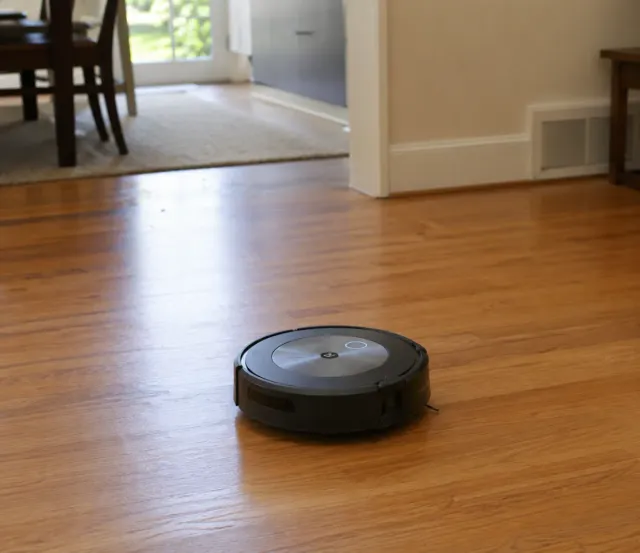
iRobot Roomba j7+
The Roomba j7+ excels at hands-free daily cleaning in pet homes, but its app reliability and bag costs add friction over time.
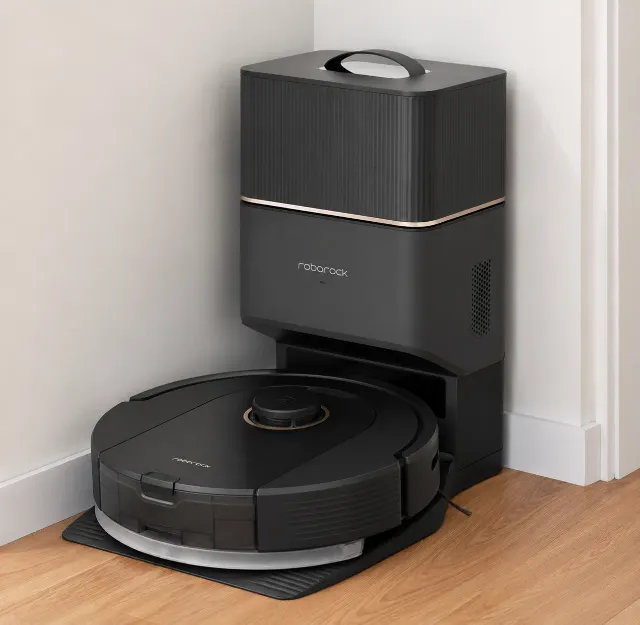
Roborock Q5+
The Roborock Q5+ delivers premium LiDAR navigation and auto-empty convenience at a budget price, but completely lacks modern obstacle avoidance.
From our guides
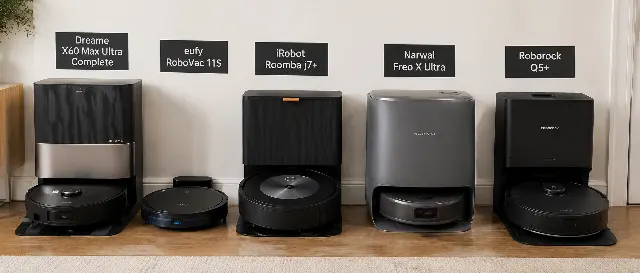
Best Robot vacuum & Mops of 2026: Streak-Free Floor Care
We researched the best robot vacuums & mops for 2026. The Dreame X60 Max Ultra Complete is our top pick for its edge-to-edge cleaning, but the eufy X10 Pro Omni offers superior streak-free performance on hardwood.
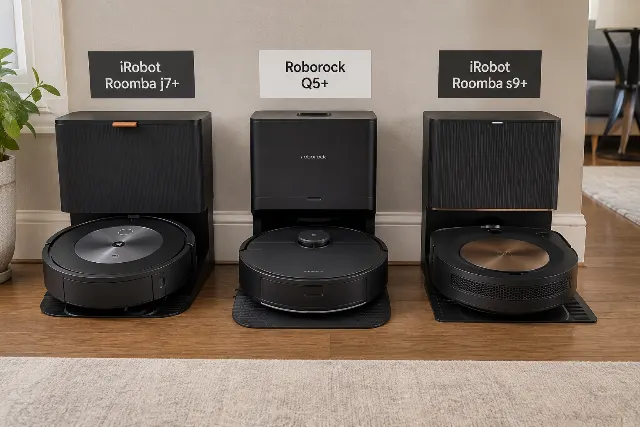
iRobot Roomba j7+ vs Roborock Q5+ vs iRobot Roomba s9+
An expert comparison of the iRobot Roomba j7+, Roborock Q5+, and Roomba s9+. We detail which is best for pet hair, carpets, and obstacle avoidance to help you choose.
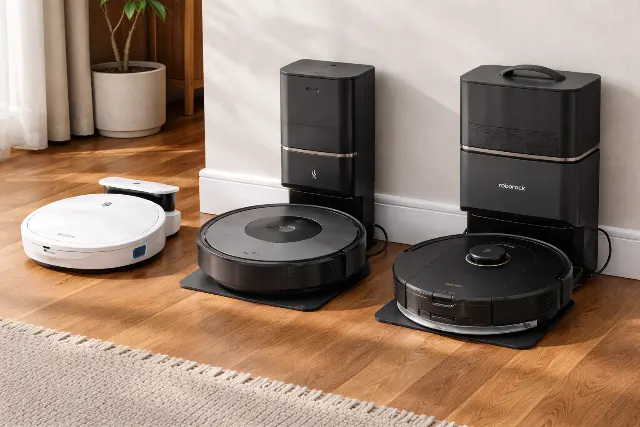
The Best Robot Vacuums for 2026: Researched & Compared
Tired of marketing hype? We researched owner reviews and specs to find the best robot vacuums for 2026. Our top picks for pet hair, value, and budget.