eufy RoboVac 11S Review
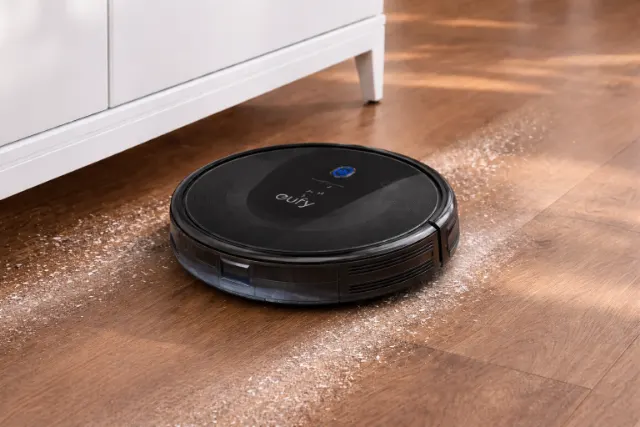
You’re staring at three options. A renewed eufy RoboVac 11S for a price that seems too good to be true. A basic Roomba 600-series, perpetually on sale. Or a slightly more expensive, but smarter, mapping robot from a brand like Wyze or Roborock. You’re wondering if this classic, once a category king, is still a smart buy in 2026. The answer is no. For almost everyone.
This review exists to break the tie for the few who should still consider it. The eufy 11S is a time capsule. It represents the peak of what a “dumb” robot vacuum could be: quiet, slim, and simple. But the market has moved on, and so should most buyers.
Its appeal is rooted in a price that has fallen dramatically since its launch. But a low upfront cost doesn't tell the whole story. The real price is paid in patience—patience for a robot that will clean the same spot three times while missing an entire corner, that will get stuck on the same rug fringe every day, and that has no concept of your home's layout.
Owning it past year one
Let's be clear about the long-term ownership picture. The first six months with the RoboVac 11S are often great, especially for first-time robot vacuum owners. It’s quiet, it picks up a surprising amount of dust, and the low price feels like a win. The reality of its limitations sets in during year two.
The original 2600mAh battery, rated for 100 minutes on hard floors, will likely deliver closer to 60-70 minutes after 18 months of regular use. This is a common complaint in owner forums. A shorter runtime is catastrophic for a random-navigation bot, as it dramatically reduces the chance of it covering your entire floor before needing to charge. Replacement batteries are available and relatively inexpensive, but it’s a hidden cost of ownership most buyers don't factor in.
Consumables are another recurring expense. You’ll need new side brushes and filters every 3-4 months. While third-party kits on Amazon, Amazon.ca, and Amazon.co.uk are cheap, the quality can be inconsistent. The main brushroll is durable, but it’s a magnet for long hair and requires frequent cleaning with the included tool. This is not a set-and-forget device.
The most common mechanical failure point, based on long-term owner feedback, is one of the side brush motors. It’s a small, inexpensive part, but requires some DIY confidence to replace. This is the central tradeoff of the 11S in 2026: it's cheap because it's simple, and its simplicity makes it repairable, but you have to be willing to be the repair person.
What ownership looks like
The daily routine with an 11S is fundamentally different from a modern mapping robot. You don't send it to clean the kitchen. You press 'Go' and hope for the best. Owners quickly learn they have to “eufy-proof” their homes: tucking away cables, removing lightweight rugs, and closing doors to confine it to one area. Without no-go zones, physical barriers are your only tool.
What most reviews miss is the mental load. You can’t trust it. You come home to find it tangled in a phone charger, dead under a bed, or beeping plaintively in a corner it can't escape. This is the reality that the marketing photos of pristine, open-plan homes don't show. The machine doesn't learn or adapt; you adapt to it.
After a few weeks, most owners stop using the included remote control and just use the 'Auto' button on the unit itself. The specialized cleaning modes (like Edge or Spot cleaning) are mostly gimmicks on a bot that can't reliably find its way back to the dock from another room anyway. Its most effective use case is in a single, contained room, like a bedroom or office, run daily.
What this is, in plain terms
The eufy RoboVac 11S is a random navigation robot vacuum. It uses a combination of infrared sensors and physical bumpers to feel its way around a room in a chaotic, pinball-like pattern. There is no camera, no LiDAR, and no memory of where it has been. It has no app connectivity. It is, by 2026 standards, an appliance, not a smart device.
It is optimized for two things above all else: a slim profile and quiet operation. At just 2.85 inches (7.24 cm) tall, its ability to get under low-clearance furniture is its single greatest advantage over most modern, taller competitors. Its operating volume of around 55dB is genuinely impressive; it’s about as loud as a running microwave, meaning you can have a conversation or watch TV while it works without being annoyed. This is the core design choice that defines the product.
The target buyer is someone living in a small, simple space with primarily hard floors, who is more sensitive to noise than they are to inefficient cleaning patterns.
How it is built
Build Quality: ★★★★☆ (4.0/5)
The 11S feels appropriate for its price. The top is tempered glass, which resists scratches better than the glossy plastic on many budget rivals, but it’s a fingerprint magnet. The main body is a sturdy-feeling plastic that holds up to inevitable bumps against furniture. The weak points are the consumables: the side brush arms can bend over time, and the dustbin’s plastic latch feels like a potential failure point, though widespread reports of it breaking are uncommon.
Long-term Reliability: ★★★☆☆ (3.6/5)
This is where its age shows. While the core vacuum motor is robust, the 11S is known for a few recurring issues after the first year. As mentioned, battery degradation is chief among them. The cliff sensors can also become dirty and cause endless beeping errors, requiring regular cleaning with a cotton swab. The front swivel wheel often needs to be popped out and cleared of hair and debris to spin freely. Its reliability is directly tied to your willingness to perform this routine maintenance.
What it does well
Eufy RoboVac 11S Performance on Hard Floors and Carpets
On hardwood, laminate, and tile, the eufy 11S does a very good job. Its 1300Pa of suction is more than adequate for picking up dust, crumbs, and pet hair from a hard surface. The combination of the main brushroll and dual side brushes effectively sweeps debris into the vacuum's path. For a small apartment with no carpets, its performance can feel like magic, especially for the price.
Carpets are a different story. On low-pile rugs, it’s acceptable. It will pick up surface debris, but it lacks the power to pull deeply embedded dust and pet dander from the carpet fibers. On medium-pile carpets, its performance drops to poor. Reddit threads on this product surface a pattern of owners being disappointed with its carpet cleaning, which is why the 11S MAX was introduced.
Quiet Operation: A Deep Dive into the 11S Noise Levels
This is its standout feature. At 55dB, it is significantly quieter than most vacuums, robotic or otherwise. A Roomba 694, a direct competitor, operates closer to 62-65dB, a difference that is immediately noticeable. The 11S hums along unobtrusively. This isn't just a spec-sheet number; it’s a quality-of-life feature for people who work from home or have sleeping children. It's the primary reason a buyer in 2026 might still choose this model over a more powerful, smarter, but louder alternative.
Buy this if you live in a sub-700 sq. ft. apartment with only hard floors, have low-hanging furniture, and are extremely sensitive to noise.
The rough edges
The list of drawbacks is long, and it's rooted in the robot's complete lack of intelligence.
The Navigation Problem: Random Bouncing in a Smart World
The 'BoostIQ' technology is marketing speak for a simple sensor that increases suction when it detects carpet. It has nothing to do with navigation. The 11S will get lost. It will clean one half of a room obsessively while ignoring the other. It may take 20 minutes to find its charging dock even if it’s in the same room. This random behavior is the single biggest source of owner frustration. In a world where entry-level bots offer methodical, row-by-row cleaning with vSLAM, this feels archaic.
Common Eufy RoboVac 11S Problems & Troubleshooting
It gets stuck. A lot. Its slimness is a double-edged sword; it can get *under* furniture, but it often wedges itself in places it can't escape. Dark-colored rugs are a known nemesis, as its cliff sensors can mistake them for a drop-off and refuse to cross. The brushroll is not tangle-free; long hair will require manual cutting and removal at least once a week in many households. Troubleshooting often involves flipping it over to see what error code its beeping corresponds to—a far cry from a smartphone app notification.
Skip this if you have a home larger than 800 sq. ft., have medium-pile carpets, own pets that shed heavily, or have a low tolerance for babysitting an appliance.
Competitors to consider
In 2026, the budget robot vacuum space is crowded with better options. The most direct philosophical competitor is the iRobot Roomba 694. It also uses random navigation but generally has more aggressive agitation for carpets. However, it's louder and taller than the 11S.
A much smarter budget alternative is the Wyze Robot Vacuum. For a slightly higher price, you get LiDAR mapping, which is a monumental leap forward. It cleans in straight, efficient lines, allows you to create virtual no-go zones in an app, and can be sent to clean specific rooms. Its introduction made bots like the 11S nearly obsolete for most people.
For those willing to spend more for a truly modern experience, the Roborock Q5+ is the logical upgrade. It offers superior LiDAR navigation, multi-floor mapping, strong suction, and an auto-empty dock. The price-to-performance of a model like the Q5+ highlights how poor the value proposition of a premium-priced dumb robot is today.
Eufy RoboVac 11S vs. 11S MAX: What's the Difference?
This is the most common comparison, and it's simple. The 11S MAX is the exact same robot—same body, same navigation, same features—but with suction boosted from 1300Pa to 2000Pa. That's it. This makes the MAX noticeably better on carpets and for picking up stubborn pet hair. If you have any carpets at all, the 11S MAX is the minimum you should consider. For hard floors only, the standard 11S is sufficient.
Best suited to
Best for: The dedicated bargain hunter who needs a quiet, ultra-slim robot for a small, clutter-free, hard-floored apartment and is willing to accept its significant navigational flaws in exchange for a rock-bottom price on a renewed unit.
Not ideal for: Anyone with a multi-room layout, medium-pile carpets, pets that shed heavily, or a busy, cluttered home. The lack of an app, no-go zones, and intelligent mapping makes it a source of constant frustration in any complex environment. The long-term cost of consumables and a potential battery replacement erodes its initial value proposition.
Bottom line
The eufy RoboVac 11S was a fantastic product in its time, but that time has passed. Its quiet operation and slim design remain best-in-class, but they are not enough to overcome the crippling inefficiency of its random navigation system. The market for entry-level, intelligent mapping robots has become so competitive that the 11S is no longer a logical choice for most buyers.
Unless you find a certified refurbished model for for a studio apartment, buy a smarter robot.
What makes it different
Its biggest weakness—simplicity—is also its hidden strength. With no complex LiDAR turret or vSLAM camera to fail, the 11S's core components are cheap and easy for owners to replace themselves, extending its life.
How it compares — value & tradeoffs
Versus the alternatives buyers cross-shop — judged on ownership, not just spec sheets.
| Alternative | Ease of use | Maintenance | Durability | Value | Best for |
|---|---|---|---|---|---|
| eufy RoboVac 11S (this pick) | Very simple | Frequent | Fair | Good (Renewed) | Quiet, simple spaces |
| Wyze Robot Vacuum | App-based | Standard | Good | Excellent | Budget smart mapping |
How it scores on what matters
| Product | Pet hair pickup | Carpet vs hard-floor suction | Navigation & mapping | Obstacle & cord avoidance | Edge & corner cleaning | Hair-tangle resistance | Verdict |
|---|---|---|---|---|---|---|---|
| eufy RoboVac 11S (this pick) | Good | Fair | Weak | Weak | Good | Fair | Good on hard floors, lost and weak on carpet. |
| Wyze Robot Vacuum | Very good | Very good | Excellent | Good | Fair | Fair | Smarter navigation provides far superior, methodical cleaning results. |
Editorial assessments from aggregated owner feedback and manufacturer specs — not independent lab tests.
Where it wins
- ✓Exceptionally quiet operation at just 55dB, making it ideal for running while at home without disruption.
- ✓Ultra-slim 2.85-inch profile allows it to clean under low furniture that most taller, smarter robots can't reach.
- ✓Simple, button-based operation with no app or Wi-Fi required, which is a plus for privacy-conscious or less tech-savvy users.
- ✓Very low price point for renewed models, making it one of the cheapest entry points into robotic vacuuming.
- ✓Long 100-minute runtime on hard floors (when new) allows for extensive coverage in smaller spaces.
Trade-offs to weigh
- ✕Archaic 'bump-and-turn' random navigation is inefficient, misses spots, and cannot be controlled or scheduled intelligently.
- ✕Weak suction power (1300Pa) struggles significantly with anything beyond low-pile carpets.
- ✕Frequently gets stuck on common obstacles like rug tassels, cables, and under furniture it can't quite clear.
- ✕Lacks any smart features: no app, no mapping, no no-go zones, and no targeted room cleaning.
The right buyer
Ideal for a student or couple in a sub-700 sq. ft. apartment with only hardwood or tile floors and minimal clutter. It’s for someone who values quiet operation above all else. Skip this if you have medium-pile carpets, multiple rooms, pets prone to accidents, or any expectation of smart features like no-go zones.
Why it earns a spot
The RoboVac 11S solves one problem better than almost any modern competitor: cleaning under very low furniture. At just 2.85 inches tall, it slips under couches and TV stands that block taller, LiDAR-equipped bots like the Roborock Q5+. It delivers this for a rock-bottom price, undercutting even basic Roombas.
Ratings at a glance
- Value
- ★★★★★ ★★★★★ 4.1
- Quality
- ★★★★★ ★★★★★ 4.0
- Ease of use
- ★★★★★ ★★★★★ 4.5
- Durability
- ★★★★★ ★★★★★ 3.6
Specifications
| Suction (Pa) | 1300 Pa |
|---|---|
| Navigation | Random Bounce (Infrared sensors) |
| Battery / runtime | 2600mAh / Up to 100 minutes |
| Dustbin capacity | 0.6 L |
| Auto-empty dock | Not available |
| Mapping / floors | No mapping / 1 floor |
| Noise level (dB) | ~55 dB |
| App features | No app |
| Warranty | 12 months (new); varies for renewed (typically 90 days) |
Frequently asked questions
Is the eufy RoboVac 11S discontinued?
Yes, the original eufy RoboVac 11S is officially discontinued. In 2026, it is primarily available as a certified refurbished or renewed product through retailers like Amazon. For a new model, eufy directs buyers to its successors.
What is the difference between eufy 11S and 11S MAX?
The single difference is suction power. The 11S MAX increases suction from the 11S's 1300Pa to a more robust 2000Pa, making it significantly more effective on low-to-medium pile carpets. All other features, including the body and navigation, are identical.
Is the eufy RoboVac 11S good for pet hair?
For pet hair on hard floors, the 11S performs adequately. However, its 1300Pa suction is not strong enough to consistently pull embedded hair from carpets. Homes with shedding pets and any carpeting should opt for the 11S MAX or a stronger competitor.
How quiet is the eufy RoboVac 11S?
Remarkably quiet. It operates at approximately 55 decibels, which is comparable to the hum of a modern refrigerator or a quiet conversation. This is one of its most compelling features and a primary reason some users still prefer it.
Does the eufy RoboVac 11S work on medium-pile carpets?
Technically it will run on medium-pile carpets, but its cleaning performance is poor. The 1300Pa suction and brush design are insufficient to provide a deep clean. It is only recommended for hard floors and very low-pile area rugs.
What are common issues with the eufy RoboVac 11S?
Common complaints center on its random navigation causing it to get stuck, its sensors misinterpreting black carpets as cliffs, and a noticeable decline in battery life after about 18 months of use. The main brushroll also requires frequent cleaning to remove tangled hair.
Is the eufy RoboVac 11S worth buying in 2026?
Only as a renewed unit for a small, hard-floor-only space where quiet operation is the top priority. For most people, the value offered by entry-level mapping robots from brands like Wyze or Roborock is a much smarter investment.
People also ask
- What is the difference between the eufy 11S and 11S MAX?
- Does the eufy 11S have mapping?
- How long does the eufy RoboVac 11S battery last?
- Can the eufy RoboVac 11S clean multiple rooms?
- How do I connect my eufy RoboVac 11S to Wi-Fi?
You might also like
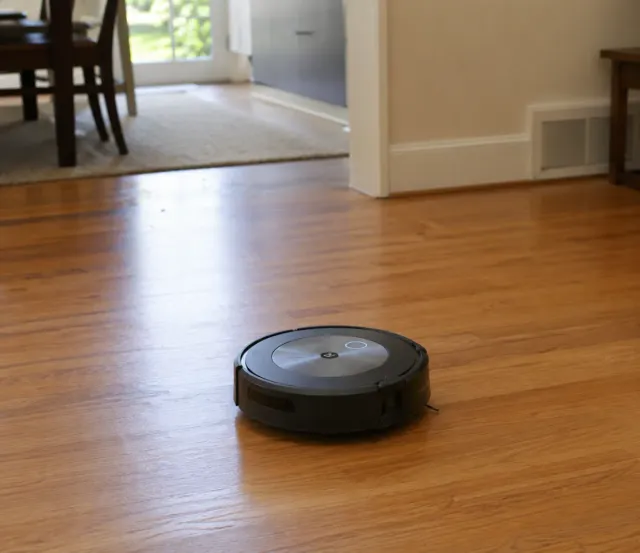
iRobot Roomba j7+
The Roomba j7+ excels at hands-free daily cleaning in pet homes, but its app reliability and bag costs add friction over time.
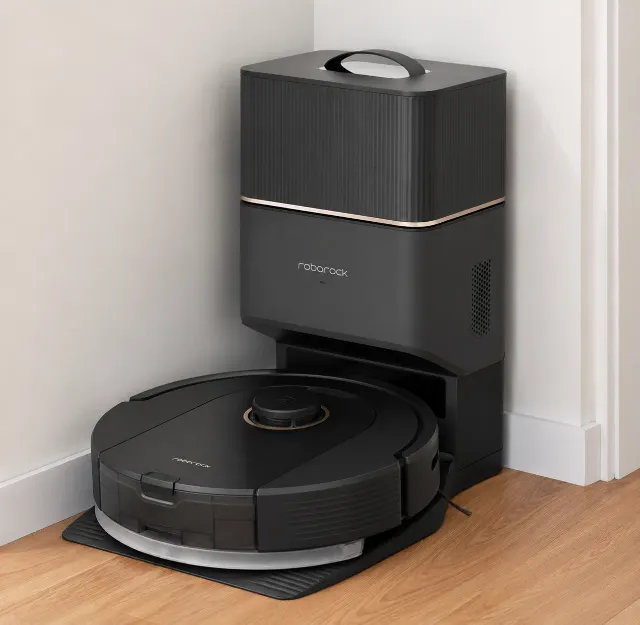
Roborock Q5+
The Roborock Q5+ delivers premium LiDAR navigation and auto-empty convenience at a budget price, but completely lacks modern obstacle avoidance.
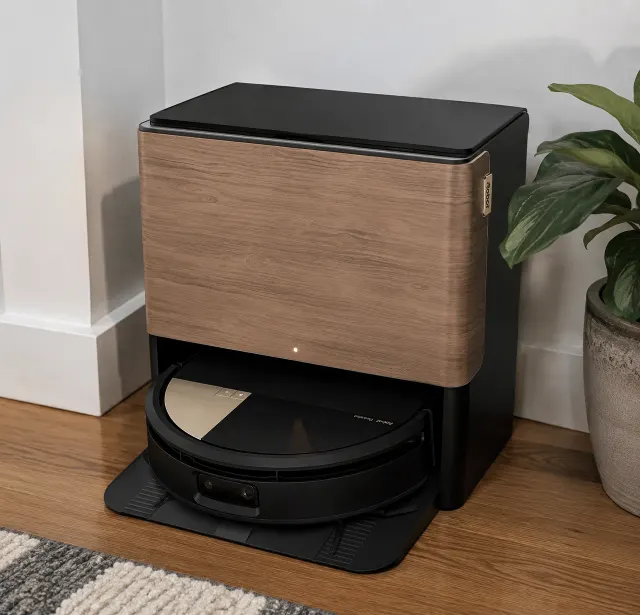
iRobot Roomba Combo Max 705
The Roomba Max 705 Combo delivers powerful, hands-off cleaning with its innovative AutoWash Dock, but its reliance on a sometimes-finicky app creates friction that undermines its core promise of simplicity.
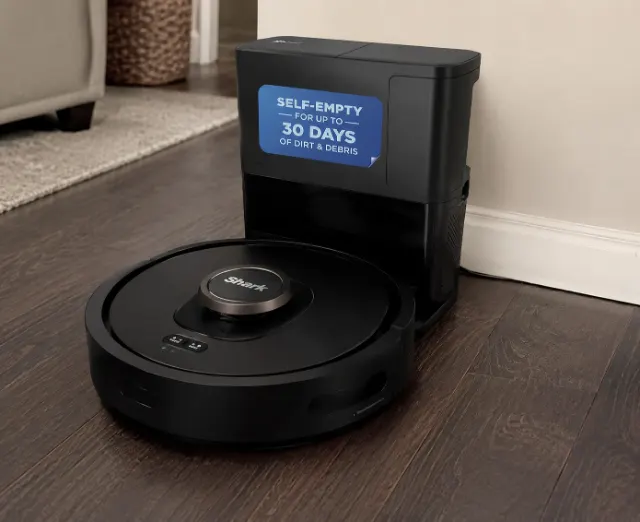
Shark AV2501AE AI Robot Vacuum
The Shark AV2501AE is a powerful vacuum with an excellent self-empty base, but its 'AI' navigation fails to avoid common household obstacles like cords.
From our guides
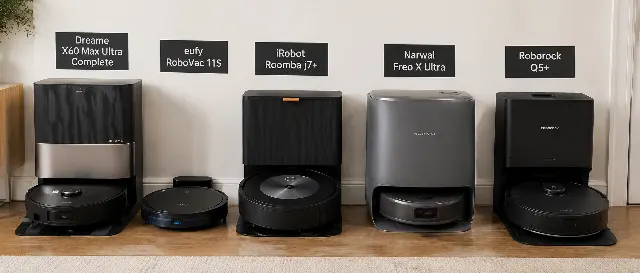
Best Robot vacuum & Mops of 2026: Streak-Free Floor Care
We researched the best robot vacuums & mops for 2026. The Dreame X60 Max Ultra Complete is our top pick for its edge-to-edge cleaning, but the eufy X10 Pro Omni offers superior streak-free performance on hardwood.
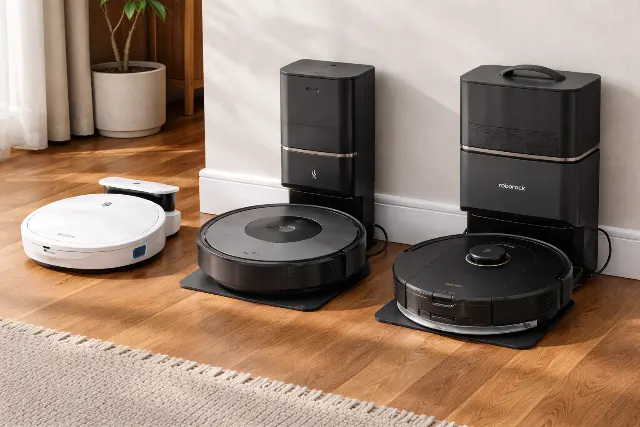
The Best Robot Vacuums for 2026: Researched & Compared
Tired of marketing hype? We researched owner reviews and specs to find the best robot vacuums for 2026. Our top picks for pet hair, value, and budget.