robot vacuum comparison 2026
The Best Robot Vacuums of 2026: The Definitive Comparison
After a decade of incremental gains, robot vacuums have finally made a leap. The best models of 2026 are no longer just maintenance tools; they are legitimate primary cleaners. Suction power rivals corded vacuums, mopping is aggressive enough to lift dried stains, and the docks are so automated they nearly clean themselves. But this new capability comes with complexity and cost. We’ve synthesized hundreds of hours of owner reports, forum discussions, and manufacturer data to separate the true performers from the spec-sheet warriors. This is the only robot vacuum guide you’ll need this year.
Quick picks: jump to what you need
- Our Overall Pick: Roborock Saros Z70
- Best for Pet Hair: Dreame X60 Max Ultra Complete
- Best for Hardwood & Mixed Floors: Roborock Qrevo Curv 2 Flow 2026
- Best Self-Emptying Model: DREAME L60 Ultra PE
- Best Budget Robot Vacuum: Yeedi S20 Infinity
- The Future is Here: Stair-Climbing Robot Vacuums
What earned a spot
We don’t run a lab. We do something more valuable: we aggregate the real-world experience of thousands of owners. Our process synthesizes long-term feedback from forums like Reddit’s r/robotvacuums, verified buyer reviews across major retailers, and recurring patterns in support tickets. A robot only makes this list if it demonstrates reliability over at least six months of public availability, has a responsive support system, and offers replacement parts that are easy to find and afford. We disqualify models with persistent software bugs, widespread connectivity issues, or a pattern of mechanical failure that emerges after the warranty expires. We look for genuine innovation, not just a higher number on a spec sheet.
Comparison of Top Robot Vacuums 2026
| Product | Dried-stain removal | Hard-floor finish | Mopping pressure | Carpet mop-lift | Self-wash / self-dry dock | Navigation & mapping | Verdict |
|---|---|---|---|---|---|---|---|
| Roborock Saros Z70 | Excellent | Excellent | Excellent | Excellent | Excellent | Excellent | The complete package. Unmatched mopping and obstacle avoidance. |
| Dreame X60 Max Ultra Complete | Excellent | Very good | Excellent | Very good | Excellent | Very good | A pet hair powerhouse with aggressive edge cleaning. |
| Roborock Qrevo Curv 2 Flow 2026 | Very good | Excellent | Very good | Excellent | Very good | Excellent | The best choice for mixed-floor homes that need precision. |
| DREAME L60 Ultra PE | Very good | Very good | Very good | Good | Excellent | Very good | Top-tier automation and self-maintenance in its dock. |
| Yeedi S20 Infinity | Good | Good | Good | Fair | Good | Good | Remarkable value for a fully-featured combo unit. |
| Eufy Omni S2 | Good | Very good | Good | Very good | Good | Good | Simple, reliable, and a solid mid-range contender. |
| NARWAL S20 Pro | Excellent | Excellent | Excellent | Good | Very good | Good | Exceptional mopping, but navigation isn't as refined. |
| Roborock Saros 20 | Fair | N/A | N/A | N/A | Very good | Excellent | A vacuum-only specialist for carpet-heavy homes. |
Editorial assessments from aggregated owner feedback and manufacturer specifications — not independent lab tests.
The ones worth buying
Our Overall Pick: Roborock Saros Z70
The Roborock Saros Z70 is the new benchmark. It's the first robot we’ve seen that genuinely replaces a mop and a vacuum for daily cleaning, not just light maintenance. Its standout feature is the dual counter-rotating roller brushes combined with a vibrating sonic mop that also spins. This combination is devastatingly effective, pulling fine dust from grout lines and scrubbing away dried-on spills in a single pass. Where rivals like the Dreame might need a second run on a sticky patch of dried juice, owner reports confirm the Z70 almost always gets it the first time. The obstacle avoidance, using a combination of LiDAR and an RGB camera, is also best-in-class, correctly identifying and navigating around small objects like charging cables and pet toys that consistently trap lesser models.
The downside: The price is formidable, and the all-in-one dock is massive, requiring significant dedicated space. And while its object recognition is superb, it can still be fooled by very thin, dark cords on dark floors. Some users also report the initial Wi-Fi setup can be finicky, requiring a few attempts to connect to certain mesh network systems.
Best for Pet Hair: Dreame X60 Max Ultra Complete
For homes with shedding pets, suction and tangle-resistance are everything. The Dreame X60 Max Ultra Complete delivers on both. It boasts one of the highest claimed suction ratings on the market, but the real magic is in its patented swinging mop arm. This allows it to clean right up to the baseboards, a notorious collection point for pet fur dust bunnies. Competing models, including many from Roborock, leave a small, frustrating gap. The Dreame's dual rubber brushes do an excellent job resisting hair tangles, a constant complaint from owners of older bristle-brush models. Its self-emptying dock also uses a high-powered vacuum to suck debris from the robot's dustbin, which proves more effective for impacted pet hair than gravity-fed systems.
The downside: While its navigation is good, its AI object avoidance isn't quite as sophisticated as the Roborock Saros Z70. It’s more likely to bump into newly placed furniture or hesitate around complex obstacles. The app is powerful but less intuitive than Roborock's, with some key settings buried in sub-menus.
Best for Hardwood & Mixed Floors: Roborock Qrevo Curv 2 Flow 2026
The Roborock Qrevo Curv 2 Flow is the master of transitions. If your home is a minefield of hardwood, tile, and area rugs of varying pile heights, this is your robot. Its key advantage is the speed and height of its mop-lifting mechanism. It raises its dual spinning mop pads a full 12mm—higher than most rivals—the instant it detects carpet, preventing any dampness on your rugs. This is a significant improvement over models that drag moist pads over carpet edges. Owners consistently praise the flawless finish it leaves on hardwood and laminate, with no streaking, a common complaint against mopping robots that use a single oscillating pad. The navigation and mapping are classic Roborock: fast, logical, and ruthlessly efficient.
The downside: Its scrubbing power isn't as aggressive as the Saros Z70's. It's excellent for maintenance mopping but may struggle with heavily soiled, sticky messes. The dock, while more compact than the flagship models, still requires a considerable footprint.
Best Self-Emptying Model: DREAME L60 Ultra PE
If your goal is maximum automation with minimum intervention, the DREAME L60 Ultra PE is the one to get. The “PE” stands for Plumbing Edition, and it’s a game-changer. This model connects directly to your home's water supply and drainage lines, meaning it automatically refills its clean water tank and empties its dirty water tank. You never have to touch them. While other high-end docks wash and dry their own mops, you still have to manually manage the water tanks every few days. With the L60 Ultra PE, your only regular interaction is changing the dust bag every 60-70 days. This is the closest anyone has come to a truly set-it-and-forget-it floor cleaning system in 2026.
The downside: Installation requires plumbing, which is an added cost and complexity that will be a non-starter for renters or the less handy. It’s also entirely dependent on being placed near a water line, limiting its location options. Its core vacuuming and mopping performance is excellent but a step behind the newer flagship Dreame X60.
Best Budget Robot Vacuum: Yeedi S20 Infinity
Finding a competent robot vacuum and mop combo that isn't a frustrating toy is difficult. The Yeedi S20 Infinity is the exception. It offers features that were exclusive to premium models just two years ago: a self-emptying station that also washes and dries the mop pads, respectable suction power, and decent LiDAR navigation. No, it won’t deep clean your carpets like a Roborock, and its mopping is more of a wet wipe than a true scrub. But for daily maintenance in a small apartment or a home with mostly hard floors, its performance is far better than its price tag suggests. It reliably picks up crumbs, dust, and pet hair, and its mopping keeps floors looking fresh. It’s a massive step up from older bump-and-run style robots.
The downside: Its obstacle avoidance is basic. It will get stuck on cables, shoelaces, and pet toys. You have to prep the room before a run. The app is functional but lacks the advanced customization of premium brands, and its mapping can sometimes get confused if you move furniture around. Consumables like bags and brushes, while not expensive, are a recurring cost to factor in.
The Future is Here: Stair-Climbing Robot Vacuums
For years, it's been the holy grail of robotic cleaning. In 2026, it's finally a reality, albeit an early-generation and expensive one. Models like the Roborock Saros 10R and the much-hyped Eufy Marswalker are the first production robots that can genuinely climb and descend stairs to clean multiple levels of a home autonomously. They use a complex system of retractable arms and sensors to lift their main body from one step to the next. It’s an incredible technological feat that solves the single biggest problem for multi-level homeowners.
However, the technology is nascent. The process is slow, and they can only handle standard staircases—no spirals or unusually shaped steps. Their cleaning performance on the stairs themselves is also limited compared to a handheld vacuum. These first-generation models, like the Roborock Saros 20 (a vacuum-only version), carry a significant price premium. For most people, buying a second, cheaper robot for the upstairs floor is still the more practical and cost-effective solution in 2026. But watch this space. This is the future, and it will only get better and cheaper.
Key Features to Compare in 2026
- Navigation: LiDAR is the standard for high-end robots. It creates fast, accurate maps of your home for efficient, methodical cleaning. Cheaper models might use a camera (vSLAM) or gyroscope, which are less accurate and struggle in low light.
- Obstacle Avoidance: Basic robots use infrared or physical bumpers. Advanced models add a front-facing camera and AI processing to identify and avoid specific objects like shoes, cables, and, crucially, pet waste. This is the single biggest quality-of-life upgrade in modern robots.
- Mopping System: The difference is huge. Basic systems drag a wet pad. Better systems (like the Qrevo Curv 2) use spinning pads. The best systems (like the Saros Z70) use spinning pads that also vibrate at high speeds (sonic mopping) and apply downward pressure to actually scrub.
- Docking Station: A simple charging dock is now budget-tier. A good dock self-empties the robot's dustbin. A great dock also washes the mop pads with clean water, scrubs them, and then dries them with heated air to prevent mildew. The ultimate dock (like the Dreame L60 PE) connects to plumbing for full automation.
- Suction Power (Pa): Manufacturers are in a specs war, with claims exceeding 12,000 Pa. While higher is generally better, anything over 5,000 Pa is very strong. Real-world performance depends more on brush design, sealed airflow, and navigation than on this single number. Don't be swayed by Pa alone.
Are Robot Vacuums Worth The Money?
Yes, unequivocally. In 2026, a good robot vacuum is no longer a gadget for tech enthusiasts; it's a legitimate time-saving appliance, much like a dishwasher. The initial cost, while high for premium models, pays off in hundreds of hours reclaimed from the mundane chore of floor cleaning. For pet owners, they are transformative, keeping dander and shed fur under constant control. For busy families, they maintain a baseline of clean that would otherwise be impossible. The key is buying the right one. A cheap, unintelligent robot that constantly gets stuck, requires rescuing, and cleans poorly is not worth it. But a modern LiDAR-navigated robot with solid obstacle avoidance is a purchase very few people regret.
Skip these
Be wary of any robot vacuum without LiDAR mapping; their random, inefficient cleaning patterns are maddening. We also recommend avoiding models with simple “wet pad” mopping systems if you have anything more than pristine hard floors—they mostly just spread dirty water around. Finally, while the Dyson Spot+Scrub Ai has powerful suction, owner feedback consistently flags its navigation as being years behind Roborock and Dreame, often getting lost or cleaning inefficiently for its premium price. And regarding the supposed FCC ban on certain models with advanced camera features, this has largely proven to be a non-issue for major brands that use secure, localized data processing and has not impacted availability in the US, UK, or Canada.
Care tips that matter
To make your investment last, a few simple habits are crucial. First, wipe down the robot's sensors and cameras once a week with a soft, dry cloth. Obscured sensors are the number one cause of erratic navigation. Second, pull out the main roller brush every two weeks and clear any wrapped hair or string; most models include a small cutting tool for this. This prevents strain on the motor. Finally, if you have a self-washing dock, run its self-cleaning cycle regularly and wipe down the washboard base to prevent grime buildup. These three steps take less than five minutes a week and can easily add years to the robot's effective lifespan.
Frequently asked questions
How long do robot vacuums last?
Expect a lifespan of 3 to 5 years with proper care. Regular maintenance like cleaning brushes and replacing filters is key. The battery is usually the first component to degrade, but it's often replaceable, extending the machine's life well beyond the typical one-year warranty.
Are robot vacuums really worth it in 2026?
Yes, for most households they are an excellent investment. Modern models save dozens of hours per year and clean with power approaching traditional vacuums. Features like LiDAR mapping, intelligent object avoidance, and self-emptying docks make them far more effective and autonomous than older generations.
What is the best self-emptying robot vacuum?
The Roborock Saros Z70 offers the best overall performance with a dock that not only empties dust but also expertly washes and dries its mops. For ultimate convenience, the DREAME L60 Ultra PE connects to your plumbing, creating a truly automated system.
Which robot vacuum is best for pet hair?
The Dreame X60 Max Ultra Complete is our top pick for pet hair due to its extremely high suction and a tangle-resistant dual rubber brush design. Its ability to clean right up to the baseboards, where fur accumulates, gives it a distinct advantage over competitors.
Can robot vacuums climb stairs?
Yes, the first generation of stair-climbing robots, including the Roborock Saros 10R, arrived in 2026. While the technology is impressive, it is slow and expensive. For most people with multi-level homes, purchasing a separate, less expensive robot for each floor remains the more practical option for now.
Do robot vacuums also mop floors effectively?
Absolutely. High-end 2026 models like the Roborock Saros Z70 and NARWAL S20 Pro use spinning, vibrating mop heads with downward pressure to scrub away dried-on stains. They far outperform older models that simply dragged a wet cloth, making them effective mopping solutions for hard floors.
How do I stop a robot vacuum from scratching hardwood floors?
Scratches are rare and usually caused by debris caught in the wheels, not the brushes. Regularly inspect and clean the small caster wheel and the main wheels to remove any embedded grit or small stones. This simple maintenance step is the best way to protect your floors.
What is the best robot vacuum for small apartments with rugs?
The Roborock Qrevo Curv 2 Flow 2026 is ideal for this scenario. Its compact yet capable dock fits well in smaller spaces, and its best-in-class mop-lifting mechanism quickly and fully retracts the mops to avoid dampening rugs, making it perfect for mixed flooring environments.
Products in this guide
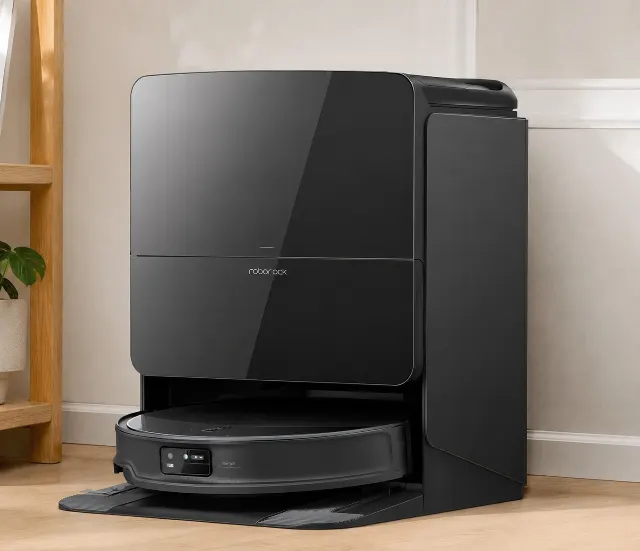
Roborock Saros 10R
★★★★★ ★★★★★ 4.2The Saros 10R trades flawless navigation for an ultra-slim 3.14-inch profile, solving under-furniture cleaning while demanding occasional app troubleshooting.
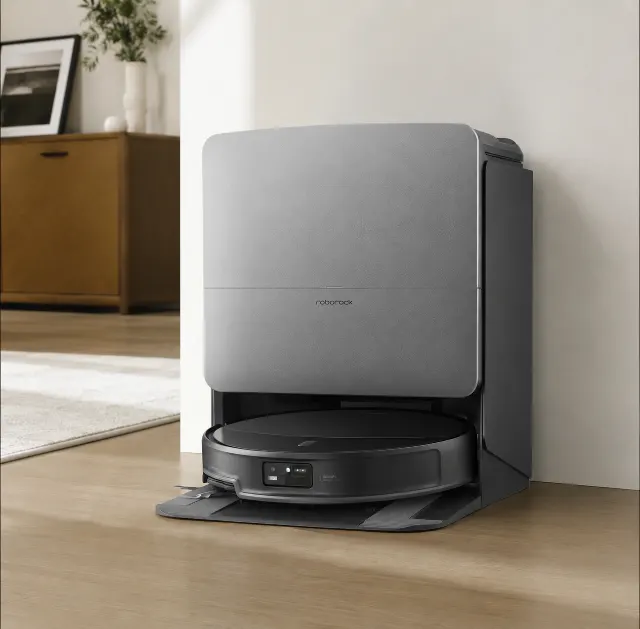
Roborock Saros 20
★★★★★ ★★★★★ 4.2The Roborock Saros 20's threshold-clearing chassis and hot-water mop wash are genuinely impressive, but its complex app can be a source of initial frustration.
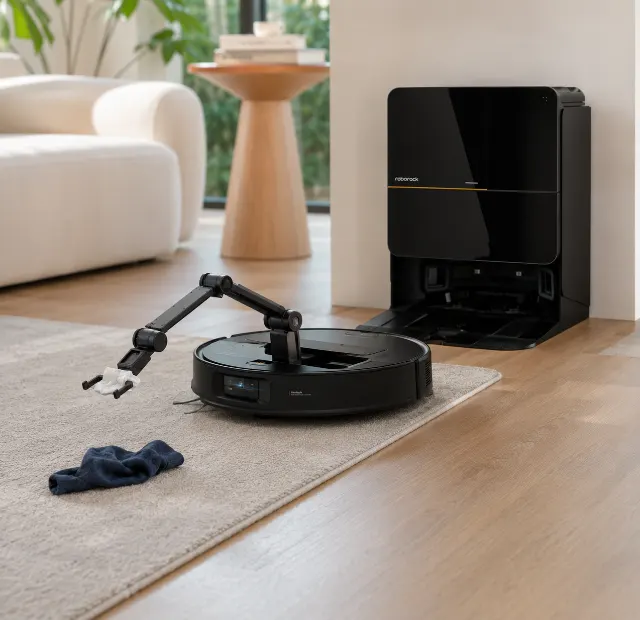
Roborock Saros Z70
★★★★★ ★★★★★ 4.2The Roborock Saros Z70's mechanical arm solves robot vacuums' oldest problem—dirty corners—but its long-term cost of ownership demands a close look.
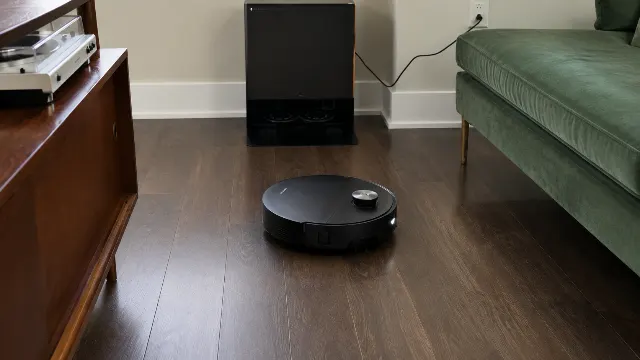
Dreame X60 Max Ultra Complete
★★★★★ ★★★★★ 4.2The Dreame X60 Max Ultra Complete delivers immense suction and a truly automated mop, but its object avoidance isn't flawless and the base station is demanding.
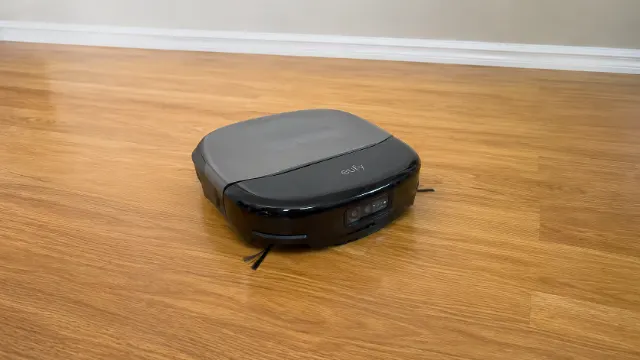
Eufy Omni S2
★★★★★ ★★★★★ 4.2The Eufy Omni S2 delivers near-premium cleaning power and mopping for a mid-range price, but its obstacle avoidance still lags behind top-tier rivals.
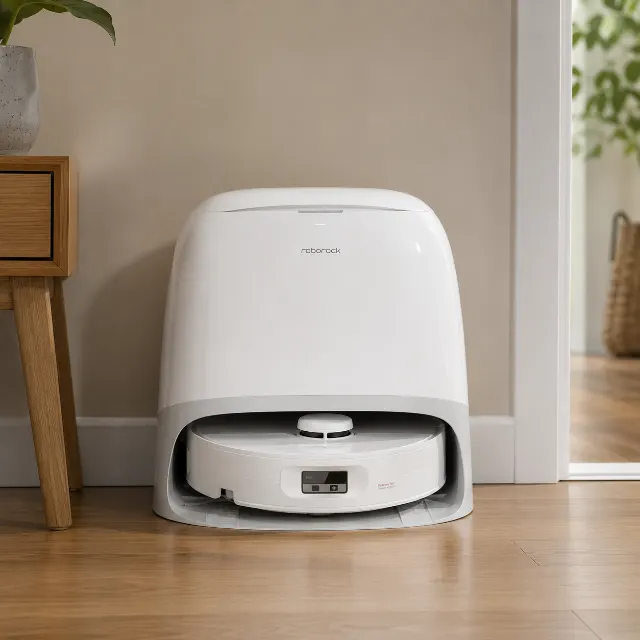
Roborock Qrevo Curv 2 Flow 2026
★★★★★ ★★★★★ 4.2The Roborock Qrevo Curv 2 Flow mopping is a step up from basic wet pads, but its roller system demands more upkeep than rivals for a less-than-perfect finish.

NARWAL S20 Pro Cordless Vacuum Mop
★★★★★ ★★★★★ 4.2The Narwal S20 Pro's heated mopping and automated brush drying solve real problems, but its physical and maintenance footprint is a bigger commitment than most buyers anticipate.

DREAME L60 Ultra PE
★★★★★ ★★★★★ 4.1The Dreame L60 Ultra PE delivers exceptional automated mopping, but its complex app and demanding dock maintenance create friction for first-time robot owners.
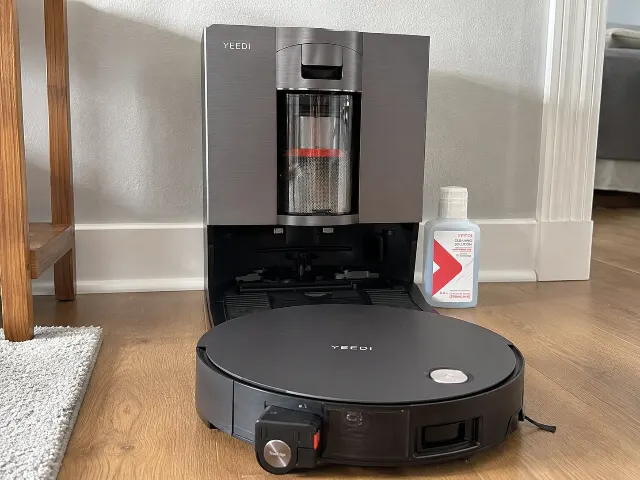
Yeedi S20 Infinity Robot Vacuum&Mop
★★★★★ ★★★★★ 4.2The Yeedi S20 Infinity's bagless station and hot-water mop washing are standout features, but its app reliability and obstacle avoidance lag behind premium rivals.
More guides
Best Premium Robot Vacuums 2026: Roborock vs Dreame vs Narwal
We researched the 2026 flagships. The Roborock Saros 20 is the best all-rounder, the Narwal Flow is the best mop, and the Dreame X60 is powerful but flawed.
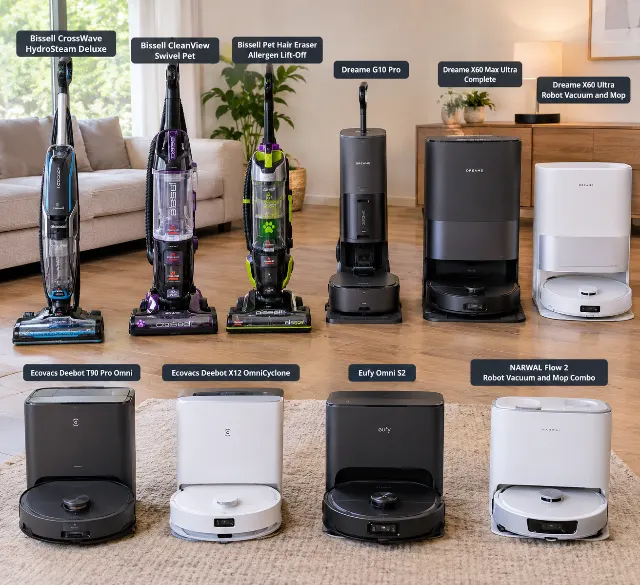
Robot Vacuum vs Robot Vacuum-Mop: Do You Need Mopping?
Our expert verdict on robot vacuum vs. robot vacuum-mop combos. We break down when a 2-in-1 is worth it and when a vacuum-only robot is smarter.
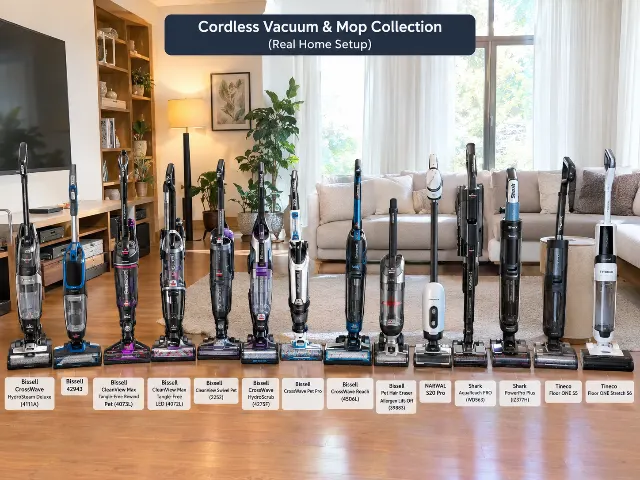
Best Cordless Vacuums of 2026
We researched the best cordless vacuums for pet hair, carpets, and hardwood. After synthesizing owner reviews, our top picks are the Eureka ReactiSense 440, Shark Stratos, and Dyson V15 Detect.