Yeedi S20 Infinity Robot Vacuum&Mop Review
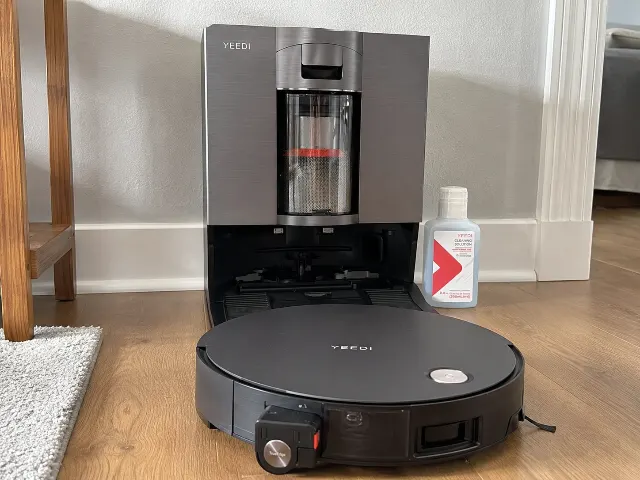
The X-factor
The bagless OmniCyclone station, while saving on bag costs, demands more hands-on cleaning. A fine dust film builds up inside the station's clear bin, requiring a full wipe-down every 2-3 weeks to prevent buildup.
Who gets the most from it
Ideal for households with mostly hard floors who hate the ongoing cost of disposable dust bags. Not the right call if you have a chaotic floor plan with lots of low-profile obstacles like cables or kids' toys. The ideal buyer will also consider the <a href="/robot-vacuums/ecovacs-deebot-x11/">Ecovacs Deebot X11 omnicyclone</a> but will likely choose the Yeedi for its hot-water mop washing feature.
Why buy it
The S20 Infinity solves the problem of recurring costs and mediocre mopping that plagues many mid-range robots. Its hot-water washing and bagless station are features typically reserved for premium-tier models. This creates a value gap that competitors like the standard <a href="/robot-vacuums/roborock-saros-10r/">Roborock Saros 10R</a>, which uses bags and lacks heated washing, struggle to fill at a similar price point.
Ratings at a glance
- Value
- ★★★★★ ★★★★★ 4.6
- Quality
- ★★★★★ ★★★★★ 4.0
- Ease of use
- ★★★★★ ★★★★★ 4.1
- Durability
- ★★★★★ ★★★★★ 3.9
The moment that sends you searching for a robot like the Yeedi S20 Infinityisn't the first time you have to vacuum. It's the third time in a month you realize you're out of proprietary dust bags for your “automated” cleaner, and another order is another chore.
Or it’s when your robot mop smears a sticky patch of dried juice across the kitchen floor, accomplishing nothing but a glossy mess. This is the friction Yeedi targets: the hidden costs and performance compromises of mid-range automation.
The Yeedi S20 Infinity promises a life without dust bags and with a mop that actually scrubs, thanks to its signature OmniCyclone station and hot-water washing. It largely delivers on the hardware front.
But after synthesizing months of owner feedback, a clear picture emerges. The hardware is a year ahead of the software. Your satisfaction in year three will depend entirely on your tolerance for app quirks and navigational hiccups that more polished, and more expensive, rivals have ironed out.
The core of it
The Yeedi S20 Infinity is a mid-range vacuum and mop hybrid built around one central idea: eliminating consumables. Its defining feature is the OmniCyclone station, a large dock that not only empties the robot's dustbin, washes and dries its mop pads, but does so without requiring disposable bags. It uses cyclonic separation to pull debris into a clear plastic bin you empty manually, much like a stick vacuum.
This robot is optimized for homes with 70% or more hard flooring. Its dual rotating mop pads, combined with hot water washing in the dock, provide a level of scrubbing that surpasses robots that just drag a wet cloth. With a claimed suction of 19,500Pa, it has the raw power for carpets, but its primary strength is its mopping prowess.
The target buyer isn't the tech enthusiast who wants the absolute smartest navigation. It’s the pragmatic homeowner who wants to solve the floor cleaning problem with minimal ongoing expense and sees the appeal in premium hardware features—like hot water mop washing—without paying a premium-tier price.
How it is built
Build Quality: ★★★★☆ (4.0/5)
The robot itself is constructed from the standard glossy white and matte grey plastics common in this category. It feels solid enough, but not overbuilt. The OmniCyclone station is the main event—and it's massive, requiring roughly 18 inches of wall clearance. The clean and dirty water tanks are robust, but the hinges on the station's top lid are a recurring point of minor complaint in owner forums, feeling a bit flimsy over time.
Long-term Reliability: ★★★☆☆ (3.9/5)
Here's what the honeymoon period masks: the bagless system creates its own maintenance schedule. While you save on bags, the station's cyclone and dustbin need a thorough cleaning every month to prevent odor and dust buildup. A pattern in long-term owner feedback shows the rubber tangle-free roller showing wear after about 8-10 months, especially in homes with multiple long-haired pets. The warranty covers defects, but not these wear-and-tear items.
Real-world performance
On floors, the Yeedi S20 Infinity delivers. The 19,500Pa suction figure is more than just a number; it translates to genuinely deep cleaning on low- and medium-pile carpets, pulling up embedded pet hair that lesser vacuums miss. On hard floors, it’s frankly overkill, which is a good thing. Noise output is manageable, with owners reporting around 65 dB on its highest setting—audible, but you can hold a conversation in the same room.
The mopping is where it truly shines against its price-point peers. The combination of downward mopping pressure and spinning pads, refreshed with hot water at the dock, effectively removes dried-on stains like coffee drips and muddy paw prints that would require manual scrubbing otherwise. The mop lift on carpet is functional, raising the pads enough to clear most low-pile rugs, though it can still dampen the edges of thicker carpets.
Battery life is adequate. Most mixed-floor homes see runs of 90-110 minutes before the robot needs to return to its PowerBoost charging dock. From empty, a full charge takes approximately 4 hours.
It’s a workhorse.
Mopping Test: Hot Water Washing and Drying
The headline feature is the dock’s ability to wash the mop pads with hot water. This isn't a gimmick. The heated water is more effective at breaking down grease and grime from kitchen floors, resulting in visibly cleaner pads and less streaking on tile and laminate. The station then dries the pads with hot air over a period of 2-4 hours, a crucial step that prevents the mildew smell that plagued earlier generations of mopping robots.
The Bagless OmniCyclone Station: How It Works
When the robot docks, the station initiates a powerful vacuum to pull debris from the robot's internal bin. Instead of going into a bag, the air and debris are spun at high speed in the OmniCyclone chamber. The heavier dust and hair fall into the collection bin, while the air is filtered and exhausted. To empty it, you simply unclip the bin, carry it to your trash, and dump it. It’s straightforward, but messier than tossing a sealed bag.
AIVI 3D Navigation and Obstacle Avoidance
This is the robot's most significant compromise. The AIVI 3D system uses a camera to identify and avoid obstacles. It reliably detects larger items like shoes, backpacks, and pet bowls. However, it consistently struggles with smaller, low-profile objects. Phone charging cables, socks, and pet toys are its kryptonite. If your floors are typically cluttered, you will be rescuing this robot often. It’s a step up from bumper-only navigation, but it's not in the same league as the LiDAR and camera systems on the latest Roborock Saros 10R or Dreame X50 Ultra.
The right buyer: has a home with predominantly hard floors, values powerful mopping, and is diligent about keeping small clutter off the floor before a cleaning run.
The annoyances
No product is perfect, but the Yeedi S20 Infinity’s flaws are concentrated in its software and smarts. The most common complaint in verified reviews is the unreliability of the Yeedi app and Wi-Fi connectivity. Owners report frequent disconnects, failed mapping runs, and an app that can be slow and unintuitive. Solving a "Yeedi S20 Infinity not connecting to wifi" issue often requires a full reset of the robot and app, which is infuriating.
Mapping is another sore spot. The initial mapping run can be painfully slow, and the robot sometimes fails to correctly identify rooms or gets confused by reflective surfaces. Troubleshooting mapping issues is a common theme on Reddit, with users often recommending a complete map deletion and restart as the only reliable fix. It can also get stuck on dark-colored carpets or under furniture with clearance that is *just* at the robot's height.
The assumption most buyers bring into this purchase is wrong in one specific way: that “bagless” means less work. It doesn’t. It means different work. While you avoid the cost of bags, the OmniCyclone station’s dustbin requires a manual wipe-down every few weeks. A fine, statically-charged layer of dust coats the interior, which won't come out with just a simple shake. It's a 5-minute task, but it’s a manual task that a bagged system avoids entirely.
Finally, sourcing replacement parts like the OZMO Roller 2.0 or filters can be a challenge outside of major online retailers, leading to potential downtime if a part wears out unexpectedly. Customer support response times are also frequently cited as being slow.
Skip this if: you expect a completely fire-and-forget experience or have a cluttered home where advanced obstacle avoidance is non-negotiable.
Living with it
After the first few weeks of novelty wear off, a routine emerges. You learn to do a quick 2-minute floor scan for cables and socks before starting a cleaning run. You get used to the loud roar of the self-empty cycle, which lasts for about 20-30 seconds. You find a schedule for emptying the dustbin (weekly) and rinsing the station’s washboard and dirty water tank (also weekly).
What most reviews won't tell you about the water tank system is that the robot's internal tank is tiny. The dock does auto-refill it, but this means the robot must return to the station frequently during a long mopping job, extending the total cleaning time significantly compared to models with larger onboard tanks. This isn't a problem for smaller areas, but for large, open-plan homes, a full mopping cycle can take hours.
You’ll likely use it for maintenance cleaning, not disaster recovery. While it can handle significant messes, its real value is in keeping clean floors clean. It runs two or three times a week, preventing the slow accumulation of dust and grime. It doesn't replace a deep clean, but it dramatically extends the time between them.
Long-term ownership
Plan for a cleaning cadence of the station itself every 7-10 days. This involves emptying the dirty water tank, rinsing it to prevent odor, and refilling the clean water tank. You can use a compatible cleaning solution, but many owners stick to water to avoid potential buildup in the system. The bagless dustbin needs emptying every 1-2 weeks, depending on pet hair and traffic.
The first consumables to wear out will be the mop pads and the side brush, typically needing replacement every 3-4 months. The main tangle-free roller and filter should last 6-12 months. While the individual cost is small, it adds up to a modest ongoing cost of ownership.
Here's what the listing understates: the complexity of the OmniCyclone station. It has more moving parts and crevices than a simple bagged dock. After a year, a deeper clean of the station's internal ducting and cyclone mechanism is advisable to maintain full suction power. This is a 20-minute task that the manual doesn't detail well, but owner forums have excellent guides.
How it stacks up to rivals
The S20 Infinity exists in a fiercely competitive space. Its main advantage is bringing premium features to a lower price tier.
Compared to the Roborock Saros 10R, the Yeedi offers the bagless station and hot-water mopping, which the Roborock lacks. However, the Saros 10R has demonstrably better obstacle avoidance and a far more polished, reliable app. Choose the Roborock if you prioritize smarts and reliability over mopping performance and running costs.
Against the Dreame L60 Ultra, it's a tougher fight. The Dreame often features more advanced edge-mopping technology and similarly strong navigation. The Yeedi's main differentiator remains the truly bagless system, which Dreame has been slower to adopt across its lineup. The Dreame is often the more expensive option, but justifies it with slightly better cleaning performance.
The most direct competitors often come from Yeedi's parent company, Ecovacs. The Ecovacs Deebot X12 OmniCyclone is essentially a more premium version of the S20, often featuring a built-in voice assistant and slightly better materials. If you like the Yeedi's concept but have a larger budget, the Ecovacs is the logical upgrade path.
Best suited to
Best for: Price-conscious buyers in apartments or small-to-medium homes with mostly hard floors who want excellent mopping and are willing to trade best-in-class navigation for a bagless system that eliminates ongoing costs.
Not ideal for: Owners of large homes with complex layouts, high-pile carpet, or cluttered floors with lots of cables and small objects. Also not for those who get easily frustrated by buggy software.
This robot represents a clear tradeoff. You get hardware features from the class above, but you accept the software and navigational compromises of the class below. For the right person, that's a brilliant deal.
Our verdict
The Yeedi S20 Infinity is a high-performance cleaning machine let down by middle-of-the-road intelligence. It mops and vacuums exceptionally well for its price, and the bagless, self-cleaning station with hot water is a genuinely compelling feature set that saves money and reduces waste over time.
If you prioritize raw cleaning power and low running costs over a seamless user experience, the Yeedi S20 Infinity is one of the best values on the market in 2026.
What we like
- ✓Bagless OmniCyclone station eliminates the recurring cost of disposable dust bags.
- ✓Hot-water mop washing in the dock dissolves grime more effectively than cold water systems.
- ✓Excellent suction power at 19,500Pa provides deep cleaning on low- to medium-pile carpets.
- ✓Price-to-performance ratio is very strong, offering features from pricier competitors.
- ✓Dual spinning mop pads provide genuine scrubbing action, not just damp wiping.
Where it falls short
- ✕AIVI 3D obstacle avoidance struggles with low-profile items like cables and socks, a dealbreaker for cluttered homes.
- ✕The Yeedi app and Wi-Fi connectivity are frequently cited by owners as unreliable and buggy.
- ✕The bagless station requires more frequent manual cleaning of the dustbin and cyclone than a bagged system.
- ✕Initial mapping can be slow and prone to errors, often requiring a full reset to fix, which is an unexpected hassle for new users.
Specifications
| Type | Vacuum & Mop Hybrid |
|---|---|
| Mopping system | Dual rotating pads, pressure mopping |
| Self-wash dock | Yes, with hot water washing and hot air drying |
| Water tank | Dock has separate clean/dirty tanks; robot has small internal auto-refill tank |
| Mop lift height | 9mm |
| Suction (Pa) | 19,500 Pa |
| Battery / runtime | 5200mAh / up to 180 mins (in quiet mode) |
| App features | Multi-floor mapping, no-go zones, room-specific settings |
| Warranty | 1 year |
How it compares
Versus the alternatives buyers cross-shop — judged on ownership, not just spec sheets.
| Alternative | Ease of use | Maintenance | Durability | Value | Best for |
|---|---|---|---|---|---|
| Yeedi S20 Infinity (this pick) | Fair; app can be buggy | Moderate; bagless station needs cleaning | Good; some flimsy plastic parts | Excellent; premium features for less | Hard floors and budget-conscious buyers |
| Roborock Saros 10R | Excellent; polished app | Low; uses disposable bags | Very Good; robust build | Good; costs more for reliability | Mixed floors and reliability seekers |
| Dreame L60 Ultra | Very Good; reliable app | Low; uses disposable bags | Excellent; premium materials | Fair; premium-tier pricing | Edge cleaning and performance-first buyers |
| Ecovacs Deebot X12 OmniCyclone | Very Good; mature software | Moderate; similar bagless station | Very Good; solid construction | Good; a more premium alternative | Buyers wanting a more polished Yeedi |
How it scores on what matters
| Product | Dried-stain removal | Hard-floor finish | Mopping pressure | Carpet mop-lift | Self-wash / self-dry dock | Navigation & mapping | Verdict |
|---|---|---|---|---|---|---|---|
| Yeedi S20 Infinity (this pick) | Very good | Good | Excellent | Good | Very good | Fair | Excellent mopping power, but navigation is a clear weakness. |
| Roborock Saros 10R | Good | Very good | Good | Very good | Good | Excellent | Smarter navigation but less effective on tough mop stains. |
| Dreame L60 Ultra | Excellent | Excellent | Very good | Excellent | Very good | Very good | Superior overall cleaning performance at a much higher cost. |
| Ecovacs Deebot X12 OmniCyclone | Very good | Very good | Excellent | Very good | Excellent | Good | A more refined version of the Yeedi's core concept. |
Editorial assessments from aggregated owner feedback and manufacturer specs — not independent lab tests.
Frequently asked questions
Is the Yeedi S20 Infinity truly bagless?
Yes. Its OmniCyclone station uses cyclonic force to separate debris into a bin you empty manually, completely eliminating the need to buy disposable bags.
How well does the AIVI 3D navigation avoid obstacles?
It's mixed. The AIVI 3D system handles larger objects like shoes well but is notoriously poor at detecting and avoiding smaller, flatter items like phone cables, socks, or pet toys. It requires a tidy floor to run without intervention.
What is the suction power of the Yeedi S20 Infinity?
The maximum suction power is 19,500Pa, which is very high for a robot vacuum.
Does the hot water mop washing make a difference?
Absolutely. The station uses heated water to clean the mop pads, which is significantly more effective at breaking down grease and stubborn stains than cold-water systems. This results in cleaner floors and helps prevent mildew odors from the pads.
Can the Yeedi S20 Infinity clean multiple floors?
Yes, the app can save maps for multiple floors. You can set up unique no-go zones and cleaning preferences for each level, but you must manually carry the robot and dock between floors for it to function.
How does the Yeedi S20 Infinity compare to a flagship Roborock?
Compared to a flagship Roborock, the Yeedi S20 Infinity offers more advanced hardware features like its bagless station and hot-water mopping for a lower price. However, it significantly trails Roborock in software stability, app polish, and the sophistication of its obstacle avoidance AI. You trade smarts for hardware.
People also ask
- How well does the Yeedi S20 Infinity avoid obstacles?
- Is the Yeedi S20 Infinity good for pet hair?
- How does the bagless self-emptying station work on the Yeedi S20?
- Can the Yeedi S20 Infinity avoid small objects like cables and toys?
- What is the difference between the Yeedi S20 Infinity and the S20 Ultra?
- How often do you need to clean the OmniCyclone station?
- Is the Yeedi S20 Infinity worth the money compared to Roborock or Ecovacs?
You might also like
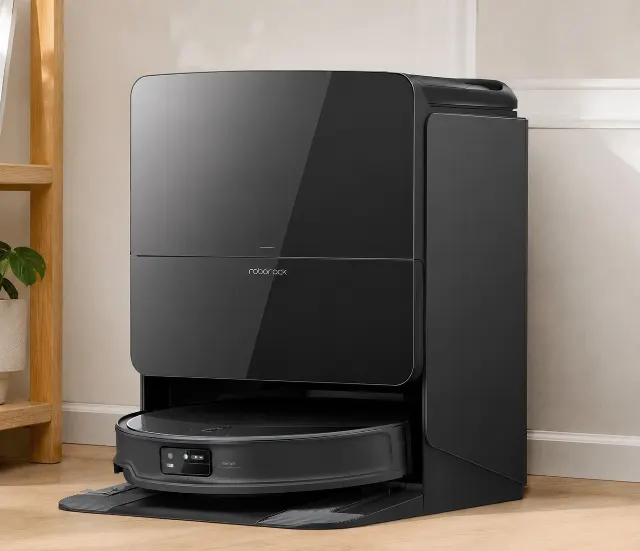
Roborock Saros 10R
The Saros 10R trades flawless navigation for an ultra-slim 3.14-inch profile, solving under-furniture cleaning while demanding occasional app troubleshooting.
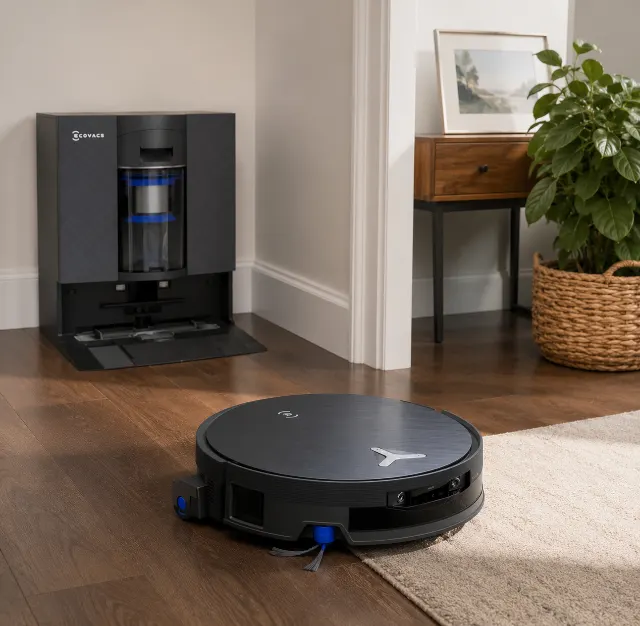
Ecovacs Deebot X12 OmniCyclone
The Ecovacs Deebot X12 OmniCyclone offers unmatched 22,000Pa suction and a truly bagless dock, but its advanced features demand a stable Wi-Fi connection and a buyer willing to troubleshoot app quirks.
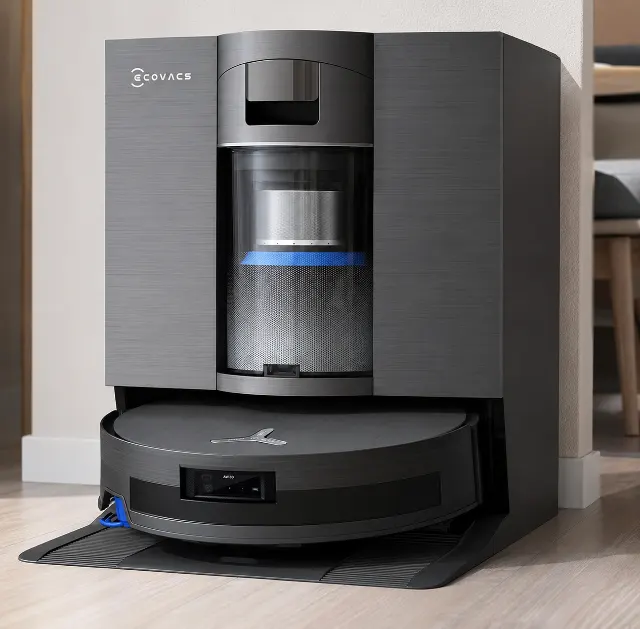
Ecovacs Deebot X11 omnicyclone
The Ecovacs Deebot X11 omnicyclone's 19,500Pa suction and bagless station offer elite automation, but recurring app glitches and navigation quirks demand patience.
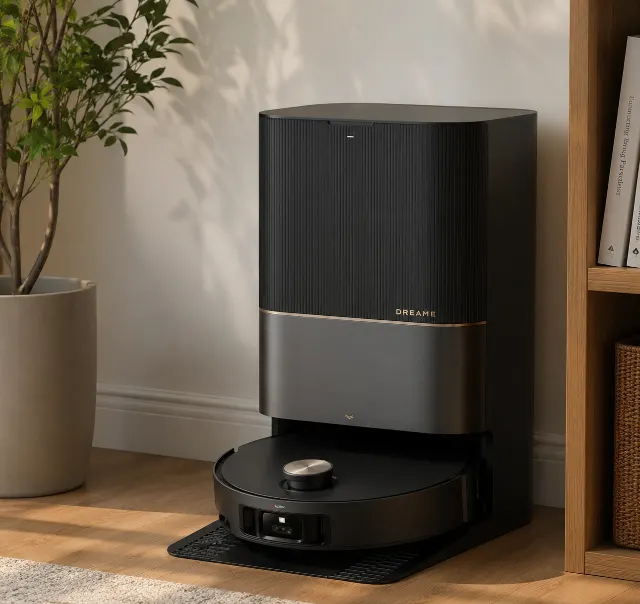
Dreame X50 Ultra
Dreame X50 Ultra review: unmatched corner mopping and 20,000 Pa suction, undercut by a moody app and dropped Wi-Fi on single-SSID homes.
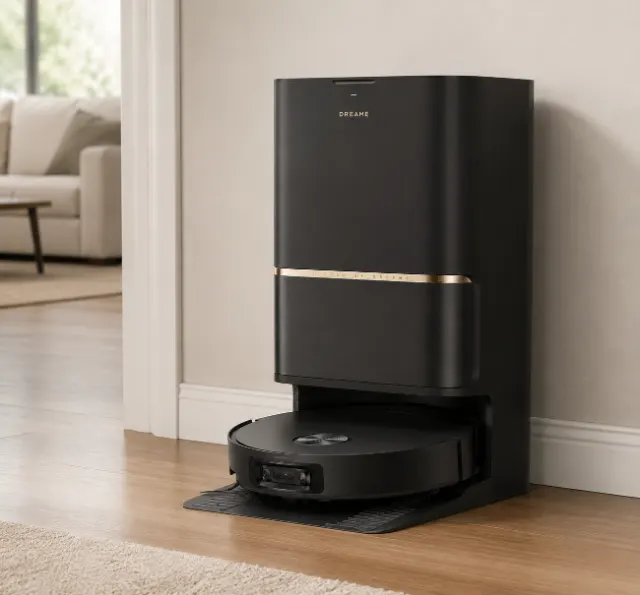
Dreame L60 Ultra
The Dreame L60 Ultra is a powerful, intelligent robot mop for mixed-floor homes, but its premium price and sheer size demand careful consideration of its specific model variants before you buy.
From our guides
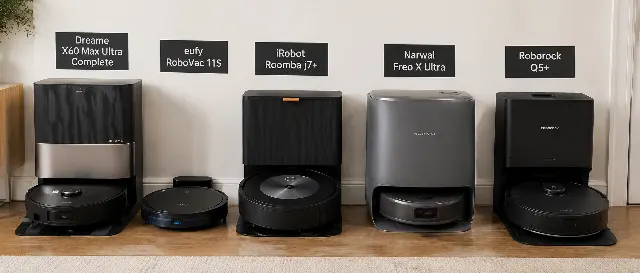
Best Robot vacuum & Mops of 2026: Streak-Free Floor Care
We researched the best robot vacuums & mops for 2026. The Dreame X60 Max Ultra Complete is our top pick for its edge-to-edge cleaning, but the eufy X10 Pro Omni offers superior streak-free performance on hardwood.
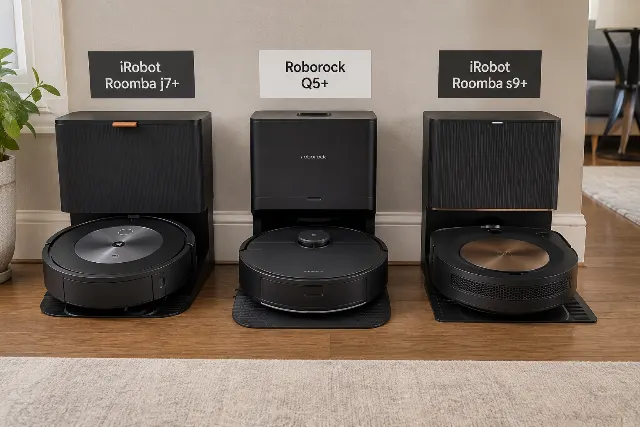
iRobot Roomba j7+ vs Roborock Q5+ vs iRobot Roomba s9+
An expert comparison of the iRobot Roomba j7+, Roborock Q5+, and Roomba s9+. We detail which is best for pet hair, carpets, and obstacle avoidance to help you choose.
The Best Robot Vacuums for 2026: Researched & Compared
Tired of marketing hype? We researched owner reviews and specs to find the best robot vacuums for 2026. Our top picks for pet hair, value, and budget.