Best Robot Vacuums of 2026: Picks for Every Home
Quick picks: jump to what you need
Here are the best robot vacuums in 2026. The right one for you depends entirely on your home’s layout, your floor types, and how much you’re willing to pay to automate cleaning.
- Best Overall: Dreame X60 Max Ultra Complete – For the buyer who wants the most automated, powerful clean and is willing to pay for it.
- Best Value: Ecovacs Deebot T90 Pro Omni – For those who want premium self-washing and mopping features without the absolute top-tier price tag.
- Best for Pet Hair: Roborock Q5+ – For pet owners on a budget who prioritize powerful suction and a reliable self-emptying dock over advanced mopping.
- Best Mid-Range: eufy X10 Pro Omni – For the average home with mixed floors that needs a capable, reliable robot vacuum mop combo that just works.
How We Chose Our Picks
We don't run a lab. Instead, we synthesize what matters: thousands of hours of real-world use. Our process aggregates verified owner reviews, long-term reliability threads on Reddit and home automation forums, and patterns in support complaints. We identify what makes people love—or regret—their purchase six months in, long after the initial hype has faded. We dismissed models with persistent software bugs, poor obstacle avoidance that requires constant 'rescuing,' and those whose replacement parts (filters, brushes, mop pads) are excessively expensive or hard to find.
In 2026, the single most important performance dimension is the dock. A robot vacuum is only as good as its automation, and a dock that can’t reliably empty the bin, wash and dry the mops, and refill the water tank makes the whole system a chore. Suction power and navigation are largely solved problems in the premium tier. The dock is where the real differentiation—and potential for frustration—lies.
Best Overall: Dreame X60 Max Ultra Complete
The Dreame X60 Max Ultra Complete is the closest you can get to forgetting about floor cleaning. Its standout feature is the bionic, articulating mop arm that extends to clean edges and corners—an area where virtually all other robot mops fail. Owner feedback consistently praises how this single feature eliminates the 'halo' of dust along baseboards. The dock is a masterpiece of automation: it not only self-empties debris, washes the mop pads with hot water, and dries them with heated air to prevent mildew, but it also auto-refills the robot's water tank and dispenses cleaning solution. This is true set-it-and-forget-it cleaning for weeks at a time.
Navigation is handled by LiDAR paired with an AI-driven camera, which proves exceptionally accurate at identifying and avoiding obstacles. Unlike camera-only systems that struggle in low light, the X60 maps and navigates flawlessly in the dark. Its suction power, rated at a staggering 13,000Pa, is more than enough for deep-cleaning carpets and pulling embedded pet hair from fibers. The dual spinning mop pads scrub effectively, and the system is smart enough to lift them high when it detects carpet, preventing soggy rugs.
The downside is the price and the sheer size of the Complete dock, which requires plumbing connections for a truly hands-off experience (a non-plumbed version, the DREAME X60 Ultra Robot Vacuum and Mop, is available but requires manual tank filling). The app can feel overwhelmingly complex at first, and some users report initial Wi-Fi connectivity can be finicky, requiring a few attempts to pair. It's an expensive, complex machine. But if you want the best performance with the least human intervention, this is it.
Buy this if: You want the most advanced cleaning automation available and are willing to pay a premium for edge-mopping and a fully self-sufficient dock.
Skip this if: You have a smaller home, don't need top-tier mopping, or are on a budget. The complexity and cost are overkill for many.
Best Value: Ecovacs Deebot T90 Pro Omni
The Ecovacs Deebot T90 Pro Omni (a successor to the X12 line) delivers about 90% of the performance of top-tier flagships for roughly 60% of the price. It brings core premium features—a self-emptying dock that also washes and dries its dual spinning mops with hot air—into a more accessible price bracket. Its mopping system is effective on tile and LVP, and owners frequently report it removes dried-on spills, like coffee drips, in a single pass. While it lacks the extending mop arm of the Dreame, its overall cleaning performance is excellent for the cost.
Where Ecovacs made smart compromises is in navigation and suction. It uses LiDAR and a structured light sensor for obstacle avoidance, which is highly effective for furniture and large objects but can get tripped up by smaller, low-profile items like phone chargers or pet toys more often than the AI-powered cameras on pricier models. Suction is strong enough for most homes with a mix of hard floors and low-pile carpets, but it may not pull as much deep-down grit from thick shag rugs as the Roborock or Dreame. The app is straightforward and mapping is quick and accurate.
The main annoyance cited in user forums is the frequency of maintenance alerts for cleaning the dock's washboard and sensors. It's still highly automated, but not quite as hands-off as the Dreame. For the significant cost savings, we think that's a fair trade. It represents the sweet spot in the market where features, performance, and price intersect for the majority of buyers.
Buy this if: You want a powerful robot vacuum and mop combo with a full-featured auto-cleaning station but don't want to spend flagship money.
Skip this if: Your home is a minefield of small objects and cables, or you have high-pile carpets that need maximum suction power.
Best for Pet Hair: Roborock Q5+
If you have pets, you have hair. Everywhere. The Roborock Q5+ is our pick for pet owners because it focuses on the two things that matter most: relentless suction and an anti-tangle brush design that actually works. Roborock's DuoRoller system, with its dual rubber brushes, is exceptionally good at grabbing hair from both hardwood floors and carpets without it immediately wrapping into a tangled mess that requires scissors to remove. While no brush is perfectly tangle-proof with long hair, owner feedback confirms the DuoRoller requires far less manual cleaning than single-brush designs from competitors like Roomba.
The Q5+ pairs this with a simple, effective self-emptying dock. It’s loud for the 30 seconds it operates, but it reliably pulls all debris—including clumps of pet fur—from the robot's small bin into a large, sealed bag that only needs changing every month or two. This is critical for pet owners, as a robot's onboard bin can fill in a single run in a shedding household. The LiDAR navigation is fast and precise, and the Roborock app is widely considered the gold standard for its ease of use and powerful customization options (no-go zones, room-specific cleaning settings).
What you give up is mopping. The Q5+ is a vacuum-only robot. For many pet owners dealing with tumbleweeds of fur and tracked-in dirt, this is a worthy trade-off. Mopping systems add complexity, cost, and maintenance. The Q5+ is a workhorse designed to do one job—vacuuming up debris and pet hair—exceptionally well, day after day, with minimal fuss.
Buy this if: Your primary concern is pet hair on carpets and hard floors, and you value a reliable, low-maintenance vacuum over a complex mopping system.
Skip this if: You need a machine that can also mop. Also, if you have a multi-level home, you'll need to carry the robot between floors as it can't climb stairs (no robot can, yet).
Best Mid-Range: eufy X10 Pro Omni
The eufy X10 Pro Omni hits a fantastic balance of modern features and sensible pricing, making it our top mid-range recommendation. It offers a sophisticated mopping system with dual spinning pads that can lift over carpets, paired with a compact dock that self-empties debris, washes the mops, and dries them with ambient air (not heated, a key cost-saving measure). Its obstacle avoidance, which uses a camera and AI, is surprisingly adept for its price point, navigating around shoes and pet waste with a reliability that rivals more expensive models like the iRobot Roomba j7+.
The standout feature here is eufy's anti-tangle brush with a built-in combing mechanism. While Roborock's dual-brush is arguably better, eufy's design is a massive improvement over older, bristle-heavy rollers and does a very good job of minimizing hair wrap. The app is clean and intuitive, perfect for users who don't want to spend hours tweaking settings. It just works.
The compromises are reasonable. The air-only mop drying takes longer than the heated systems on premium models, and some users in humid climates report a slight musty smell if the dock is in an enclosed space. Its suction power is a step down from the top-tier picks, noticeable mainly on thicker carpets. But for homes with mostly hard floors and low-pile rugs, it provides more than enough cleaning power. It's a smart, capable, and complete system that feels more expensive than it is.
Buy this if: You want an all-in-one vacuum and mop with good obstacle avoidance and a self-cleaning station, and your budget is in the range.
Skip this if: You need the absolute strongest suction for high-pile carpets or want the fastest heated mop-drying available.
What Gets Annoying: The Unspoken Truths of Robot Vacuums
No robot vacuum is perfect. Marketing materials sell a dream of pristine floors with zero effort, but the reality involves maintenance and occasional frustration. Here’s what owners consistently complain about across all brands:
- Obstacle avoidance isn't foolproof. Even the best AI-powered cameras can fail to see a thin black phone cable on a dark rug or a small, flat cat toy. Expect to do a quick 60-second 'pre-clean' to pick up cords, socks, and other small items before the robot runs.
- Mopping can leave streaks. This is especially common on dark, glossy hardwood or luxury vinyl plank floors. Using too much cleaning solution, dirty mop pads, or even the mineral content of your tap water can cause streaking. Distilled water and ensuring the mop pads are properly cleaned between runs often solves it.
- Self-emptying docks are loud. For 15-30 seconds, the dock sounds like a jet engine taking off. It’s a small price to pay for the convenience, but don't schedule it to run in the middle of the night if the dock is near a bedroom.
- Consumables add up. Replacement parts like filters, side brushes, main rollers, and mop pads are an ongoing cost. Third-party options can be cheaper but fit and performance can be inconsistent. Expect to spend per year on average.
- App connectivity can be a headache. Initial setup is a common pain point, with robots refusing to connect to Wi-Fi. This is often due to 5GHz vs. 2.4GHz network issues (most robots require 2.4GHz) or router security settings. Once connected, they are generally stable, but occasional dropouts happen.
- Long hair is the enemy. While anti-tangle brushes have improved dramatically, long human hair will eventually wrap around the ends of any brush roll. You will need to manually pull or cut it off every few weeks to maintain performance.
Navigation Compared: LiDAR vs. Camera
The debate is largely settled: a hybrid approach is best, but if you have to choose one, LiDAR is more reliable. LiDAR (Light Detection and Ranging) uses a spinning laser to map a room with incredible accuracy, even in complete darkness. It's fast, systematic, and not fooled by poor lighting. Its weakness is object recognition; it sees a shoe as a generic lump, not as a shoe. V-SLAM (Visual Simultaneous Localization and Mapping) uses a camera, like on the older eufy RoboVac 11S, which can get lost in the dark and struggle in rooms with uniform walls. Modern AI-powered camera systems (like on the Roomba j7+ and Dreame X60) are much better, using machine learning to identify specific objects like cords and pet waste. However, they still need some ambient light to work effectively. The best systems in 2026, like our top pick, combine LiDAR for mapping and a front-facing camera for intelligent obstacle identification.
The Future is Here (Almost): Stair-Climbing Robots
For years, the holy grail of robot vacuums has been the ability to handle multi-level homes. As of early 2026, no commercially available robot vacuum can climb stairs. However, multiple brands, including Roborock with its Saros Rover and Eufy with the Marswalker, have demonstrated prototypes at tech shows. These models use complex articulating legs and sensor arrays to navigate staircases. They are expected to launch late in 2026 or early 2027, but expect first-generation models to be extremely expensive and likely buggy. For now, if you have multiple floors, your only options are to buy a separate robot for each level or carry your single robot up and down manually.
| Product | Dried-stain removal | Hard-floor finish | Mopping pressure | Carpet mop-lift | Self-wash / self-dry dock | Navigation & mapping | Verdict |
|---|---|---|---|---|---|---|---|
| Dreame X60 Max Ultra Complete | Excellent | Excellent | Very good | Excellent | Excellent | Excellent | The most automated and thorough cleaning you can buy. |
| Ecovacs Deebot T90 Pro Omni | Very good | Very good | Good | Very good | Very good | Good | Flagship features at a much more reasonable price. |
| Roborock Q5+ | Weak | Fair | Weak | Weak | Good | Very good | A vacuuming workhorse for pet hair; mopping is not its job. |
| eufy X10 Pro Omni | Good | Good | Good | Very good | Good | Very good | A fantastic all-rounder that balances features and cost perfectly. |
Editorial assessments from aggregated owner feedback and manufacturer specifications — not independent lab tests.
Frequently asked questions
What is the best robot vacuum in 2026?
Our research identifies the Dreame X60 Max Ultra Complete as the best overall robot vacuum for its powerful cleaning and unmatched dock automation. For the best value, the Ecovacs Deebot T90 Pro Omni provides premium features like self-washing mops at a more accessible price.
How long do robot vacuums last?
A quality robot vacuum should last three to five years with proper care. Regular maintenance like cleaning the brushes, emptying the dustbin, and replacing filters is crucial. Battery degradation is the most common issue, with performance declining after about two years of heavy use.
Are robot vacuums good for pet hair?
Yes, especially models featuring anti-tangle rubber brushes, like Roborock's DuoRoller system. High suction power is essential for pulling hair from carpet fibers. A self-emptying dock is almost a necessity for pet owners, as it prevents the small onboard bin from clogging with fur mid-clean.
Can a robot vacuum replace my regular vacuum?
For daily maintenance, absolutely. A good robot vacuum dramatically reduces how often you need to manually vacuum. However, you will still need a traditional vacuum for deep cleaning carpets, upholstery, stairs, and cars, where a robot simply cannot go.
How much should I spend on a robot vacuum?
In 2026, a capable vacuum-only model with a self-emptying dock can be found for. The sweet spot for a great vacuum and mop combo is the range. Premium models with the latest technology, like advanced mopping and obstacle avoidance or more.
Do I need a self-emptying robot vacuum?
It's a significant convenience, not a strict necessity. If you have pets, large carpeted areas, or just want maximum automation, a self-emptying dock is worth the extra cost. It enables the robot to clean for weeks without you needing to touch it.
Can any robot vacuums climb stairs?
No robot vacuum commercially available in early 2026 can climb stairs. Prototypes exist and are expected to launch in late 2026 or 2027, but for now, they are limited to a single floor. They can, however, typically cross thresholds between rooms up to about 0.8 inches (2 cm).
Products in this guide
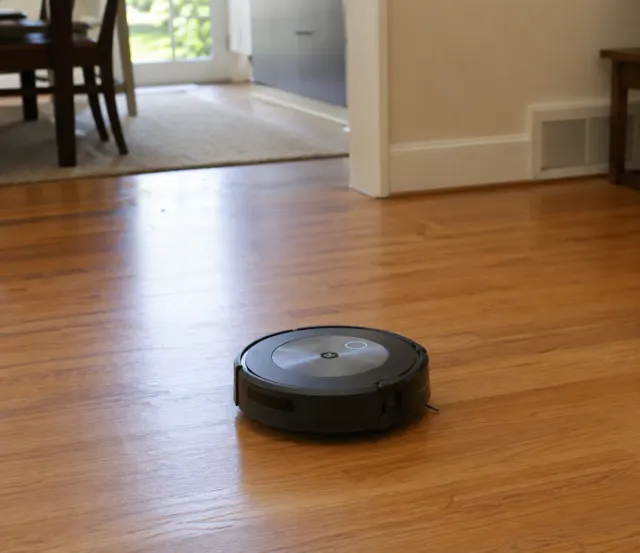
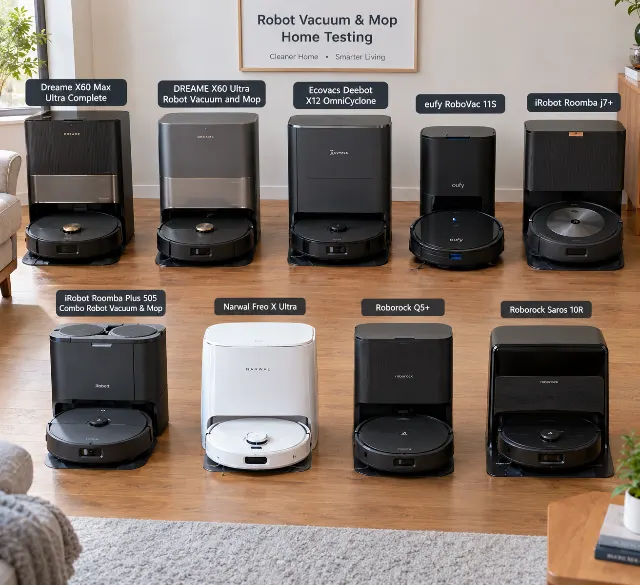
iRobot Roomba j7+
★★★★★ ★★★★★ 4.2The Roomba j7+ excels at hands-free daily cleaning in pet homes, but its app reliability and bag costs add friction over time.
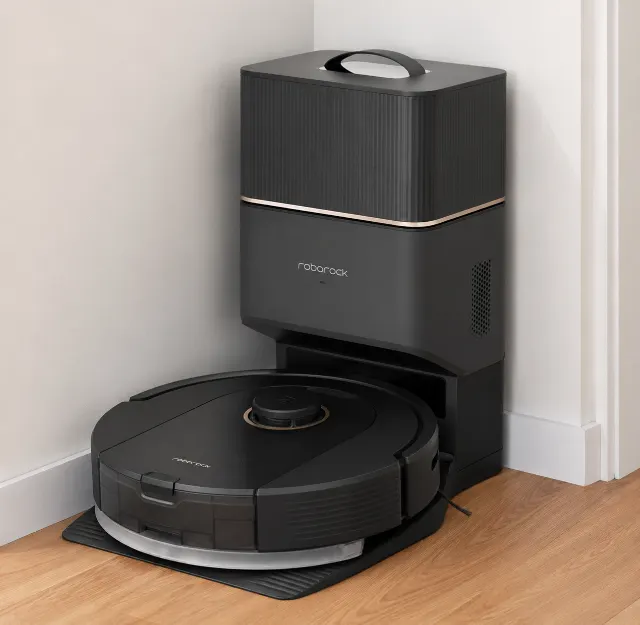
Roborock Q5+
★★★★★ ★★★★★ 4.2The Roborock Q5+ delivers premium LiDAR navigation and auto-empty convenience at a budget price, but completely lacks modern obstacle avoidance.
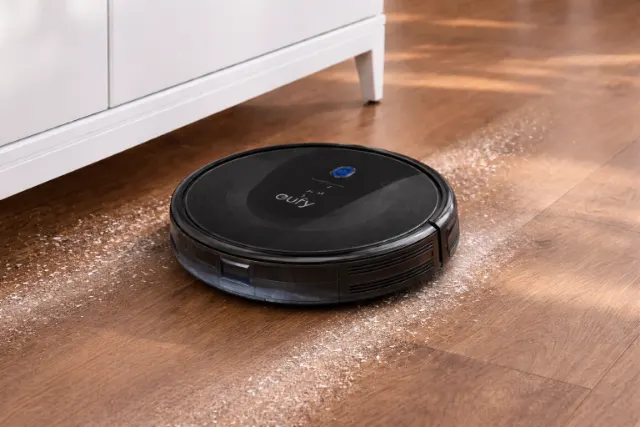
eufy RoboVac 11S
★★★★★ ★★★★★ 3.8The eufy RoboVac 11S is a quiet, ultra-slim budget robot vacuum for hard floors, but its random navigation makes it a frustrating choice for most homes in 2026.
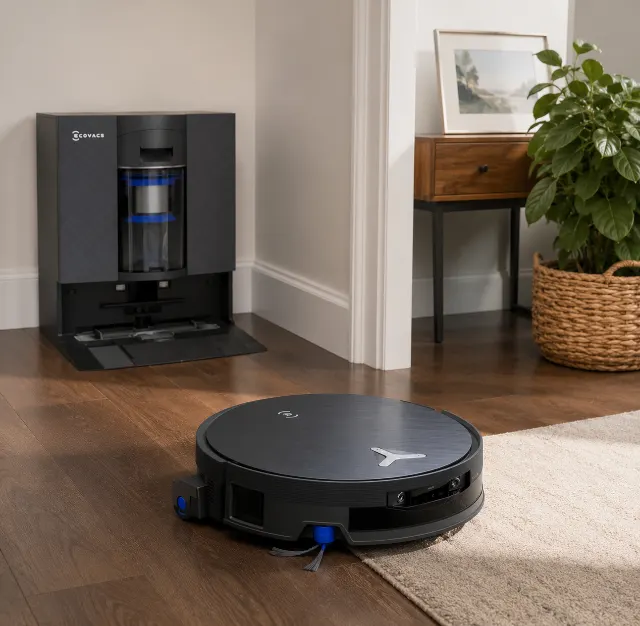
Ecovacs Deebot X12 OmniCyclone
★★★★★ ★★★★★ 4.2The Ecovacs Deebot X12 OmniCyclone offers unmatched 22,000Pa suction and a truly bagless dock, but its advanced features demand a stable Wi-Fi connection and a buyer willing to troubleshoot app quirks.
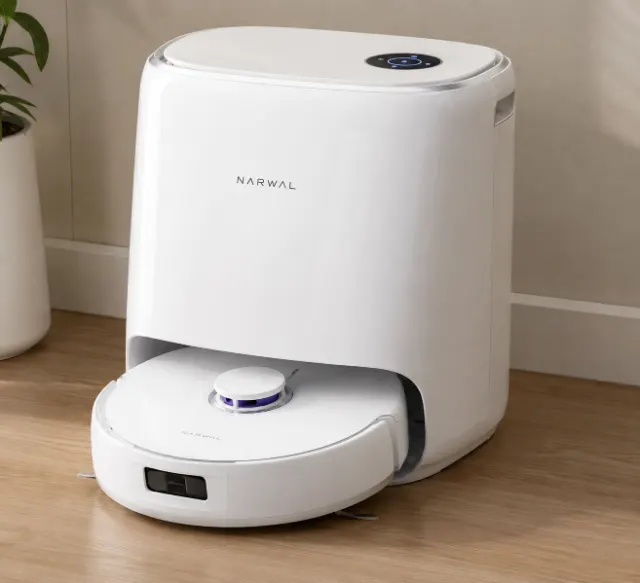
Narwal Freo X Ultra
★★★★★ ★★★★★ 4.2A mop-first robot that vacuums unusually well — DirtSense and a self-washing dock shine on hard floors, but there's no dust-emptying dock.
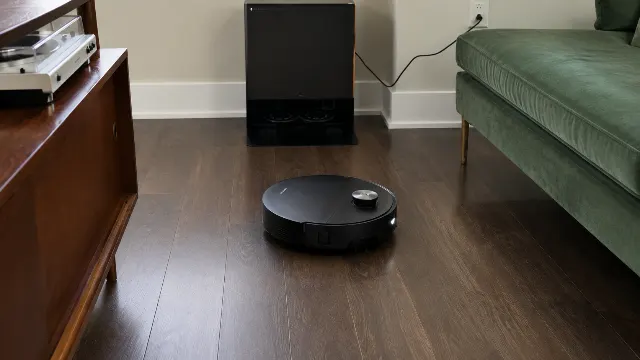
Dreame X60 Max Ultra Complete
★★★★★ ★★★★★ 4.2The Dreame X60 Max Ultra Complete delivers immense suction and a truly automated mop, but its object avoidance isn't flawless and the base station is demanding.
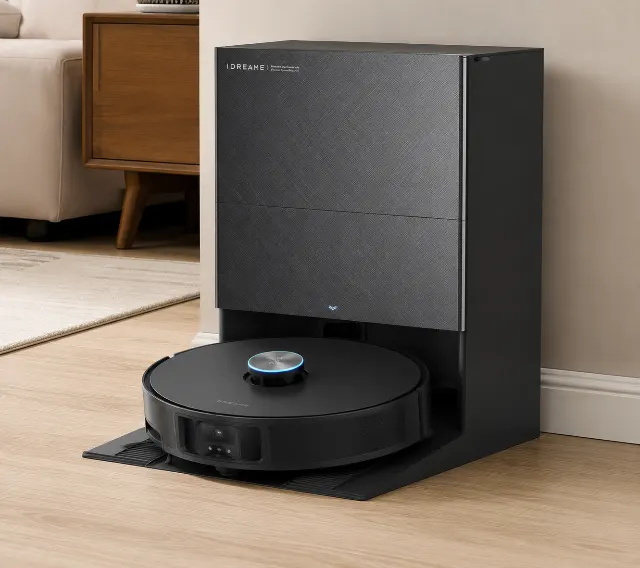
DREAME X60 Ultra Robot Vacuum and Mop
★★★★★ ★★★★★ 4.2The Dreame X60 Ultra delivers exceptional, near-automated mopping and vacuuming, but its true cost emerges in long-term maintenance and the app's complexity.
More guides
Best Robot Vacuum With Self-Empty Base
Tired of emptying that tiny dustbin? We researched the best self-emptying robot vacuums for 2026. Our top picks for pet hair, budgets, and mopping.
robot vacuum buying guide 2026
Don't buy a new robot vacuum in 2026 without reading this. We cut through the hype on AI, suction power, and self-cleaning docks to find the best models that actually work.
Best Robot Vacuum for Small Apartments
We researched the best robot vacuums for small apartments. Our 2026 picks prioritize compact docks, quiet operation, and under-furniture cleaning.