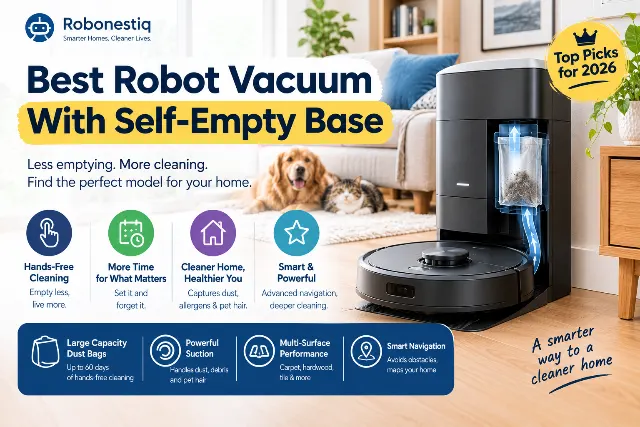
Best Robot Vacuum With Self-Empty Base
The picks we recommend
Is a self-emptying robot vacuum actually worth the huge price jump? That's the only question that matters. The answer depends entirely on whether your biggest frustration is the daily chore of emptying a tiny dustbin or the occasional headache of troubleshooting a complex machine. For a growing number of people, automating away that one dirty job is worth the cost and complexity. A good auto-empty robot vacuum isn't just a convenience; it's a fundamental change in how you maintain your floors. Forget daily emptying. Think monthly.
We've synthesized months of owner feedback, forum discussions, and long-term reliability reports to find the models that actually deliver on that promise. These are the self-emptying robot vacuums that navigate intelligently, clean effectively, and, most importantly, empty their own bins without constant supervision.
Best for most people: iRobot Roomba j7+
The iRobot Roomba j7+ remains our top recommendation for one simple, unglamorous reason: it is the most reliable obstacle-avoidance vacuum you can buy. While competitors chase higher suction numbers and add complex mopping systems, iRobot has relentlessly focused on the single biggest point of failure for any robot vacuum—getting stuck. Its front-facing camera and AI, which iRobot calls PrecisionVision Navigation, are uncannily good at identifying and avoiding charging cables, stray socks, and, crucially, pet waste. Owners consistently report that the j7+ completes cleaning runs without intervention far more often than rivals. This is the core of its value.
The cleaning performance is solid, not class-leading. Its dual rubber rollers are excellent at resisting hair tangles, a massive win for pet owners, and it agitates carpets well. The Clean Base is compact for this category and reliably evacuates the bin, though it is jarringly loud for about 20 seconds. The app is mature and straightforward, a welcome relief from the often-buggy software accompanying newer brands. It’s not a perfect machine; its methodical, back-and-forth navigation can seem less efficient than the grid-like patterns of LiDAR-based competitors, and its suction power on paper (iRobot doesn't publish Pa specs) is lower than the spec-sheet champions from Roborock or Dreame.
But specs aren't reality. A robot with 10,000 Pa of suction is useless if it’s stuck on a shoelace in the hallway. The j7+ finishes the job. That’s why it’s our top pick.
Buy this if: You have a busy, unpredictable home with pets or kids, and your highest priority is a robot that won't eat your phone charger or require a rescue mission mid-clean. You want reliability over raw power.
Skip this if: You want integrated mopping or have a simple, uncluttered home where a less sophisticated (but more powerful) LiDAR robot could thrive without getting stuck. The lack of mopping is a dealbreaker for many at this price point.
The smart-money pick: Roborock Q5+
The Roborock Q5+ is the sweet spot in the market. It delivers the two most important features of a modern robot vacuum—high-performance LiDAR mapping and a reliable self-empty dock—for hundreds less than premium models. This isn't a stripped-down budget unit; it's a thoughtfully de-featured version of Roborock's flagship vacuums. You get the same fast, accurate mapping and the same powerful, logical cleaning patterns that make the brand a favorite. The 2700 Pa of suction is more than enough for excellent debris pickup on hard floors and solid performance on low-pile carpets.
So what's missing? Mostly, the fancy extras. There's no AI obstacle avoidance for small objects like cables or pet toys, so you'll need to tidy up before a run. It also lacks the advanced mopping systems of its pricier siblings, offering only a basic drag-mop attachment that's best for light dustings, not scrubbing spills. But these are precisely the features many buyers don't need or want to pay for. The core experience—vacuuming—is top-tier. The Auto-Empty Dock Pure is effective, holding up to seven weeks of debris in its 2.5L bag.
The Q5+ represents the point of diminishing returns. For many homes, especially those without pets or complex mopping needs, spending more doesn't get you a meaningfully cleaner floor. It just gets you more features you might not use. That makes the Q5+ the smartest buy in the category.
Buy this if: You want excellent vacuuming performance and the convenience of a self-empty base without paying for advanced mopping or AI object detection you don't need.
Skip this if: Your home is cluttered with small objects that would trap a robot without advanced obstacle avoidance, or if you have pets prone to accidents. For that, you need the Roomba j7+.
Best for Pet Hair: Narwal Freo X Ultra
For homes buried in pet fur, the Narwal Freo X Ultra is the answer. Its standout feature is a redesigned, zero-tangle brush system that actually works. The conical, bristle-less brush is engineered to direct hair to the ends and into the suction inlet, dramatically reducing the tedious task of cutting away wrapped hair. Owner forums are filled with testimonials from Golden Retriever and Husky owners who confirm this isn't just marketing hype. Combined with a formidable 8,200 Pa of suction, it pulls embedded fur from carpets that other robots leave behind.
But the Freo X Ultra is more than just a pet hair specialist. Its base station is a true all-in-one, not only emptying dust but also washing and drying its triangular Reuleaux mop pads with hot air to prevent mildew. The mops apply downward pressure and scrub effectively, lifting even dried-on grime. The robot can even dispense cleaning solution automatically. A unique feature is its internal dust compression, which allows it to hold up to seven weeks of debris *before* needing to empty into the base's disposable bag, extending bag life even further.
The main drawback is the sheer size and complexity of the base station, which requires a dedicated spot with some clearance. It's also a premium-priced machine. But for pet owners who need both elite vacuuming for fur and serious mopping for muddy paws, the Freo X Ultra justifies its cost by solving both problems exceptionally well.
Buy this if: You have one or more shedding pets and are tired of constantly cleaning tangled brushes. You also want a top-tier mopping function in the same machine.
Skip this if: You don't have pets or significant mopping needs. The complexity and price are overkill for a simple vacuuming job; the Roborock Q5+ is a much better value.
Best Robot Vacuum and Mop Combo: Dreame X60 Max Ultra Complete
If you want a single machine to replace both your vacuum and your mop, the Dreame X60 Max Ultra Complete is the most capable option we've researched. It pushes the boundaries of automation. The key innovation is its MopExtend RoboSwing technology. The robot can extend one of its dual spinning mop pads outwards to clean right up to the edge of baseboards and into corners—an area where every other round or D-shaped robot mop leaves a dirty border. This single feature makes a visible difference in the overall cleanliness of a room.
The base station is a marvel of engineering. It auto-empties the dustbin, washes the mop pads with 158°F (70°C) hot water, dries them with hot air, refills the robot's onboard water tank, and even dispenses cleaning solution. The robot itself is a powerhouse, with 12,000 Pa suction and AI-powered obstacle avoidance that's second only to Roomba's. It lifts its mops high on carpet (12mm) to avoid dampening rugs, a common failure point for lesser combo units.
This level of automation comes with trade-offs. The base station is enormous and requires plumbing for the ultimate hands-off experience (though manual tank refills are possible). It's also one of the most expensive consumer robots on the market. The app, while feature-rich, can be intimidating for new users. This is not a simple appliance. It's a complex cleaning system for homeowners who want the absolute best and are willing to pay for it.
Buy this if: You want the most advanced, hands-free floor cleaning available and are frustrated by other robot mops that can't clean edges and corners.
Skip this if: You have mostly carpet, don't need heavy-duty mopping, or are intimidated by complex technology and a high price tag. The iRobot Roomba j7+ is a simpler, more reliable vacuum-only choice.
What we would not buy
Not every self-emptying robot is a smart purchase. We'd advise caution with the eufy RoboVac 11S. While it's a perfectly fine budget robot vacuum for basic, random-navigation cleaning, it lacks a self-empty base and smart mapping. In 2026, buying a robot without LiDAR or camera-based navigation is a mistake unless your budget is extremely tight; you'll spend more time rescuing it than it saves you. We'd also skip most first-generation models from new brands. They often launch with buggy apps, unreliable connectivity, and poor long-term support. Stick with established players like Roborock, iRobot, Dreame, and Narwal, who have years of experience refining both hardware and software.
Finally, be wary of the Ecovacs Deebot X12 OmniCyclone. While impressive on paper, owner forums and reviews consistently surface complaints about its navigation logic getting confused in complex layouts and a less-than-intuitive app experience. For its premium price, we expect a more polished and reliable performance.
How we picked
We don't run a lab. Instead, we act like obsessive editors, synthesizing hundreds of hours of real-world data to determine which products are worth your money. Our process combines deep dives into owner forums like Reddit's r/robotvacuums, analysis of long-term verified buyer feedback on retail sites, and a close reading of manufacturer specifications and support documents. We're looking for patterns: what features do owners actually use and love? What are the recurring points of failure that cause frustration? And which models quietly get the job done without fanfare?
For this guide, the single most important performance dimension was dock reliability. A fancy robot is useless if its self-empty base clogs constantly, fails to pull all the debris from the bin, or requires manual intervention. We prioritized models with a proven track record of successfully and completely emptying the robot's bin, especially in homes with pet hair. After that, we weighted intelligent navigation (LiDAR or advanced camera/AI) heavily, as this directly impacts cleaning efficiency and the ability to complete a job without getting stuck. Suction power (Pa) is a factor, but we consider it less important than smart navigation and a tangle-resistant brush design. A robot that never gets lost is better than a powerful one that can't find its way home.
Are Self-Emptying Robot Vacuums Worth It in 2026?
Yes, but not for everyone. The value proposition is simple: you trade a daily 30-second task (emptying a tiny bin) for a monthly 2-minute task (swapping a bag in the base). For allergy sufferers, this is a massive win, as it contains dust and dander far more effectively. For busy households and pet owners, it removes a constant, annoying chore from the to-do list. The convenience is real.
However, the trade-offs are equally real. The base stations are large and often unsightly, requiring a dedicated spot near an outlet. The emptying cycle is loud—as loud as a full-size traditional vacuum for 15-30 seconds. And there's an ongoing cost for proprietary dust bags, which can add up. Finally, these are more complex machines with more potential points of failure. If you hate troubleshooting apps or dealing with potential clogs, the simplicity of a standard robot vacuum might be a better fit. But if your goal is maximum automation, a self-emptying model is the only way to go.
Key Features to Look For When Buying
Navigation and Mapping: LiDAR vs. VSLAM
This is the most critical feature. LiDAR (Light Detection and Ranging) uses a spinning laser to create a highly accurate map of your home. It allows the robot to clean in efficient, straight lines and navigate perfectly even in total darkness. This is the gold standard. VSLAM (Visual Simultaneous Localization and Mapping) uses a camera to navigate. Basic VSLAM is less accurate and struggles in low light. Advanced AI-powered camera navigation, like on the Roomba j7+, is different; it excels at identifying and avoiding small, everyday obstacles that can trap LiDAR-only bots. For most people, LiDAR offers the best balance of speed and efficiency. For cluttered homes with pets and kids, the AI-camera approach of the j7+ is superior.
Suction Power (Pascals)
Measured in Pascals (Pa), this spec indicates raw suction strength. A higher number is generally better, especially for pulling embedded dirt from carpets. Most good models today offer between 2,500 Pa and 8,000 Pa. While important, don't fixate on this number alone. Brush design, especially with anti-tangle rubber rollers, and smart navigation contribute more to overall cleaning effectiveness than raw suction.
The Base Station: Bags vs. Bagless
Most self-emptying bases use disposable bags. This is the most hygienic option, sealing dust and allergens away completely. A bag typically lasts 30-70 days. The downside is the ongoing cost. A few models offer bagless self-emptying, depositing debris into a larger plastic bin you empty manually. This saves money but re-introduces the dust cloud you were trying to avoid. For allergy sufferers, bags are non-negotiable.
Mopping Capability
Basic combo units simply drag a wet microfiber cloth. They're fine for wiping up light dust but won't scrub stains. Advanced models like the Dreame X60 or Narwal Freo X Ultra use spinning, pressurized mop pads, hot water, and self-cleaning/drying docks. These are legitimate mop replacements. A key feature for homes with mixed flooring is automatic mop-lifting, where the robot raises its pads when it detects carpet to avoid soaking your rugs.
How Do Self-Emptying Bases Actually Work?
It's a simple but powerful concept. After a cleaning run, the robot vacuum returns to its charging dock. It aligns itself with a port on the base. Then, a powerful secondary vacuum motor inside the base station turns on, creating a high-velocity suction current that pulls all the hair, dust, and debris out of the robot's small onboard dustbin, through the port, and into a much larger sealed dust bag (or bin) inside the base. The entire process is automated and typically takes just 15 to 30 seconds. This allows the robot to clean for weeks or even months before you need to interact with it, depending on the size of the bag and how dirty your floors are.
Noise Levels: Are They Too Loud?
There are two distinct noises to consider. While the robot is cleaning, it's relatively quiet, typically operating between 55 and 65 decibels. That's about the level of a normal conversation or a modern dishwasher—noticeable, but not disruptive. You can easily watch TV or work in the same room.
The self-emptying process, however, is a different story. For that 15-30 second cycle, the base station's powerful motor kicks in, and the noise level jumps to 80 decibels or more. This is comparable to a traditional upright vacuum cleaner or a garbage disposal. It’s loud enough to startle you if you're not expecting it. The good news is that it's very brief, and most apps allow you to schedule cleaning times (and thus, emptying times) for when you're out of the house, completely avoiding the noise.
Ongoing Costs: Bags, Filters, and Maintenance
Don't forget the consumables. The most significant ongoing cost is the proprietary dust bags for the base station. A pack of three to six bags typically costs between and (£15-£25) and will last several months to a year, depending on usage. While some third-party options exist, using them may void your warranty. You'll also need to replace the robot's HEPA filter every two to four months and the side brushes and main brush roll every six to twelve months. All-in, you should budget (£40-£65) per year for maintenance costs on a typical self-emptying robot vacuum. For advanced mopping units, you'll also have the cost of replacement mop pads and optional cleaning solution.
| Product | Dried-stain removal | Hard-floor finish | Mopping pressure | Carpet mop-lift | Self-wash / self-dry dock | Navigation & mapping | Verdict |
|---|---|---|---|---|---|---|---|
| Dreame X60 Max Ultra Complete | Excellent | Excellent | Excellent | Excellent | Excellent | Excellent | The best all-in-one for those who want truly automated mopping and vacuuming. |
| Ecovacs Deebot X12 OmniCyclone | Very good | Good | Very good | Good | Very good | Fair | Powerful hardware let down by inconsistent navigation and software. |
| eufy RoboVac 11S | Weak | Good | Weak | Weak | Weak | Weak | A basic, budget vacuum-only robot. Lacks smart navigation and self-emptying. |
| iRobot Roomba j7+ | Weak | Very good | Weak | Weak | Weak | Very good | The most reliable choice for avoiding obstacles in busy, real-world homes. |
| Narwal Freo X Ultra | Very good | Excellent | Very good | Very good | Excellent | Excellent | Unbeatable for pet hair thanks to its tangle-free brush and strong mopping. |
| Roborock Q5+ | Fair | Excellent | Fair | Weak | Weak | Excellent | The best value, offering premium LiDAR navigation and reliable self-emptying. |
Editorial assessments from aggregated owner feedback and manufacturer specifications — not independent lab tests.
Amazon Prime Membership
Get More From Your Amazon Shopping With Prime
Amazon Prime combines eligible shopping, delivery, entertainment, and other membership benefits. Available features, prices, and eligibility depend on your location and membership plan.
Fast, Eligible Delivery
Get available delivery benefits on qualifying orders, subject to item and location eligibility.
Movies and TV Shows
Explore Prime Video titles and benefits available with your membership.
Exclusive Shopping Offers upto 50% off
Discover eligible member-only deals and shopping events.
Additional Benefits
Depending on your plan, other benefits may include selected music, reading, gaming, and more.
Is Prime worth it? Compare the membership price with the delivery, entertainment, and shopping benefits you expect to use before signing up.
Explore Amazon Prime Membership →
Affiliate disclosure: We may earn a commission if you sign up through this affiliate link and your referral qualifies, at no additional cost to you. Membership fees, free-trial eligibility, benefits, and offers may vary. Check Amazon's current terms before joining.
Frequently asked questions
Are self-emptying robot vacuums worth it?
For most people who prioritize convenience, yes. They eliminate the daily chore of emptying a tiny dustbin, reducing your hands-on time to just a few minutes per month. This is a huge benefit for pet owners, allergy sufferers, and anyone with a busy schedule seeking true automation.
How often do I need to empty the base station?
The dust bag in the base station typically needs to be replaced every 30 to 70 days. This duration depends on your home's size, flooring types, and whether you have pets shedding fur. Your vacuum's app will notify you when the bag is full.
Are auto-empty robot vacuums loud?
The robot itself is quiet during cleaning, similar to a dishwasher. However, the self-emptying process is very loud for about 15-30 seconds, comparable to a traditional upright vacuum. Most users schedule this to happen when they are away from home to avoid the noise.
How long does the dust bag last in a self-emptying robot vacuum?
In an average home without pets, a single dust bag can last 60-90 days. For households with multiple shedding pets or extensive carpeting, you should expect to replace the bag more frequently, likely every 30-45 days. Bag capacity and debris type are the biggest factors.
What is the difference between a self-emptying and a self-cleaning robot vacuum?
A 'self-emptying' vacuum only handles dry debris, automatically transferring dust from the robot to the base. A 'self-cleaning' model is an all-in-one system that also washes and dries its own mop pads, offering a more complete, hands-off solution for both vacuuming and mopping.
Which robot vacuum is best for pet hair?
Models with high suction power (over 5,000 Pa) and, most importantly, tangle-free rubber or silicone brush rollers are best for pet hair. The <a href="/robot-vacuums/narwal-freo-x-ultra/">Narwal Freo X Ultra</a> and <a href="/robot-vacuums/irobot-roomba-j7-plus/">iRobot Roomba j7+</a> are top performers because their brush designs actively resist hair wrap, ensuring consistent pickup without constant maintenance.
Products in this guide
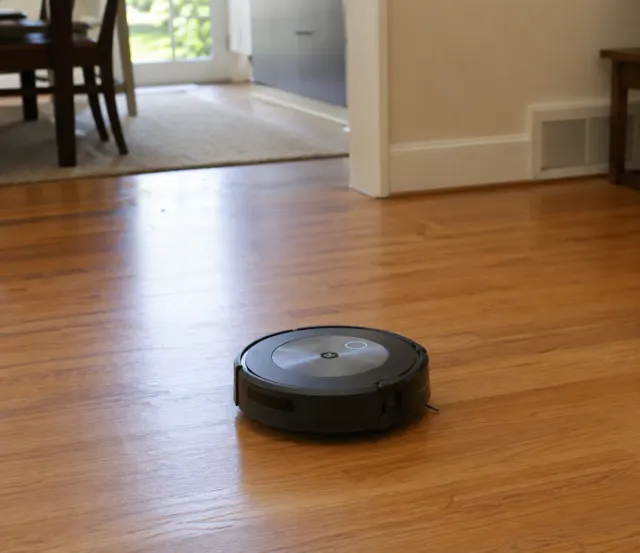
iRobot Roomba j7+
★★★★★ ★★★★★ 4.2The Roomba j7+ excels at hands-free daily cleaning in pet homes, but its app reliability and bag costs add friction over time.
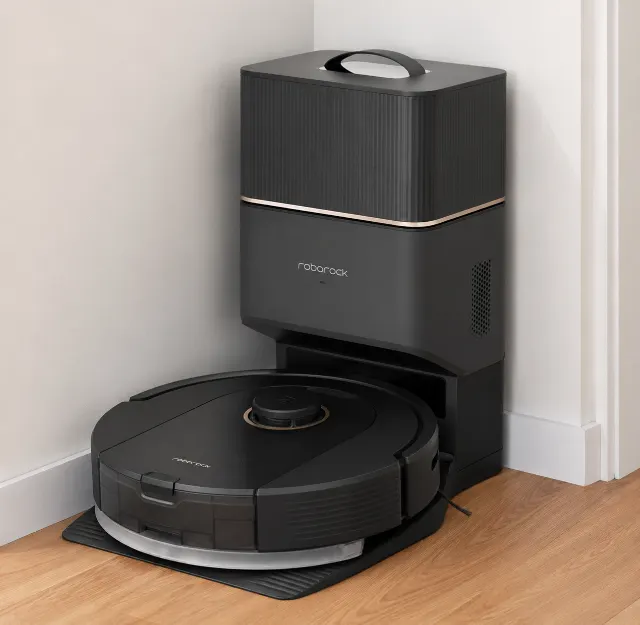
Roborock Q5+
★★★★★ ★★★★★ 4.2The Roborock Q5+ delivers premium LiDAR navigation and auto-empty convenience at a budget price, but completely lacks modern obstacle avoidance.
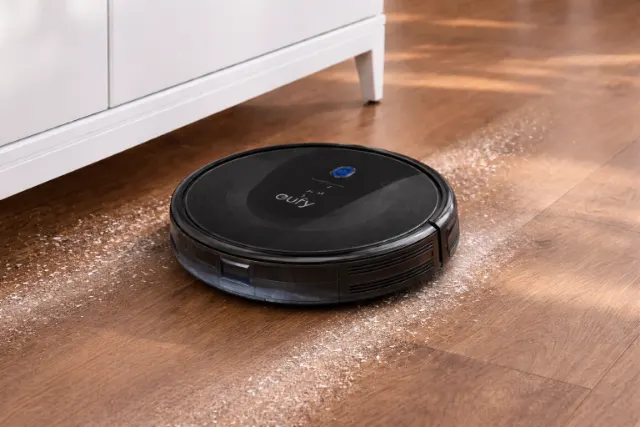
eufy RoboVac 11S
★★★★★ ★★★★★ 3.8The eufy RoboVac 11S is a quiet, ultra-slim budget robot vacuum for hard floors, but its random navigation makes it a frustrating choice for most homes in 2026.
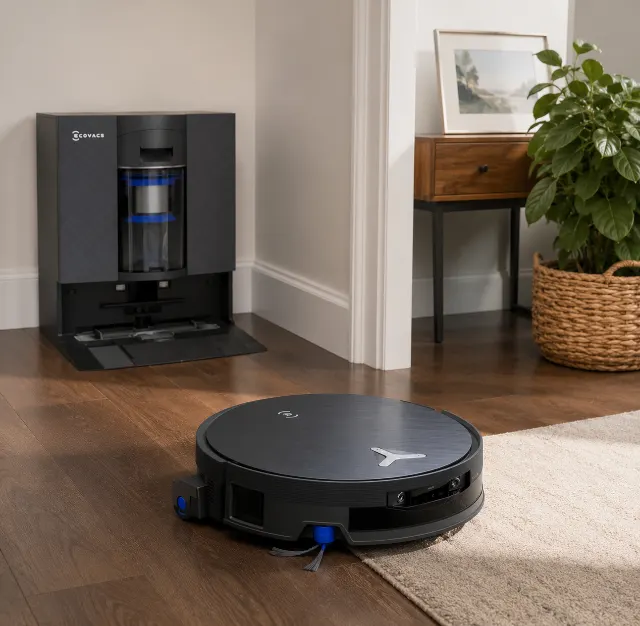
Ecovacs Deebot X12 OmniCyclone
★★★★★ ★★★★★ 4.2The Ecovacs Deebot X12 OmniCyclone offers unmatched 22,000Pa suction and a truly bagless dock, but its advanced features demand a stable Wi-Fi connection and a buyer willing to troubleshoot app quirks.
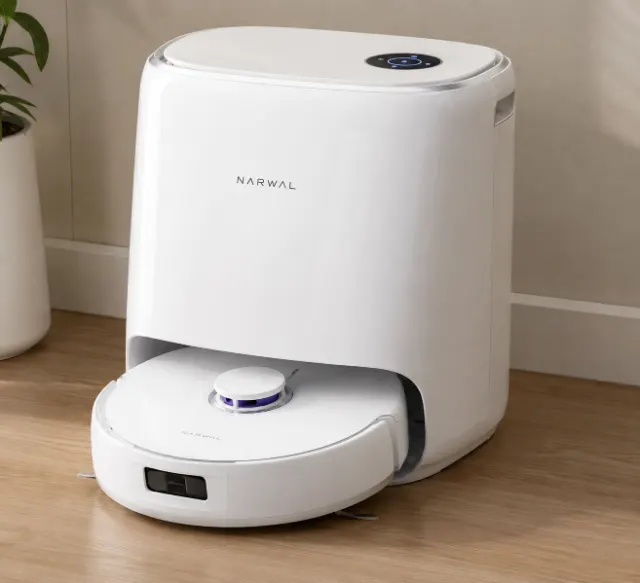
Narwal Freo X Ultra
★★★★★ ★★★★★ 4.2A mop-first robot that vacuums unusually well — DirtSense and a self-washing dock shine on hard floors, but there's no dust-emptying dock.
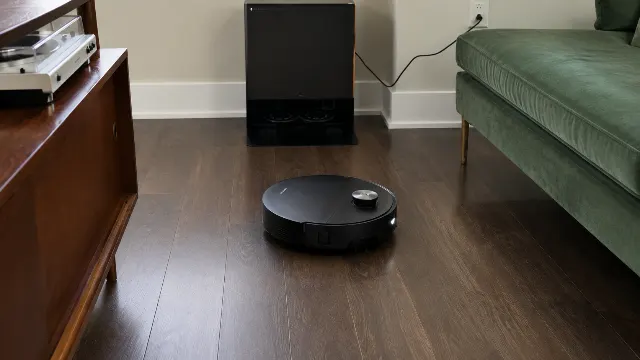
Dreame X60 Max Ultra Complete
★★★★★ ★★★★★ 4.2The Dreame X60 Max Ultra Complete delivers immense suction and a truly automated mop, but its object avoidance isn't flawless and the base station is demanding.
More guides
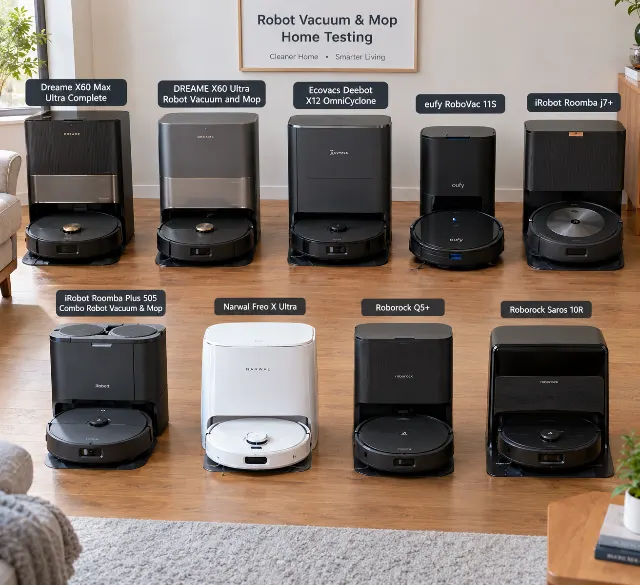
Best Robot Vacuum for Small Apartments
We researched the best robot vacuums for small apartments. Our 2026 picks prioritize compact docks, quiet operation, and under-furniture cleaning.
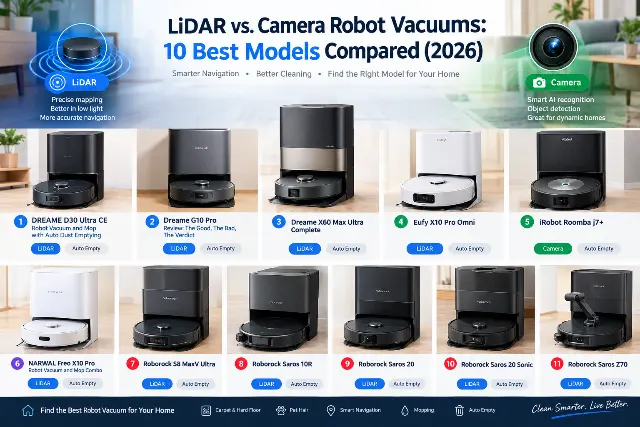
LiDAR vs. Camera Robot Vacuums: 10 Best Models Compared (2026)
Tired of your robot vacuum getting lost? We explain the real-world differences between LiDAR and camera (vSLAM) navigation, naming the best tech for your home, pets, and privacy.
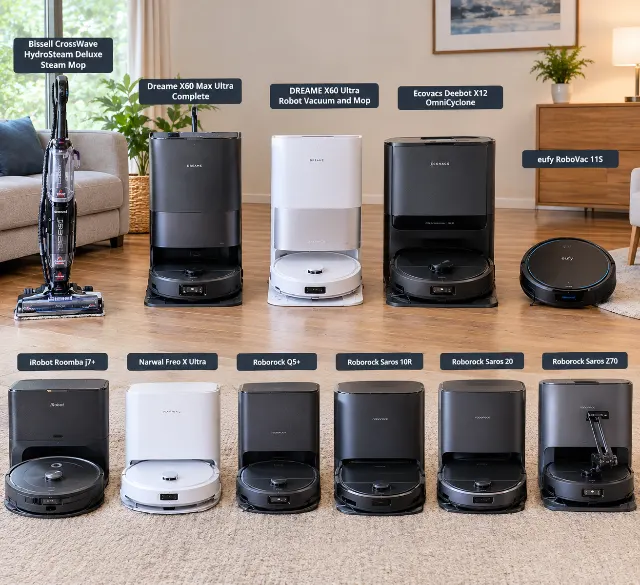
Robot Vacuum Trends 2026: What Changed This Year
Our expert 2026 guide to robot vacuum trends, technology, and top models. We name the best robot vacuums from Roborock, Dreame, and Narwal, and what to skip.