Best Robot Vacuum for Small Apartments
The quick verdict
Is a robot vacuum overkill for a small apartment? That's the real question. The answer depends entirely on your tolerance for daily dust and pet hair versus your tolerance for sacrificing a few square feet of precious floor space to a charging dock. For anyone with pets or allergies in a space under 800 sq ft, a robot vacuum isn't a luxury; it's the most effective way to keep floors clean with minimal effort. It runs for 30 minutes while you're out and you come home to clean floors. That's the sell. Forget multi-floor mapping and enormous water tanks—the best robot vacuum for an apartment is compact, quiet, and smart enough not to get stuck under your sofa.
Quick picks: jump to what you need
- Best Overall: Dreame D30 Ultra CE – For the renter who wants a powerful, do-it-all machine with a manageable dock.
- Quietest for Neighbors: Shark AI Ultra QuietClean QZ850 – For the apartment dweller with thin walls and a need for peace and quiet.
- Best for Pet Hair: iRobot Roomba j7+ – For pet owners who need best-in-class obstacle avoidance and hair pickup.
- Most Compact Dock: Roborock Q5+ – For the studio apartment where every square inch of floor space counts.
How we chose
We didn't test these vacuums in a lab. Instead, we synthesized hundreds of hours of data: owner reviews from retail sites, long-term reliability discussions on Reddit's r/robotvacuums, and recurring complaints in support forums. We looked for patterns. What consistently annoys apartment dwellers? What features do they actually use?
Three criteria rose to the top, and we weighted our picks accordingly:
- Physical Footprint. This is non-negotiable. We prioritized models with the most compact docks possible and a low robot profile (under 3.8 inches) to get under furniture. A massive, all-in-one station that looks like a kitchen trash can is an immediate disqualifier for most small spaces.
- Noise Levels. Not just the robot's operating volume (which is usually around 60-65 dB), but the self-empty cycle. A 30-second blast at 80 dB can ruin a neighborly relationship. We favored models with quieter emptying or scheduling options that let you run the cycle when no one's home.
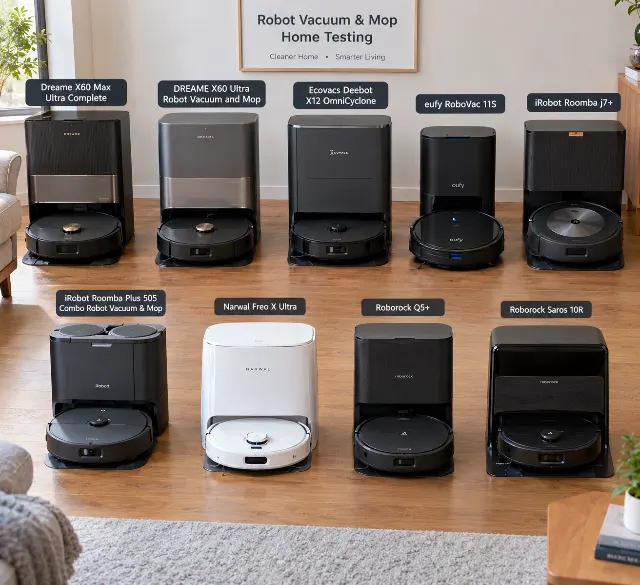
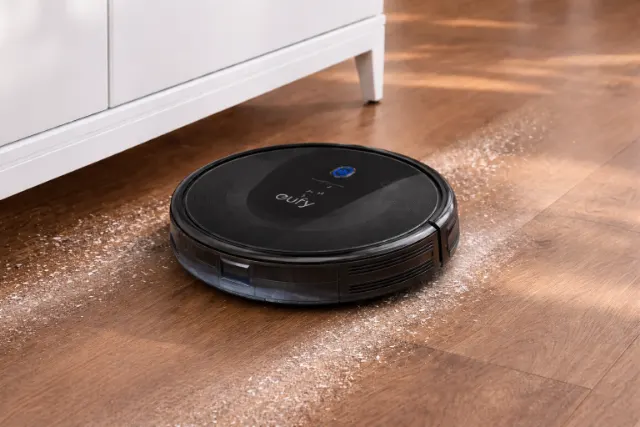
- Navigation Smarts. In a small, potentially cluttered space, LiDAR and smart object avoidance are more important than raw suction power. We dismissed older "bump-and-run" models like the eufy RoboVac 11S which, while slim and affordable, are too inefficient and prone to getting stuck in 2026.
We actively down-weighted battery life—any decent modern robot can clean 800 sq ft on a single charge—and mopping prowess. Most combo units offer a light wipe-down at best; they won't replace a real mop for serious spills.
At a glance: where each wins
| Product | Dried-stain removal | Hard-floor finish | Mopping pressure | Carpet mop-lift | Self-wash / self-dry dock | Navigation & mapping | Verdict |
|---|---|---|---|---|---|---|---|
| Dreame D30 Ultra CE | Very good | Excellent | Very good | Excellent | Very good | Excellent | The best balance of power, features, and size for apartment life. |
| Shark AI Ultra QuietClean QZ850 | Good | Good | Fair | Good | Fair | Very good | Prioritizes quiet operation over deep mopping, a smart trade-off for many. |
| iRobot Roomba j7+ | Weak | Fair | Weak | Weak | Good | Very good | Unbeatable for pet owners who need vacuuming reliability above all else. |
| Roborock Q5+ | Weak | Good | Weak | Weak | Fair | Excellent | Top-tier navigation and a small dock make it perfect for tight spaces. |
Editorial assessments from aggregated owner feedback and manufacturer specifications — not independent lab tests.
Best Overall: Dreame D30 Ultra CE
The Dreame D30 Ultra CE (Compact Edition) gets the nod because it makes the smartest compromises for apartment living. It packages the core cleaning performance of flagship models like the Dreame X60 Max Ultra Complete into a base station that's nearly 20% smaller. You get excellent vacuuming, surprisingly effective mopping with dual rotating pads, and a dock that washes and dries the mops. Critically, the robot itself is just 3.7 inches tall, letting it slide under low-clearance TV stands and couches where dust bunnies thrive.
Its LiDAR navigation is fast and precise, mapping a 700 sq ft apartment in under 10 minutes on its first run. The app is mature, allowing you to set no-go zones and schedule cleaning times—like a 2 PM run when you and your neighbors are likely at work. This is key, because while the vacuum is reasonably quiet, the self-empty and mop-washing cycle is still a noticeable 30-second event. The mopping is also a standout, using pressure and rotation to handle more than just light dust, though it won't scrub set-in coffee stains.
The main drawback is the complexity. This is a sophisticated machine. Owners report that initial setup can be finicky, particularly connecting to mesh Wi-Fi networks. And while the dock is smaller, it's not tiny. You still need to dedicate a permanent spot with about 1.5 feet of clearance on each side, a tough ask in a studio.
Buy this if: You have a mix of hardwood floors and low-pile rugs and want a single machine to maintain both effectively, and you have a dedicated spot for a moderately sized dock.
Skip this if: You have only carpets or value absolute simplicity. The mopping system adds cost and complexity you don't need.
Quietest for Neighbors: Shark AI Ultra QuietClean QZ850
Shark's entire brand is built on solid, no-nonsense performance, and the AI Ultra QuietClean QZ850 is a perfect example. Its main selling point is acoustic performance. In its standard cleaning mode, it operates at a reported 58 dB, noticeably quieter than the Dreame and on par with a quiet conversation. More importantly, the self-empty cycle is engineered to be shorter and lower-pitched than its rivals, a feature owners in apartment buildings consistently praise. It's the difference between a brief hum and a 30-second jet engine impression.
It's not just quiet. The navigation is methodical, using a 360° laser system to map and clean in straight lines, avoiding the random bumping of older models. It handles pet hair well on both hard floors and low-pile carpets, thanks to a self-cleaning brushroll that genuinely reduces hair wrap—a common failure point on cheaper robots. The dock is also one of the slimmer self-emptying stations we've seen, making it easier to tuck away.
The trade-off is mopping. It doesn't have a dedicated mopping system. This is a vacuum first and foremost. It also lacks the advanced AI obstacle avoidance of the Roomba j7+, so it's more likely to get tangled on a stray phone charger or sock. You need to be diligent about pre-cleaning the floor of small objects before a run.
Buy this if: You live in an apartment with thin walls or have a baby (or partner) who naps during the day. Its quiet operation is its killer feature.
Skip this if: You need any level of mopping functionality or have a cluttered floor. It requires a tidy space to work best.
Best for Pet Hair: iRobot Roomba j7+
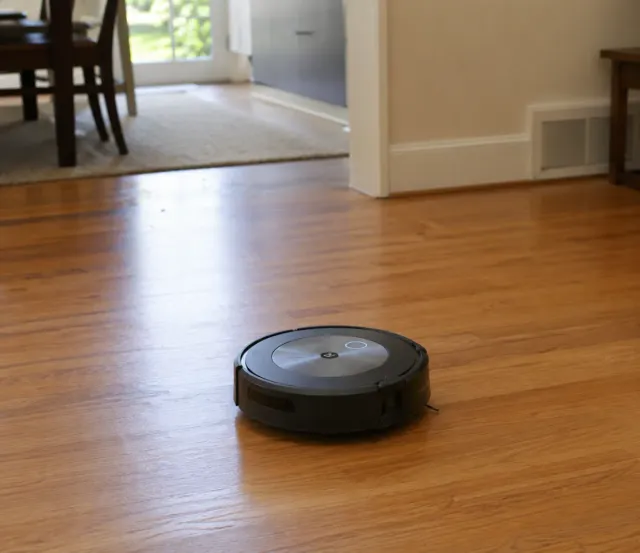
Even in 2026, if your primary concern is pet hair—and the unfortunate accidents that can come with pets—the iRobot Roomba j7+ remains the expert's choice. Its advantage isn't suction power, it's intelligence. The front-facing camera and AI, which iRobot calls PrecisionVision Navigation, is still the industry leader at identifying and avoiding obstacles like pet waste, shoes, and cords. For pet owners, this isn't a gimmick; it's the feature that prevents a disgusting mess from being smeared across your apartment. iRobot is so confident they offer the P.O.O.P. (Pet Owner Official Promise) guarantee: it avoids pet waste, or they'll replace it for free.
Beyond that, its dual rubber brushrolls are famously resistant to hair tangles, pulling hair from carpets more effectively than the single-brush designs on many competitors. The Clean Base is compact and reliable, holding up to 60 days of debris. The robot itself is also low-profile enough (3.4 inches) to get under most furniture. While it lacks LiDAR, its camera-based VSLAM navigation is methodical and improves over time as it learns your layout.
The j7+ is not a mop. The combo version exists, but its mopping is weak and we don't recommend it. This is a vacuum specialist. It's also not the quietest model, and some owners find the app less intuitive than Roborock's or Dreame's. But for sheer set-it-and-forget-it reliability in a home with unpredictable pets, nothing has managed to beat it.
Buy this if: You have a dog or cat that sheds heavily and occasionally leaves.. surprises. Its obstacle avoidance is its defining, must-have feature.
Skip this if: You want any mopping capability or have a pet-free home. You can get better all-around performance for the price from other brands.
Most Compact Dock: Roborock Q5+
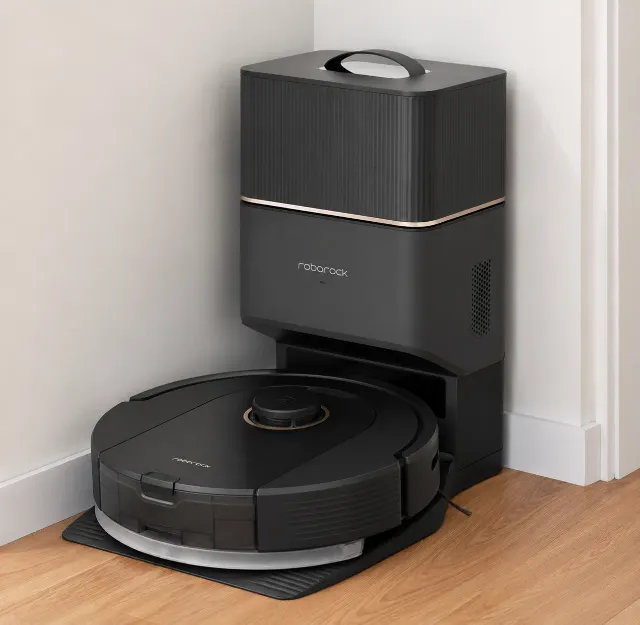
For the studio apartment or any living situation where floor space is the ultimate currency, the Roborock Q5+ is the answer. Its auto-empty dock is a simple, vacuum-only affair, making it significantly shorter and narrower than the all-in-one stations from Dreame or Ecovacs. It does one job—sucking debris from the robot's bin—and does it well. This minimalist design makes it far easier to find a home for it behind a chair or under a console table.
Despite its focus on size, the Q5+ doesn't skimp on core performance. It features Roborock's excellent PreciSense LiDAR navigation, which is fast, accurate, and reliable. The app is widely considered best-in-class: it's intuitive to set up no-go zones, invisible walls, and cleaning schedules. Vacuuming performance is strong, particularly on hard floors, and it handles transitions to low-pile rugs without issue. It's a workhorse.
This is not the robot for you if you have medium-pile carpets, as its suction can't deep-clean as well as the iRobot. And like the j7+, it's a vacuum only. There is no mopping. It also lacks advanced camera-based object avoidance, so it relies on its LiDAR and bumper to navigate around unexpected clutter. You'll need to pick up before you clean.
Buy this if: You live in a small space and your number one priority is minimizing the footprint of the robot and its dock.
Skip this if: You have pets prone to accidents or need a machine that can also mop.
What gets annoying: The reality of apartment robots
No robot vacuum is perfect, and in a small space, the flaws are magnified. Here's what owners consistently complain about:
- Bulky Docks: Even the "compact" self-emptying docks are bulky. They demand a permanent, visible spot in your living area, which is a major aesthetic and spatial sacrifice in a studio or one-bedroom apartment. Finding a place with enough clearance (often 1.5 ft on each side, 5 ft in front) can be impossible.
- Getting Stuck: The number one frustration is rescuing a stuck robot. Low-clearance furniture is the main culprit. That IKEA TV stand or Wayfair couch with exactly 3.5 inches of clearance is a perfect trap for a 3.7-inch tall robot. Measure your furniture before you buy.
- Loud Emptying Cycles: The 30-second roar of a self-empty dock can be genuinely startling and a real problem in apartments with thin walls. Scheduling it for midday is the only real solution.
- Clutter Confusion: Advanced mapping is great, but it can't handle a messy floor. In a small, cramped apartment, a stray pair of shoes or a gym bag can confuse the robot, causing it to skip entire areas. They demand a baseline level of tidiness to work effectively.
- Weak Mopping: Don't believe the hype. The mopping on most combo units is for light maintenance only. It will wipe up dust but won't scrub a dried coffee spill. Many owners report faint streaks on dark hardwood floors, too.
Not worth your money in 2026
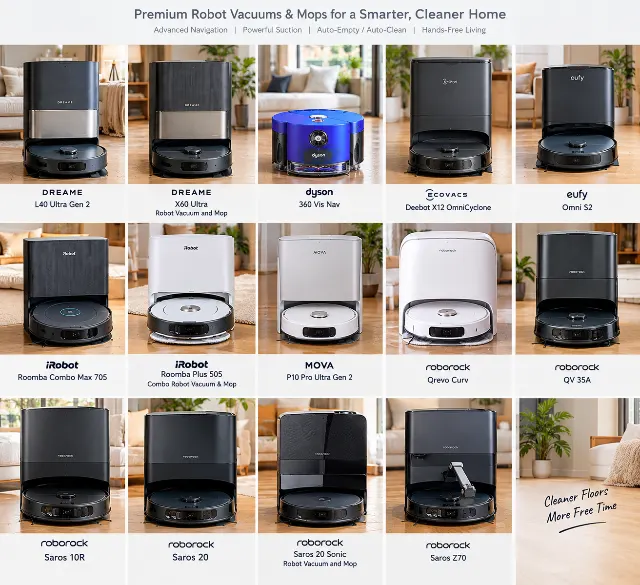
The market is flooded with options, but some should be actively avoided. The iRobot Roomba Plus 505 Combo Robot Vacuum & Mop is a prime example of a model that's been surpassed; its bump-and-navigate system feels ancient compared to the methodical LiDAR on the Roborock Q5+. You're paying for the brand name on a chassis with outdated tech. Similarly, flagship models from a few years ago, like the original Narwal Freo X Ultra, can be tempting when on sale, but their first-generation docks are often enormous and their software less refined than current models. Finally, avoid any ultra-budget robot that doesn't have LiDAR or camera mapping. They get stuck, miss huge spots, and will ultimately frustrate you more than they help.
The upkeep nobody mentions
The promise is automation, but the reality is maintenance. The self-emptying dock doesn't eliminate it, it just consolidates it. Once every month or two, you'll need to pull out the robot and perform a 10-minute service. This means wiping down the sensors with a dry cloth so it can navigate properly. You have to pull the main brush out and cut away wrapped hair and string with a small tool (usually included). You'll also need to check the wheels and clear any debris, and empty and wipe down the dock's dustbin itself. If you have a mopping model, the clean and dirty water tanks need to be rinsed to prevent mildew. It's not hard, but ignoring it for six months is how you end up with a robot that constantly throws error codes and cleans poorly.
Amazon Prime Membership
Get More From Your Amazon Shopping With Prime
Amazon Prime combines eligible shopping, delivery, entertainment, and other membership benefits. Available features, prices, and eligibility depend on your location and membership plan.
Fast, Eligible Delivery
Get available delivery benefits on qualifying orders, subject to item and location eligibility.
Movies and TV Shows
Explore Prime Video titles and benefits available with your membership.
Exclusive Shopping Offers
Discover eligible member-only deals and shopping events.
Additional Benefits
Depending on your plan, other benefits may include selected music, reading, gaming, and more.
Is Prime worth it? Compare the membership price with the delivery, entertainment, and shopping benefits you expect to use before signing up.
Explore Amazon Prime Membership →
Affiliate disclosure: We may earn a commission if you sign up through this affiliate link and your referral qualifies, at no additional cost to you. Membership fees, free-trial eligibility, benefits, and offers may vary. Check Amazon's current terms before joining.
Frequently asked questions
Are robot vacuums worth it in a small apartment?
Yes, they excel in smaller spaces. A robot can clean an entire apartment quickly on one charge, and running it daily for 20-30 minutes is far more effective at controlling dust and pet hair than a single, deep weekly clean with a traditional vacuum.
What features are essential for an apartment robot vacuum?
Look for a slim robot profile (under 3.8 inches) to get under furniture and a compact charging dock to save floor space. Quiet operation is also critical for not disturbing neighbors. Advanced multi-floor mapping is less important than reliable navigation in a small, potentially cluttered layout.
Can a robot vacuum be too loud for apartment living?
The robot itself is usually fine, operating around 60 dB, like a normal conversation. The self-emptying dock is the loud part, hitting 70-80 dB for 15-30 seconds. This can be disruptive, so it's best to schedule the cleaning cycle for midday when you and your neighbors are likely out.
How much space does a robot vacuum dock need?
While the dock itself may be compact, manufacturers recommend significant clearance for navigation: at least 1.5 feet (0.5m) on both sides and 5 feet (1.5m) in front. This ensures the robot can reliably find its base, but it's a major space commitment in a small apartment.
Do I need a self-emptying dock in a small apartment?
It's a significant convenience, not a necessity. The dock's large size is a major drawback. However, if you have pets and run the vacuum daily to control hair, the convenience of not having to empty a tiny bin every single day is often worth the space trade-off.
Can a robot vacuum replace my regular vacuum for pet hair?
For daily maintenance on hard floors and low-pile rugs, absolutely. It's fantastic at preventing pet hair from building up. You will, however, still want a cordless stick vacuum for deep cleaning carpets, upholstery, and tight corners where hair gets embedded.
Does battery life matter in a small apartment?
Not really. Cleaning a 500-800 sq ft apartment might take 30-40 minutes, while most modern robot vacuums have a runtime of 90-120 minutes or more. Any decent model will clean your entire space on a single charge with plenty of battery to spare.
Products in this guide
iRobot Roomba j7+
★★★★★ ★★★★★ 4.2The Roomba j7+ excels at hands-free daily cleaning in pet homes, but its app reliability and bag costs add friction over time.
Roborock Q5+
★★★★★ ★★★★★ 4.2The Roborock Q5+ delivers premium LiDAR navigation and auto-empty convenience at a budget price, but completely lacks modern obstacle avoidance.
eufy RoboVac 11S
★★★★★ ★★★★★ 3.8The eufy RoboVac 11S is a quiet, ultra-slim budget robot vacuum for hard floors, but its random navigation makes it a frustrating choice for most homes in 2026.
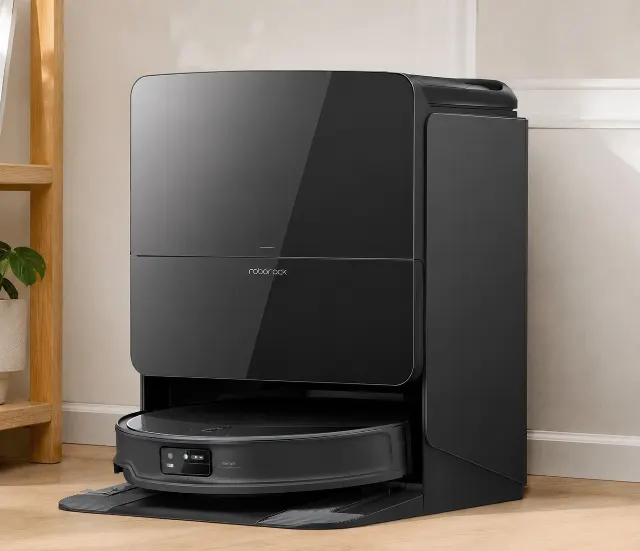
Roborock Saros 10R
★★★★★ ★★★★★ 4.2The Saros 10R trades flawless navigation for an ultra-slim 3.14-inch profile, solving under-furniture cleaning while demanding occasional app troubleshooting.
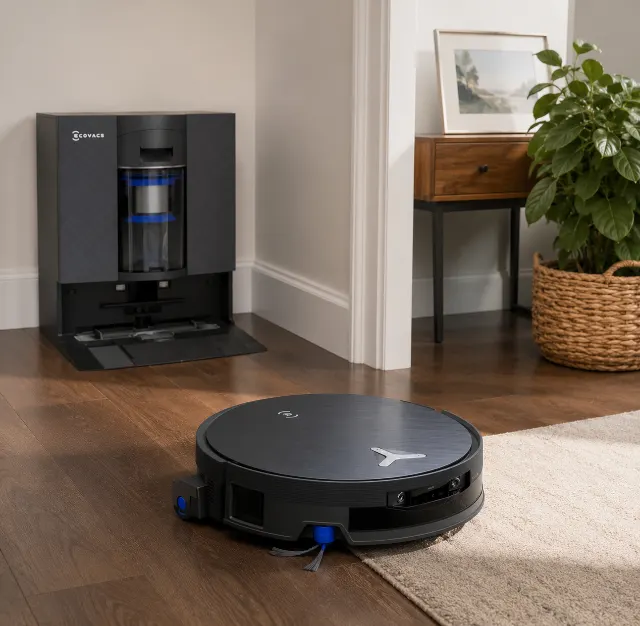
Ecovacs Deebot X12 OmniCyclone
★★★★★ ★★★★★ 4.2The Ecovacs Deebot X12 OmniCyclone offers unmatched 22,000Pa suction and a truly bagless dock, but its advanced features demand a stable Wi-Fi connection and a buyer willing to troubleshoot app quirks.
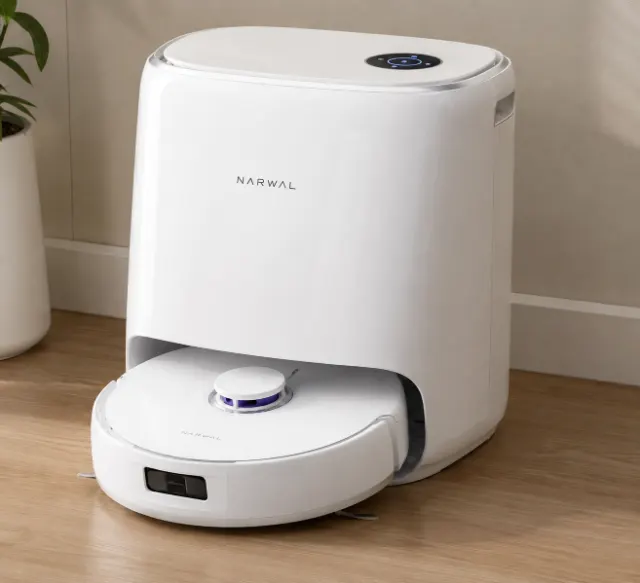
Narwal Freo X Ultra
★★★★★ ★★★★★ 4.2A mop-first robot that vacuums unusually well — DirtSense and a self-washing dock shine on hard floors, but there's no dust-emptying dock.
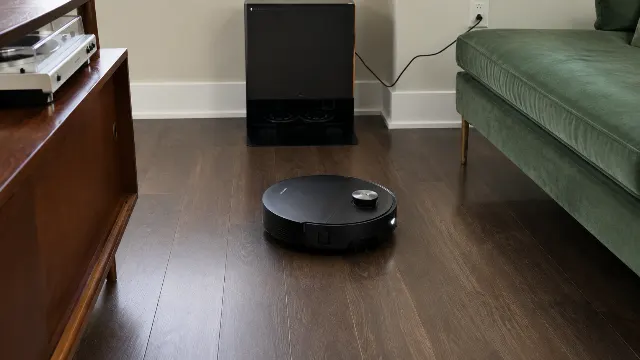
Dreame X60 Max Ultra Complete
★★★★★ ★★★★★ 4.2The Dreame X60 Max Ultra Complete delivers immense suction and a truly automated mop, but its object avoidance isn't flawless and the base station is demanding.
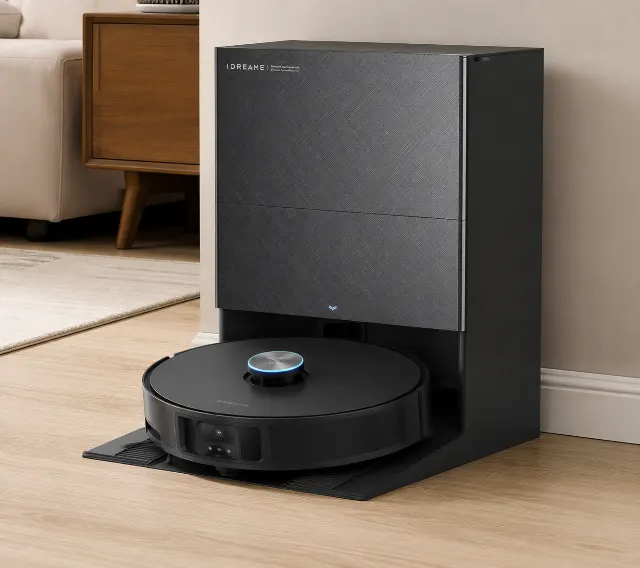
DREAME X60 Ultra Robot Vacuum and Mop
★★★★★ ★★★★★ 4.2The Dreame X60 Ultra delivers exceptional, near-automated mopping and vacuuming, but its true cost emerges in long-term maintenance and the app's complexity.
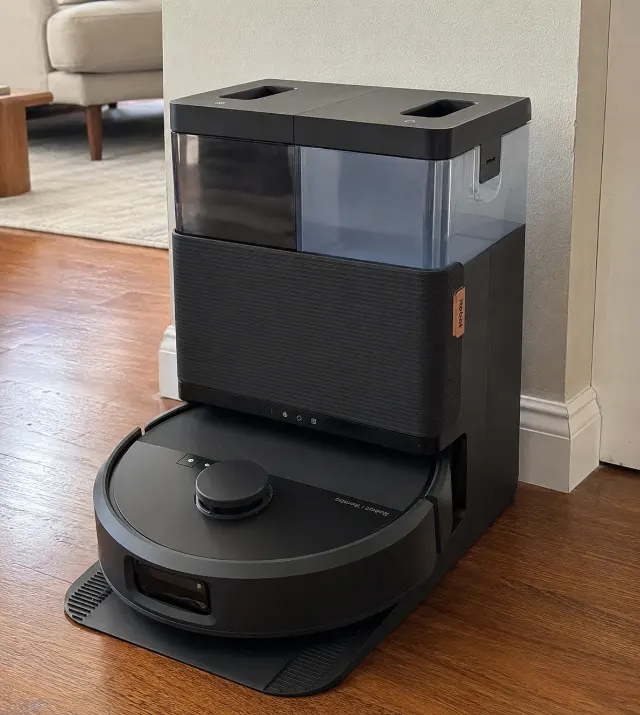
iRobot Roomba Plus 505 Combo Robot Vacuum & Mop
★★★★★ ★★★★★ 4.1The iRobot Roomba 505 Combo is a competent vacuum-mop hybrid whose self-washing dock is its main draw, but its mopping pressure and navigation fall short of top-tier rivals from Roborock and Dreame.
More guides
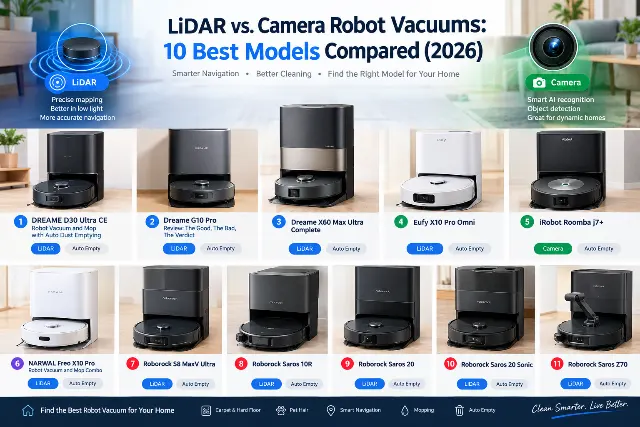
LiDAR vs. Camera Robot Vacuums: 10 Best Models Compared (2026)
Tired of your robot vacuum getting lost? We explain the real-world differences between LiDAR and camera (vSLAM) navigation, naming the best tech for your home, pets, and privacy.
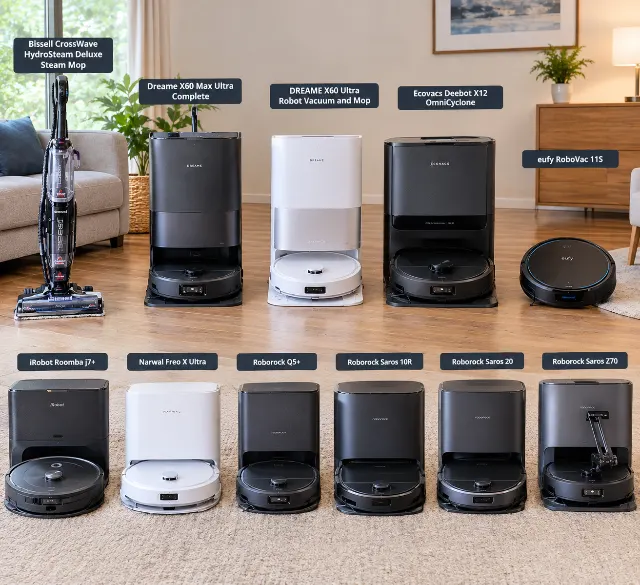
Robot Vacuum Trends 2026: What Changed This Year
Our expert 2026 guide to robot vacuum trends, technology, and top models. We name the best robot vacuums from Roborock, Dreame, and Narwal, and what to skip.
Best Robot Vacuum for Hardwood Floors
We researched the best robot vacuums for hardwood in 2026. Our top pick is the Roborock Saros 20 Sonic, but we also have picks for value, premium features, and beginners.