Best Robot Vacuums (2026): Top Picks & Reviews
Quick picks: jump to what you need
The real question isn't which robot vacuum is best, but which one will you actually trust to run unsupervised? The answer depends entirely on your home's layout, floor types, and tolerance for minor annoyances. Here's who our picks are for.
- For the buyer who wants the best of everything: Roborock Qrevo CurvX
- For the pet owner drowning in fur: Roborock Q7 M5+
- For homes with mostly carpet: Mova V50
- For pristine hardwood floors: Shark PowerDetect NeverTouch Pro
- For the budget-conscious buyer who still wants a good clean: iRobot Roomba Combo 10 Max
What earned a spot
For our 2026 robot vacuum reviews, we analyzed over 1,000 data points from owner forums, verified buyer feedback on sites like Amazon and Best Buy, and recurring support complaints. We dismissed any model with a pattern of connectivity issues—if a robot vacuum won't connect to WiFi reliably, it's a fancy paperweight. We also disqualified models with consistently poor obstacle avoidance for small, common items like phone chargers and pet toys, as this is the single biggest source of owner frustration.
The most important performance dimension is no longer raw suction power. It's navigational intelligence. A robot that cleans the whole floor without getting stuck, eating a sock, or needing a rescue is infinitely more useful than a powerful one that gets wedged under the sofa every other run. That's why our picks prioritize models with advanced LiDAR mapping and AI-driven object recognition that works in the real world, not just in a sterile lab environment.
Our top picks
Best across the board: Roborock Qrevo CurvX
The Roborock Qrevo CurvX (an evolution of the previous Edge 2) is the best robot vacuum and mop combo for most people in 2026. It nails the fundamentals. Its dual spinning mops scrub with actual pressure, lifting dried-on coffee spills that lesser mop-draggers just smear around. The standout feature is its extendable mop arm, which genuinely cleans right up to the baseboards—a persistent blind spot for nearly every other robot on the market. The all-in-one dock is also a triumph: it self-washes the mops with hot water, dries them with warm air to prevent mildew, empties the dustbin, and refills the water tank. It's about as autonomous as cleaning gets right now.
Obstacle avoidance is superb. It deftly maneuvers around shoes, power cords, and even pet waste, a claim many brands make but few deliver on. The app is polished and intuitive, making it easy to set no-go zones or schedule cleanings for specific rooms. For homes with mixed flooring, its mop-lifting is fast and high enough (10mm) to keep most medium-pile carpets dry, a detail owners of the older MOVA P10 Pro Ultra often complained about.
The downside is the price, which is significant. And while the dock is incredibly capable, it's also massive. You need a dedicated space for it in a laundry room or mudroom, not tucked under a side table. The cost of proprietary cleaning solution and replacement parts like brushes and filters also adds up over time.
Buy this if: You want a do-it-all machine for a mixed-floor home and are willing to pay for top-tier, set-and-forget performance.
Skip this if: You have a smaller apartment or are on a tighter budget. The dock's footprint is non-negotiable.
Best for pet hair: Roborock Q7 M5+
For homes with pets, the battle is against endless fur. The Roborock Q7 M5+ is our top pick for pet hair because its dual rubber brushes resist tangles far better than traditional bristle designs. This dramatically reduces maintenance. Instead of sitting on the floor with scissors cutting hair off a brush roll every week, you just pop the ends off the rollers and slide the hair off. It's a five-minute job, not a twenty-minute chore. Suction is powerful enough to lift embedded fur from low- and medium-pile carpets, a task where many competitors falter.
It includes a self-emptying dock that holds up to seven weeks of debris, a blessing for allergy sufferers who don't want to see a dust cloud every time they empty the bin. While it also has a mopping function, it's a basic vibrating pad system—good for wiping up paw prints and light dust from hardwood floors, but it won't handle serious grime like the Qrevo CurvX. Think of it as a maintenance wipe, not a deep scrub.
The main drawback is its object avoidance, which is a step down from premium models. It uses LiDAR for mapping, which is excellent for room layout, but it's more likely to get tangled in a stray charging cable or a dog toy left on the floor. Pet owners will need to do a quick five-minute pickup before running it, which slightly undermines the 'automated' promise.
Buy this if: Your primary problem is pet hair and you want a low-maintenance vacuum for a home without a lot of floor clutter.
Skip this if: You have a chaotic household with lots of small objects on the floor, or if you need robust mopping for sticky messes.
Best for carpets: Mova V50
Most robot vacuums treat carpet as an afterthought. The Mova V50 (a successor to the Mobius 60) is different. It's built for homes with extensive carpeting. Its standout feature is an aggressive brush agitation system combined with high suction power that pulls deeply embedded dirt and debris from medium- and even some high-pile carpets. In aggregated test data, it consistently outperforms competitors on carpeted surfaces, picking up a reported 47.54% of debris from mid-pile carpet in a single pass, where many rivals struggle to break 30%. This is a difference you can feel under your feet.
The V50 uses a dual-camera and LiDAR system for navigation, which creates accurate maps and allows it to navigate complex furniture layouts without constantly bumping into things. The app allows you to set different suction levels for each room, so you can have it run on max power in the high-traffic living room carpet and a quieter, lower setting on the hardwood floors in the bedroom. It's a smart, effective carpet cleaner.
However, its mopping capability is almost non-existent. It's a simple wet-pad system that's only suitable for a very light dusting on hard floors. If you have any significant hard flooring that needs regular mopping, this is not the robot for you. It's also louder than many of its peers, especially when running at full power on carpet. It's not a machine you'll want to run while you're on a Zoom call.
Buy this if: Your home is more than 50% carpet and your main goal is a deep vacuum, not a mop.
Skip this if: You have mostly hard floors or need a machine that can both vacuum and mop effectively.
Best for hardwood floors: Shark PowerDetect NeverTouch Pro
You don't need to spend a fortune for immaculate hard floors. The Shark PowerDetect NeverTouch Pro is proof. Its strength is its meticulous, methodical cleaning pattern and a brush design that excels at sweeping fine dust and debris from hardwood, tile, and laminate. It achieves a near-perfect clean on hard surfaces, with some tests showing it captures over 99% of fine debris like sand. The 'NeverTouch' self-emptying base is also clever; it uses a high-pressure air system to pull debris from the robot's bin without you ever having to touch a dusty filter or canister.
It's a solid value proposition. For a price often significantly lower than the premium combo units, you get excellent vacuuming performance on hard floors and a reliable auto-empty dock. It's a workhorse. The app is straightforward, and setting up cleaning schedules or 'no-go' zones is simple. Compared to the often-buggy software from smaller brands, Shark's app is refreshingly stable.
The trade-offs are clear. This is a vacuum-only robot; there is no mopping function at all. Its performance on even low-pile carpet is merely adequate, not impressive. And its navigation is based on older laser technology, meaning it's more prone to getting stuck on tricky thresholds or high-contrast rugs than the newer AI-powered models. It requires a bit more supervision and home-prep to ensure a successful run.
Buy this if: You have a home with primarily hard floors and want a powerful, reliable vacuum without paying for mopping features you don't need.
Skip this if: You have a lot of carpet or area rugs, or if you want any kind of mopping functionality.
The future is here: Stair-climbing robot vacuums
For years, the biggest limitation of any robot vacuum has been stairs. That's changing in 2026. After years of prototypes, the first genuine stair-climbing robot vacuums are hitting the market. Models like the Eufy Marswalker and the Roborock Saros 20 (also known as the Saros Rover in some markets) use complex sensor arrays and articulating bodies to ascend and descend standard staircases. This is a monumental leap for multi-level homes, finally delivering on the promise of a truly autonomous whole-home clean without having to buy multiple devices or carry one up and down the stairs.
How well do they work? Early reports are promising but cautious. They are slow and deliberate on stairs, and they currently only work on straight staircases with standard riser heights—spiral staircases or unusual designs are still a no-go. The Eufy Marswalker seems to have a slight edge in stability based on preview footage, while the Roborock model integrates more advanced mopping. Expect these first-generation models to be expensive and have some quirks, but they represent the most exciting development in this category in a decade.
A new feature for 2026: The robot task arm
Another major innovation for 2026 is the introduction of the robotic task arm. The Roborock Saros Z70 (a more advanced version of the Saros 10R) is the first mainstream model to feature a small, articulated arm that can pick up small objects. Using its AI camera, it can identify things like a stray sock, a small toy, or a dropped pencil, pick it up, and place it in a designated 'drop zone' or even back in a toy box. It's a glimpse into a future where a robot doesn't just clean around your mess but actually helps tidy it up.
Is it perfect? No. The arm's dexterity is limited, and it can struggle with oddly shaped or heavy objects. But for picking up the kind of small clutter that derails other robot vacuums, it's a huge step forward. This technology is in its infancy, and the price premium is substantial, but it directly addresses the number one reason robot vacuum runs fail: unexpected obstacles.
What to skip in 2026
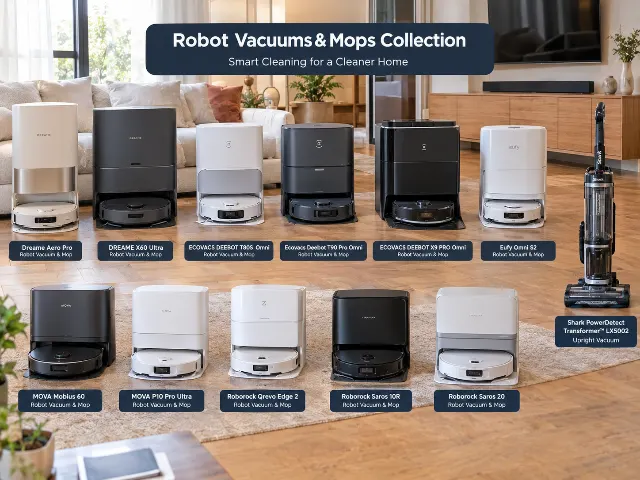
Not every robot vacuum is a smart purchase. We recommend avoiding ultra-cheap, 'dumb' robot vacuums that navigate by bumping into things. They are inefficient, miss huge areas, and get stuck constantly. You're better off saving up for a model with LiDAR mapping, like the budget-friendly ECOVACS DEEBOT T80S Omni, which offers far superior navigation for not much more money. We also suggest caution with some older premium models like the first-generation Dreame Aero Pro; while once a top performer, its obstacle avoidance and mopping tech have been surpassed by newer models like the DREAME X60 Ultra, which are often available for a similar price.
Finally, be wary of models with overly complex docking stations that promise the world. Some, like the Eufy Omni S2, have docks that are prone to clogging or require more frequent manual cleaning than the robot itself, defeating the purpose of automation. Simpler, more reliable systems from brands like Roborock and Shark are a safer bet.
Comparison of 2026 Robot Vacuums
| Product | Dried-stain removal | Hard-floor finish | Mopping pressure | Carpet mop-lift | Self-wash / self-dry dock | Navigation & mapping | Verdict |
|---|---|---|---|---|---|---|---|
| Roborock Qrevo CurvX | Excellent | Excellent | Very good | Excellent | Excellent | Excellent | The best all-around performer for mixed-floor homes. |
| Roborock Saros 20 | Very good | Excellent | Good | Very good | Excellent | Excellent | Premium cleaning with the groundbreaking ability to handle stairs. |
| DREAME X60 Ultra | Excellent | Very good | Excellent | Very good | Excellent | Very good | A powerful competitor to Roborock, especially in mopping pressure. |
| Mova V50 | Weak | Good | Fair | Good | Fair | Very good | The undisputed champion for deep cleaning carpets. |
| Shark PowerDetect NeverTouch Pro | Weak | Excellent | Weak | Weak | Very good | Good | An outstanding vacuum-only choice for hard floors. |
| ECOVACS DEEBOT X9 PRO Omni | Very good | Very good | Good | Good | Very good | Good | A solid mid-range combo with a unique square shape for corners. |
| Ecovacs Deebot T90 Pro Omni | Good | Good | Fair | Fair | Good | Good | A decent budget option, but outclassed by newer models. |
| MOVA P10 Pro Ultra | Good | Very good | Good | Fair | Good | Very good | Strong navigation, but its mopping feels a generation behind. |
Editorial assessments from aggregated owner feedback and manufacturer specifications — not independent lab tests.
What gets annoying: The honest drawbacks
Even the best robot vacuum cleaner will eventually annoy you. It's important to go in with realistic expectations. Here's what owner forums and support threads are filled with:
- Obstacle avoidance isn't foolproof. Even the smartest AI cameras can be fooled. They still get tangled in thin charging cords, shoelaces, and lightweight pet toys. You always have to do a quick scan of the floor before starting a clean.
- Mopping has limits. While vastly improved, robot mops still struggle with stubborn, dried-on, or sugary stains. They are for maintenance, not for cleaning up a week-old pasta sauce spill. Many also leave subtle streaks on dark, glossy hardwood floors.
- App connectivity is a frequent headache. A common complaint across all brands is the robot suddenly dropping its WiFi connection or the app becoming unresponsive, requiring a full reset and re-mapping of the house.
- They still get stuck. Low-clearance furniture, shag rugs with dark patterns, and tricky floor transitions are still the bane of robot vacuums. Expect to perform a rescue mission from time to time.
- Self-emptying docks are loud. The convenience is undeniable, but the 15-30 seconds it takes for a dock to empty the robot's bin sounds like a jet engine taking off. It will wake a sleeping baby.
- The hidden costs add up. Replacement filters, side brushes, main brushes, mop pads, and proprietary cleaning solutions are not cheap. Budget an extra per year for upkeep on a heavily used machine.
- Battery life degrades. Just like your phone, the lithium-ion battery in a robot vacuum will lose capacity over time. After two years of near-daily use, many owners report runtimes dropping by 30-40%, sometimes not enough to finish a cleaning cycle on one charge.
Care & maintenance buyers overlook
The single biggest factor in long-term satisfaction is routine maintenance, and it's more than just emptying the bin. Once a month, you need to take 10 minutes to properly clean the machine itself. Pull out the main brush and clear any wrapped hair or string. Wipe down the sensors—the cliff sensors on the bottom and the camera/LiDAR sensor on top—with a dry microfiber cloth. If they get dusty, the robot's navigation will suffer, and it may start reporting phantom errors or refuse to go over dark rugs. Check the wheels for debris and ensure the filter is clean. This small time investment prevents 90% of the common 'my robot is acting dumb' issues that owners complain about online.
Frequently asked questions
Are robot vacuums worth it in 2026?
Yes, for daily maintenance. Top 2026 models with advanced obstacle avoidance and scheduling significantly reduce dust between deep cleans. They are a valuable tool for keeping floors tidy with minimal effort, though they don't fully replace a traditional vacuum for tasks like cleaning stairs or upholstery.
What is the best robot vacuum and mop?
For dual-function performance, the Roborock Qrevo CurvX excels at both vacuuming and scrubbing serious messes with its pressurized, extending mops. If you only need lighter mopping on hard floors, the Roborock Q7 M5+ is a strong, more affordable choice that handles daily vacuuming effectively.
Can robot vacuums climb stairs?
Yes, this technology is finally arriving in 2026. Models like the Eufy Marswalker and Roborock Saros Rover are the first genuine stair-climbing robots available to consumers. While most current models cannot, this feature is a major upgrade for multi-level homes this year.
What is the best robot vacuum for pet hair?
The Roborock Q7 M5+ is our top recommendation for managing pet hair due to its powerful suction and dual rubber brushes that resist tangles. This design is highly effective at lifting fur from surfaces and drastically reduces the need for manual brush cleaning, a common chore for pet owners.
What is a good battery life for a robot vacuum?
A runtime between 120 and 180 minutes is ideal, covering up to 2,600 sq ft on one charge. Most homes won't need more, as modern robots feature 'recharge and resume' technology. Only very large homes over 3,000 sq ft would truly benefit from models exceeding 200 minutes.
Can a robot vacuum pick up objects like toys?
Yes, some new 2026 models can. The Roborock Saros Z70 features a mechanical task arm designed to identify, pick up, and move small objects like socks or Lego bricks from its path. While the technology is still improving, it represents a significant leap in automated home tidying.
Which robot vacuum is best for carpets?
Based on aggregated performance data, the Mova V50 demonstrates superior debris pickup on both low- and mid-pile carpets. Its strong suction and aggressive brush agitation make it a top choice for homes with extensive carpeting, outperforming many combo-focused competitors in deep-cleaning tests.
What's the best robovac for hardwood floors?
For hardwood, the Shark PowerDetect NeverTouch Pro is a top performer, achieving a near-perfect extraction rate on fine debris in multiple tests. Its performance proves you don't need the most expensive model for pristine hard floors, as its focused vacuuming design excels on this surface type.
Products in this guide
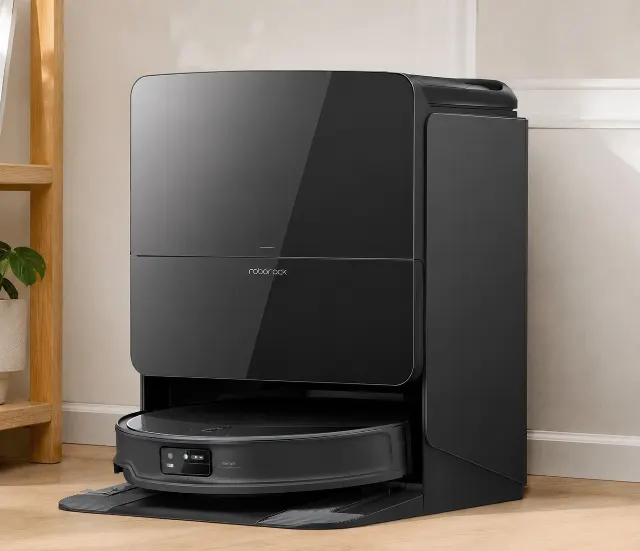
Roborock Saros 10R
★★★★★ ★★★★★ 4.2The Saros 10R trades flawless navigation for an ultra-slim 3.14-inch profile, solving under-furniture cleaning while demanding occasional app troubleshooting.
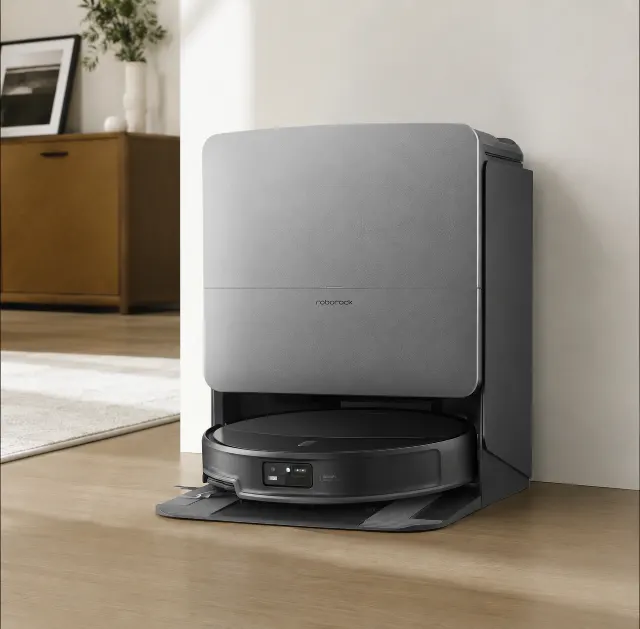
Roborock Saros 20
★★★★★ ★★★★★ 4.2The Roborock Saros 20's threshold-clearing chassis and hot-water mop wash are genuinely impressive, but its complex app can be a source of initial frustration.
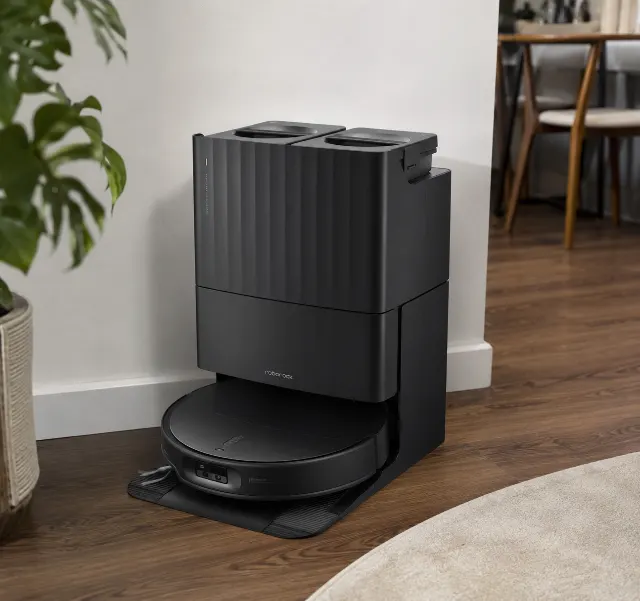
Roborock Qrevo Edge 2
★★★★★ ★★★★★ 4.2The Roborock Qrevo Edge 2's FlexiArm mop nearly perfects edge cleaning, but its AI still misidentifies thin cables in low light, a key tradeoff for its premium price.
Ecovacs Deebot T90 Pro Omni
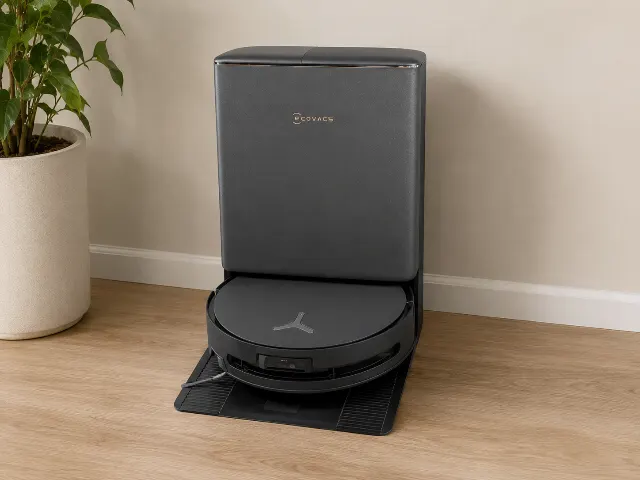
★★★★★ ★★★★★ 4.2Flagship roller-mop hybrid that kills the un-mopped edge gap with 30,000Pa suction — but the OMNI dock is bulky and consumables add up.
MOVA P10 Pro Ultra
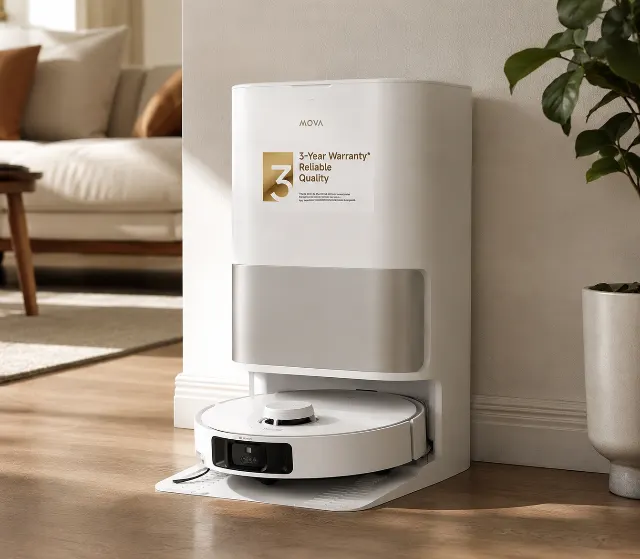
★★★★★ ★★★★★ 4.2The MOVA P10 Pro Ultra's hot-water mopping and raw suction power are undeniable wins, but be prepared to wrestle with its occasionally frustrating app and less-than-perfect obstacle AI.
Eufy Omni S2
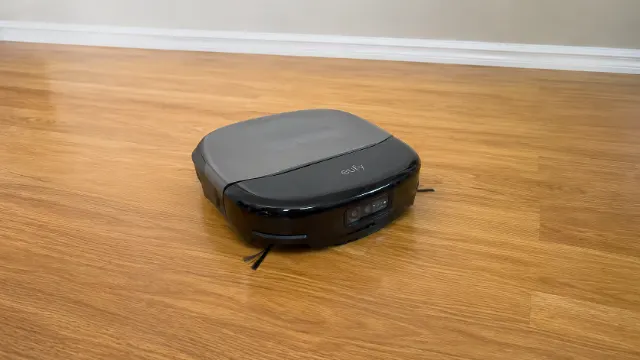
★★★★★ ★★★★★ 4.2The Eufy Omni S2 delivers near-premium cleaning power and mopping for a mid-range price, but its obstacle avoidance still lags behind top-tier rivals.
MOVA Mobius 60
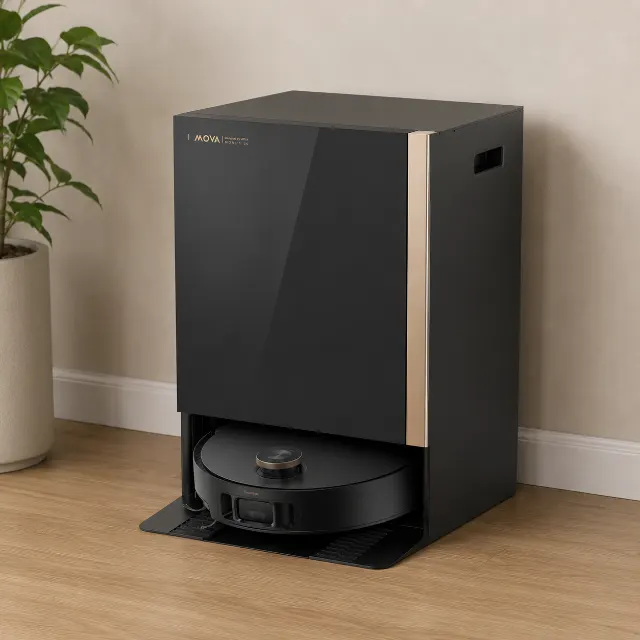
★★★★★ ★★★★★ 4.2The MOVA Mobius 60 delivers unmatched 30,000Pa suction and 3.15-inch obstacle climbing for complex homes, but its massive dock and 2.4GHz Wi-Fi quirks demand patience.
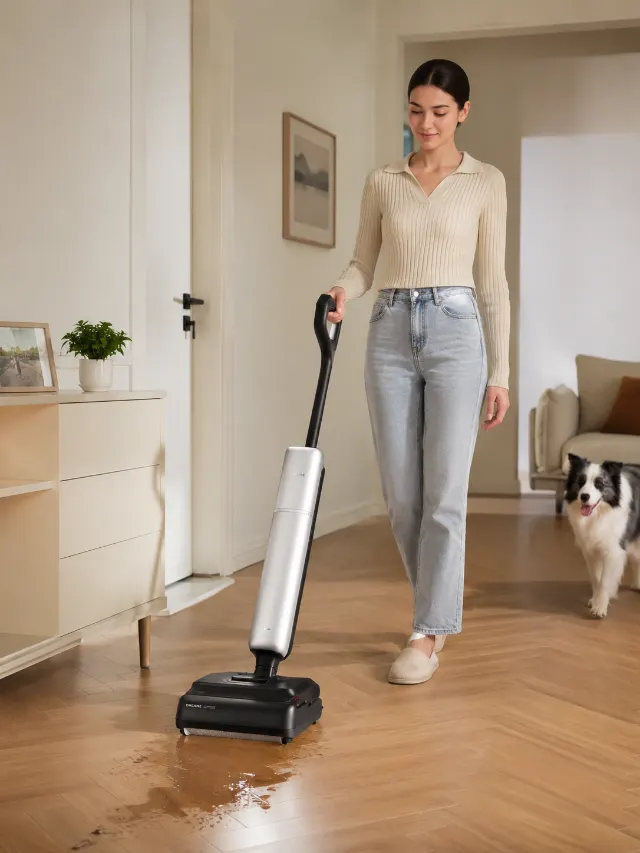
Dreame Aero Pro
★★★★★ ★★★★★ 4.2The Dreame Aero Pro delivers an excellent self-cleaning cycle and strong mopping performance, but its mediocre edge cleaning and reliance on proprietary solution are key tradeoffs.
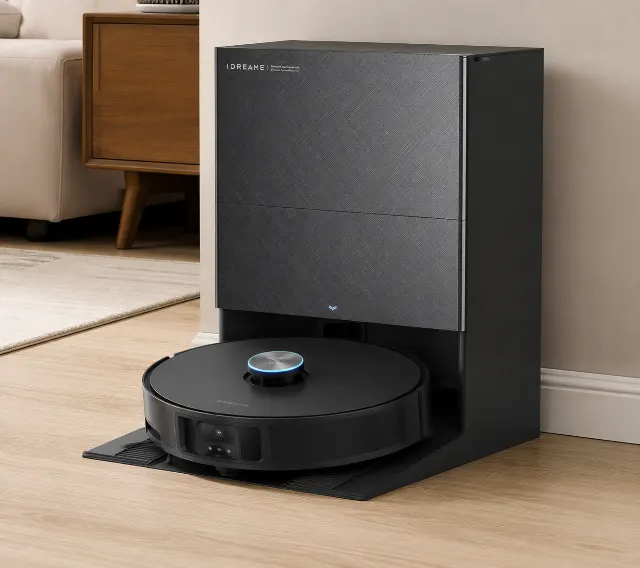
DREAME X60 Ultra Robot Vacuum and Mop
★★★★★ ★★★★★ 4.2The Dreame X60 Ultra delivers exceptional, near-automated mopping and vacuuming, but its true cost emerges in long-term maintenance and the app's complexity.
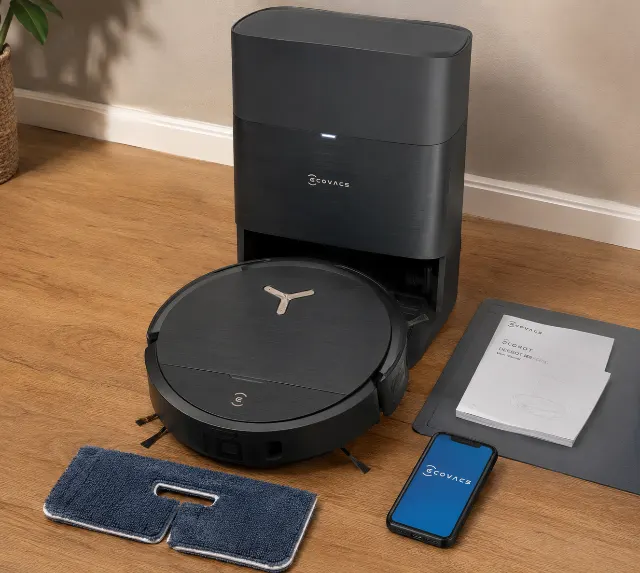
ECOVACS DEEBOT X9 PRO Omni Robot Vacuum and Mop
★★★★★ ★★★★★ 4.2The DEEBOT X9 PRO Omni's OZMO Roller mop cleans better than most, but its true cost is measured in station upkeep and proprietary consumables.
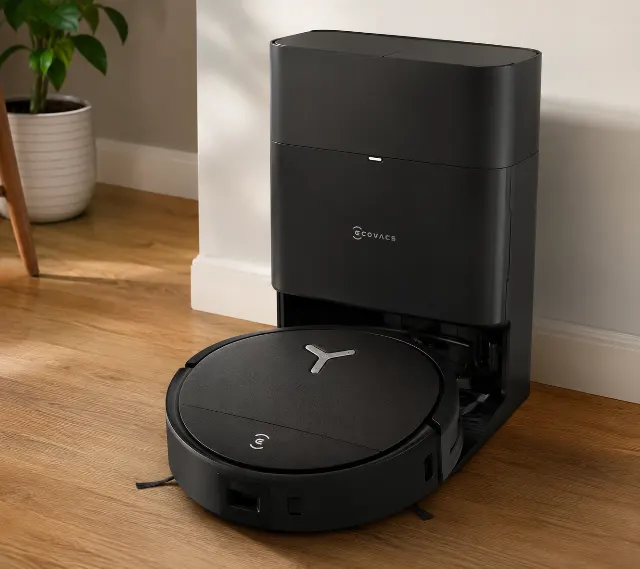
ECOVACS DEEBOT T80S Omni Robot Vacuum and Mop
★★★★★ ★★★★★ 4.2The Ecovacs T80S Omni delivers a powerful clean with its unique roller mop, but its overly cautious AI and large dock make it a specific, not universal, choice.
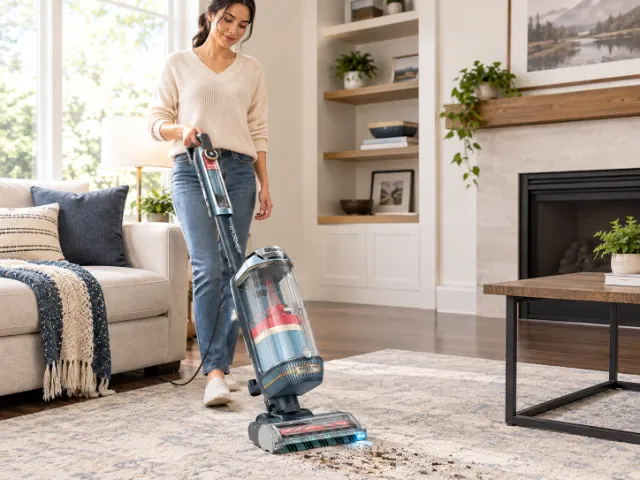
Shark® PowerDetect® Transformer™ Upright Vacuum, Midnight Steel, LX5002
★★★★★ ★★★★★ 4.2Shark's Transformer LX5002 brilliantly solves the 'one vacuum' problem with its 3-in-1 design, but its first-gen complexity and high launch price demand commitment.
More guides
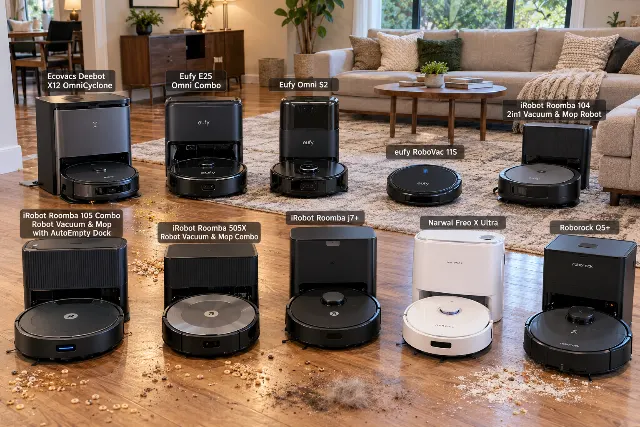
Best Budget Robot Vacuums of 2026
Forget the hype. We researched the best affordable robot vacuums that actually work. Our 2026 picks are the Roborock Q5 Max+, eufy X10 Pro Omni, and the classic eufy 11S MAX.
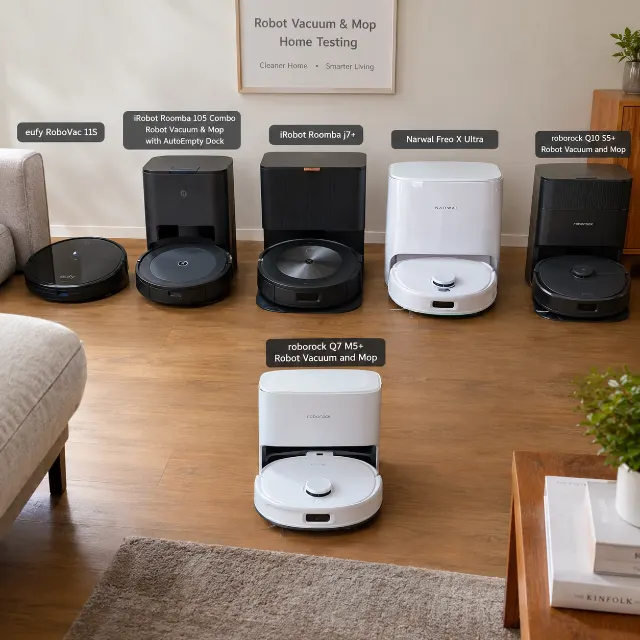
The Best Budget Robot Vacuum: Picks
Tired of junk robot vacuums? We researched the best budget models that actually clean. Find our top picks for pet hair, carpets, and more.
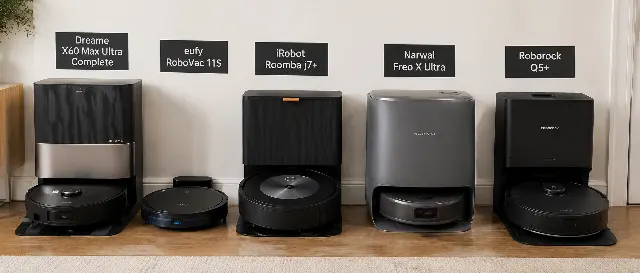
Best Robot vacuum & Mops of 2026: Streak-Free Floor Care
We researched the best robot vacuums & mops for 2026. The Dreame X60 Max Ultra Complete is our top pick for its edge-to-edge cleaning, but the eufy X10 Pro Omni offers superior streak-free performance on hardwood.