Do Robot Vacuums Really Work on Pet Hair & Thick Carpet?
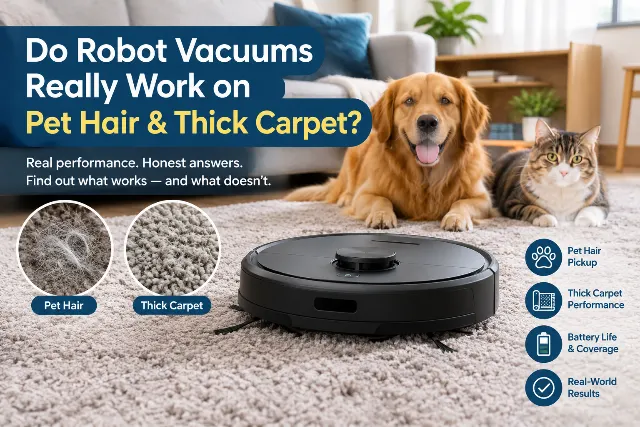
The Honest Answer: Do Robot Vacuums Work on Pet Hair & Carpet?
Yes, but with major caveats. The fantasy is a set-and-forget machine that erases all signs of your shedding golden retriever from your plush living room rug. The reality is that only specific, powerful, and intelligently designed robot vacuums can handle the dual challenge of pet hair and carpet without becoming a tangled, stuck, bin-full mess every ten minutes. Most sub- models fail spectacularly. They scatter kibble, get ensnared by long hair, and choke on the edge of a medium-pile rug. Success isn't about buying any robot vacuum; it's about buying the right one, understanding its limits, and accepting it’s a maintenance tool, not a miracle worker.
How Robot Vacuums Tackle Pet Hair: The Key Features
Effective pet hair management isn't a single feature; it's a system. Ignore the marketing hype and focus on the mechanics. Three components do the real work.
The Brush Roll: Rubber Beats Bristles, Every Time
This is the single most important feature for pet owners. Traditional bristle brushes are a nightmare, instantly wrapping long hair from dogs like huskies or golden retrievers into a tight cocoon that requires you to play surgeon with scissors. Look for an anti-tangle robot vacuum with solid rubber or silicone rollers. iRobot's dual rubber brush design on its Roomba j and s-series models remains a benchmark for resisting hair wrap. Roborock's newer designs, like the one on the Saros 10R, use a similar principle with great effect. These designs agitate carpet fibers to lift hair and then feed it directly into the suction channel with minimal tangling. A bristle brush is a deal-breaker for homes with long-haired pets.
Suction Power and Carpet Boost
Raw suction power, measured in Pascals (Pa), is often overstated but still matters on carpet. On hard floors, almost any robot can pull up pet hair. On carpet, it needs raw power to lift hair that’s woven into the fibers. Look for a baseline of 5,000 Pa. For homes with medium- to high-pile carpet, 8,000 Pa or more is a better target. More important than the peak number is an automatic “carpet boost” feature. This uses sensors to detect when the robot moves from a hard floor to a rug, instantly ramping up suction to maximum. It’s a critical battery-saving and noise-reducing feature that ensures power is used only when needed.
Filtration: Why a HEPA Filter is Non-Negotiable
A robot vacuum without a proper filter just kicks allergens into the air. For pet owners, especially those with allergies, a genuine HEPA filter is essential. It captures microscopic particles like pet dander, dust mites, and pollen that standard filters miss. This makes a tangible difference in air quality, reducing the invisible irritants that cause sneezing and itchy eyes. Don’t settle for vague terms like “high-efficiency filter.” If it doesn't say HEPA, assume it's not doing enough for pet dander.
Carpet Performance: From Low-Pile to Thick Shag
A robot's ability to handle carpet depends entirely on pile height. Most modern robots can handle low-pile rugs (less than 1/4 inch or ~0.6 cm) without issue. It's the thicker stuff that separates the contenders from the pretenders.
For medium-pile carpets (up to 1/2 inch or ~1.3 cm), you need a combination of high suction (5,000+ Pa), good ground clearance, and robust wheels that can climb the edge without getting stuck. This is where budget models often fail; their wheels spin uselessly at the rug’s edge.
High-pile carpet and shag rugs (over 1/2 inch or ~1.3 cm) are the final boss for robot vacuums. Very few can cope. Models with over 8,000 Pa of suction and aggressive, articulating wheels might manage to move across the surface, but they will not deep-clean it. The long fibers bog down the brush roll and obstruct suction. For homes dominated by thick, plush carpeting, a robot vacuum is a surface-level supplement, not a replacement for a powerful upright vacuum.
The Verdict: Best Robot Vacuums for Pet Hair & Carpet in 2026
After synthesizing hundreds of owner reviews, forum discussions, and manufacturer specs, these are the models that consistently deliver on the promise of automated pet hair cleanup on carpets.
The All-Round Winner: Roborock Saros 10R
The Saros 10R is the most complete solution for pet owners with mixed flooring. Its 10,000 Pa suction and aggressive carpet boost feature pull hair from medium-pile carpets that other models leave behind. The key is its dual rubber roller brush, which rivals Roomba’s anti-tangle performance and drastically reduces the need for manual clean-outs. Its AI-powered obstacle avoidance is also impressively adept at spotting and avoiding pet toys, cords, and the dreaded pet waste accident. The self-emptying dock is loud but effective, holding weeks of pet hair. The downside? It’s expensive, and the mopping feature, while clever in its ability to lift over carpets, is still just for light surface cleaning on hard floors.
The Value Champion: Roomba j7+
The Roomba j7+ isn't the newest or most powerful, but it remains a phenomenal value for its core competency: dealing with pet hair and clutter. Its dual rubber brushes are legendary for their tangle resistance, making it a top choice for long-haired breeds. Its front-facing camera and P.O.O.P. (Pet Owner Official Promise) guarantee mean it’s one of the most reliable navigators in cluttered, real-world homes. While its suction is lower than the Roborock’s on paper, the brush design makes up for it on low- and medium-pile carpet. It struggles more with thick carpets and its navigation is methodical but slower than LiDAR-based competitors. But for a reliable, hair-resistant workhorse it’s the smart buy.
Best for Thick Carpet & Multiple Pets: Narwal Freo X Ultra
If your home is a minefield of thick rugs and shedding from multiple pets, the Narwal Freo X Ultra is the brute-force solution. It boasts a staggering 8,200 Pa of suction and a unique floating brush designed to maintain contact and resist tangles. Owner feedback consistently highlights its ability to climb onto and effectively clean thicker carpets where others get stuck or lose suction. Its self-washing mop system is also class-leading for homes with hard floors. The trade-offs are significant: it's one of the largest and most expensive units on the market, and its object avoidance isn't as sophisticated as Roborock's or Roomba's, so you’ll need to pre-tidy your floors.
| Product | Pet hair pickup | Carpet vs hard-floor suction | Navigation & mapping | Obstacle & cord avoidance | Edge & corner cleaning | Hair-tangle resistance | Verdict |
|---|---|---|---|---|---|---|---|
| Roborock Saros 10R | Excellent | Excellent | Excellent | Very good | Good | Excellent | The best all-around performer for mixed-floor homes with pets, balancing power, intelligence, and low maintenance. |
| Roomba j7+ | Very good | Good | Good | Excellent | Fair | Excellent | Unbeatable value for its tangle-free brushes and smart, clutter-aware navigation. The best choice for chaotic homes. |
| Narwal Freo X Ultra | Excellent | Very good | Good | Fair | Good | Very good | The power-lifter for homes with thick carpets and multiple pets, where raw suction and climbing ability are paramount. |
Editorial assessments from aggregated owner feedback and manufacturer specifications — not independent lab tests.
Suction Power (Pa) vs. Brush Design: What Really Matters?
Brush design matters more. A robot with 10,000 Pa of suction and a basic bristle brush will be useless in a home with a Golden Retriever, as it will spend most of its time immobilized by tangles. A robot with 4,000 Pa and an excellent dual-rubber brush system will run successfully day after day, keeping floors consistently cleaner. High suction is the force that lifts the hair from the carpet fibers *after* the brush has agitated it loose. The brush does the hard work. For pet hair on carpet, prioritize an anti-tangle rubber brush first, then look for the highest suction you can afford, ideally with a carpet boost feature.
Tangles & Maintenance: How to Manage Pet Hair Buildup
Even the best anti-tangle systems aren't perfect. You still need to perform monthly maintenance. Long hair can get wrapped around the axles at the ends of the brush roll, even if the main roller stays clear. Pop the brush out once a month and clear these ends. It takes two minutes. Also, check the small front caster wheel, as hair loves to bind it up, causing navigation errors. Finally, wipe down the sensors with a dry cloth to keep its navigation accurate. A little upkeep prevents a lot of frustrating “Error 10: Bumper Stuck” notifications.
Self-Emptying Bins: A Must-Have for Pet Owners?
Yes. It’s not a luxury; it’s a core feature for pet owners. A standard robot's onboard dustbin is tiny, often less than 400ml. In a home with a shedding dog, that bin can fill up in a single cleaning run, forcing the robot to abandon its job halfway through. A self-emptying dock allows the robot to run daily for weeks—sometimes over a month—before you need to interact with it. It vacuums the robot’s small bin into a large, sealed bag in the base station. This automation is what makes a robot vacuum truly useful in a high-shedding environment. The only real drawback is the ongoing cost of proprietary replacement bags, which can run for a pack of three.
Beyond Vacuuming: Mopping, Dander, and Odor Control
Many robot vacuums are now robot vacuum and mop combos. Modern units are smart about carpet. They use ultrasonic sensors to detect rugs and will automatically lift their mop pads (typically by 5-10mm) to avoid wetting them. This works well for low-pile rugs, but the mop may still brush against the top of thicker carpets. Some models allow you to designate carpets as “no-mop zones” in the app for total peace of mind. While these mops are only good for light-duty cleaning and won't scrub tough stains, they are effective at wiping up the fine layer of dander and dust that vacuuming leaves behind, which can help with lingering pet odors.
Common Problems & How to Solve Them
Even the best robots have bad days. Here are the most common complaints we see in owner forums and how to fix them.
- Gets stuck on thick carpet edges: This is often a hardware limitation. If your robot consistently fails to climb a specific rug, the best solution is to use the app's mapping feature to draw a “no-go zone” around that rug.
- Brush constantly tangles with long hair: If you have a bristle brush, this is unavoidable. If you have a rubber roller and it's still tangling, check the roller ends. Hair often builds up there first, creating a seed for a larger tangle. Clean them weekly.
- Small bin fills up mid-clean: The only real fix is a self-emptying dock. If you don't have one, your best bet is to schedule two shorter cleaning runs per day instead of one long one, emptying the bin in between.
- Navigation gets confused by dark carpets: This is a known issue with older infrared-based cliff sensors, which can mistake a black rug for a drop-off. Most modern LiDAR or camera-based robots have solved this, but if you have an older model, you may need to use physical “virtual walls” or tape over the cliff sensors (at your own risk, as it could then fall down stairs).
- Mop accidentally wets a rug corner: The mop-lifting mechanism isn't instantaneous. As the robot transitions onto the rug, the corner can get damp. The best fix is to set a small no-mop zone buffer around the edges of your rugs in the app.
Can a Robot Vacuum Truly Replace Your Upright?
No. A robot vacuum cannot replace a good upright or canister vacuum, especially in a home with pets and carpets. Think of it as a floor maintainer, not a deep cleaner. It runs daily to prevent the accumulation of surface-level pet hair, dust, and crumbs. This dramatically extends the time between manual vacuuming sessions and keeps your home looking consistently tidy. But once a week, or every other week, you still need to use your full-sized vacuum to pull out the deeply embedded grit, allergens, and fine hair that the robot simply doesn't have the power to extract from carpet fibers.
Final Checklist: Choosing the Right Model for Your Home
Before you buy, run through this list. If your answer to most of these is “yes,” a high-end robot vacuum will likely be a worthwhile investment.
- Brush Type: Does it have dual rubber rollers or a well-designed anti-tangle hybrid brush? (If bristle-only, skip it).
- Suction Power: Is it at least 5,000 Pa, with a reliable automatic carpet boost feature?
- Self-Emptying Dock: Does it come with one? (For pet owners, this is almost mandatory).
- Navigation: Does it use LiDAR or a camera for smart mapping and obstacle avoidance, not just random bumping?
- Carpet Height: Is most of your carpeting low- to medium-pile? (If you have mostly high-pile shag, manage your expectations).
- Home Layout: Is your floor plan relatively free of clutter, cords, and complex furniture legs that could cause traps?
Amazon Prime Membership
Get More From Your Amazon Shopping With Prime
Amazon Prime combines eligible shopping, delivery, entertainment, and other membership benefits. Available features, prices, and eligibility depend on your location and membership plan.
Fast, Eligible Delivery
Get available delivery benefits on qualifying orders, subject to item and location eligibility.
Movies and TV Shows
Explore Prime Video titles and benefits available with your membership.
Exclusive Shopping Offers upto 50% off
Discover eligible member-only deals and shopping events.
Additional Benefits
Depending on your plan, other benefits may include selected music, reading, gaming, and more.
Is Prime worth it? Compare the membership price with the delivery, entertainment, and shopping benefits you expect to use before signing up.
Explore Amazon Prime Membership →
Affiliate disclosure: We may earn a commission if you sign up through this affiliate link and your referral qualifies, at no additional cost to you. Membership fees, free-trial eligibility, benefits, and offers may vary. Check Amazon's current terms before joining.
More guides
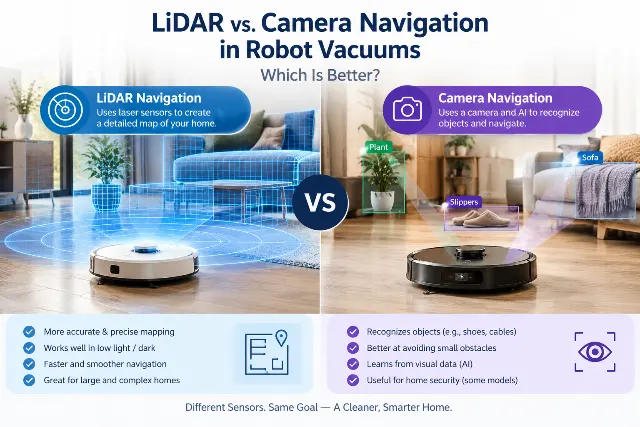
LiDAR vs. Camera Navigation guide in Robot Vacuums: Which Is Better?
An expert guide to robot vacuum navigation. We break down LiDAR vs. camera (vSLAM) for mapping accuracy, obstacle avoidance, and low-light performance to help you choose.
robot vacuum comparison 2026
Our definitive 2026 robot vacuum comparison. We review the best from Roborock, Dreame, Eufy, and more to find the top robovacs for pet hair, mopping, and self-emptying. Forget the hype—these are the ones actually worth buying.
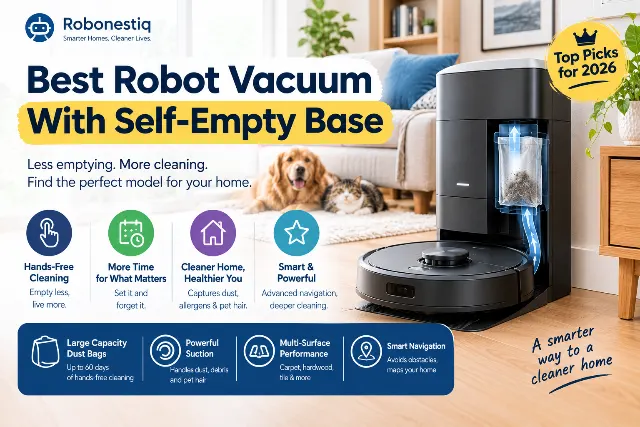
Best Robot Vacuum With Self-Empty Base
Tired of emptying that tiny dustbin? We researched the best self-emptying robot vacuums for 2026. Our top picks for pet hair, budgets, and mopping.