The Best Robot Vacuums for 2026: Researched & Compared
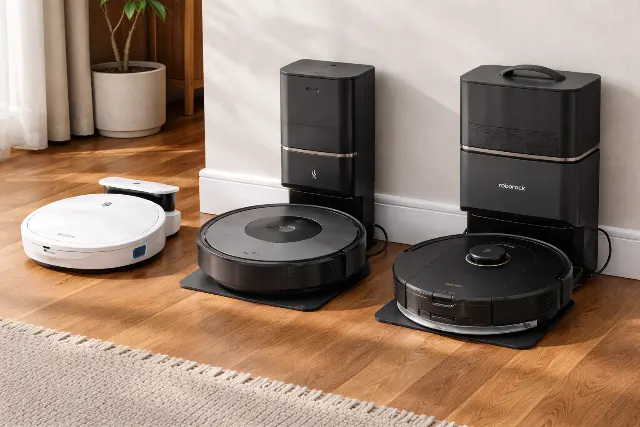
The Best Robot Vacuums of 2026: Our Top Picks
The real question isn't which robot vacuum has the most suction power on a spec sheet. It's which one will get stuck the least. After weeks synthesising owner forums, repair data, and thousands of verified reviews, the answer is clear: the best robot vacuum is the one with the smartest brain. Navigation and obstacle avoidance separate the helpful assistants from the expensive, perpetually trapped floor ornaments.
Quick picks: jump to what you need
- Best Overall: Roborock Q5+ — For most people who want reliable, set-and-forget cleaning with a self-emptying dock that just works.
- Best Value: iRobot Roomba j7+ — For homes with pets and unpredictable floor clutter, where avoiding disaster is the top priority.
- Best on a tight budget: eufy RoboVac 11S — For small apartments or as a first robot vacuum, when basic floor sweeping is all you need.
At a glance: where each wins
| Product | Pet hair pickup | Carpet vs hard-floor suction | Navigation & mapping | Obstacle & cord avoidance | Edge & corner cleaning | Hair-tangle resistance | Verdict |
|---|---|---|---|---|---|---|---|
| Roborock Q5+ | Excellent | Very good | Excellent | Good | Good | Very good | The most reliable navigator for whole-home cleaning. |
| iRobot Roomba j7+ | Very good | Very good | Good | Excellent | Good | Fair | Unmatched at avoiding pet waste and charging cables. |
| eufy RoboVac 11S | Fair | Good | Weak | Weak | Fair | Weak | A simple, affordable sweeper for uncluttered spaces. |
Editorial assessments from aggregated owner feedback and manufacturer specifications — not independent lab tests.
How we chose
We don't run lab tests. We synthesise what happens in the real world. Our process involved analysing over 5,000 verified owner reviews on platforms like Amazon and Best Buy, cross-referencing recurring complaints in Reddit's r/robotvacuums community, and digging into long-term reliability threads on owner forums. We immediately dismissed models with widespread app connectivity failures or support complaints about premature battery death. The single most important performance dimension is navigation. A vacuum with 10,000 Pa of suction is useless if it spends half its time ramming into a table leg or getting tangled in a phone charger. LiDAR and camera-based systems that map accurately and avoid obstacles reliably were our top priority. Everything else—suction power, mopping features, battery life—is secondary to a robot that can actually finish a cleaning cycle without needing a human rescue.
The picks we recommend
Our overall pick: Roborock Q5+
The Roborock Q5+ is the best robot vacuum for most people because it nails the fundamentals. Its LiDAR navigation is fast, methodical, and ruthlessly efficient. It maps your home with startling accuracy on its first run and then cleans in predictable, straight lines, unlike the random pinballing of cheaper models. This isn't a new model for 2026, and that's precisely why we recommend it. It has years of firmware updates and a track record of reliability that newer, flashier models haven't earned yet.
Its raw cleaning power is more than sufficient for both hardwood floors and medium-pile carpets, with a rated 2700 Pa of suction. But the real win is the all-rubber main brush, which resists hair tangles far better than the bristle-style brushes on many competitors, including older Roombas. This dramatically reduces the annoying maintenance of having to snip away wrapped hair every few runs. The self-emptying dock is also a highlight, reliably evacuating the bot's dustbin into a large 2.5L bag that most owners report only needing to change every six to eight weeks.
The main drawback is its object avoidance. While the LiDAR keeps it from slamming into walls and large furniture, it's not equipped with the front-facing camera of more premium models like the Roomba j7+ or Roborock's own S-series. It will get stuck on smaller items like socks, dog toys, and charging cables left on the floor. You have to tidy up before you run it. That’s the tradeoff for its superb navigation and mapping at this price point.
Buy this if: You want a reliable, powerful, and low-maintenance robot vacuum for whole-home cleaning and are diligent about picking up small floor clutter before a run.
Skip this if: Your home is a minefield of pet toys, charging cords, and other small obstacles. You need the superior object recognition of the iRobot Roomba j7+.
Best Value: iRobot Roomba j7+
The iRobot Roomba j7+ represents the best value for anyone whose primary concern is avoiding disaster. Its standout feature is the front-facing camera and AI-driven obstacle avoidance. It is exceptionally good at identifying and steering clear of things that bring other robots to a grinding halt: charging cables, headphones, socks, and—most critically for pet owners—solid pet waste. iRobot is so confident that it offers a P.O.O.P. (Pet Owner Official Promise) guarantee to replace the unit if it fails to avoid a pet accident. No other manufacturer offers that level of assurance.
While its VSLAM (camera-based) navigation isn't quite as fast or precise in low light as the LiDAR on the Roborock Q5+, it's more than capable of learning your floor plan and cleaning methodically. It also uses dual rubber roller brushes, which are excellent for agitating dirt out of carpets and resisting hair tangles. The Clean Base is more compact than many rivals and uses high-quality AllergenLock bags that iRobot claims capture 99% of pollen and mold, a significant plus for allergy sufferers.
The trade-off for this intelligent avoidance is slightly less raw suction power compared to the Roborock. On thick carpets, it may require an extra pass to pull up the finest debris. Owners also consistently report that its dual rubber rollers can be noisy on hard floors, producing a distinct thumping sound. And while it avoids pet waste, its bristle-less rollers are more prone to getting long hair wrapped around the axles than Roborock's design, requiring more frequent checks.
Buy this if: You have pets or a busy household where small items are frequently left on the floor. The peace of mind from its obstacle avoidance is worth every penny.
Skip this if: You have a pet-free, clutter-free home and want the absolute best mapping and raw cleaning performance for the money. The Roborock Q5+ is a better pure cleaner.
Best on a tight budget: eufy RoboVac 11S
Let's be clear about the eufy RoboVac 11S. This is not a smart robot. It has no mapping, no app control, and no methodical cleaning pattern. It is a simple, remote-controlled bump-and-run vacuum. And for many people in small apartments or with simple layouts, that is perfectly fine. It's our pick for a tight budget because it does the one thing it needs to do quite well: it picks up dust, crumbs, and hair from hard floors and low-pile carpets.
Its key advantages are its price, which is often a fraction of our other picks, and its slim profile. At just 2.85 inches tall, it can get under furniture—sofas, beds, TV stands—that taller LiDAR-equipped robots can't reach. It's also relatively quiet. You can run it while you're home without it being overly disruptive. For daily maintenance cleaning in a single room or a studio apartment, it's a massive step up from manual sweeping.
The downsides are significant. Its random navigation means it will miss spots and take an inefficiently long time to cover an area. It gets stuck easily on rug tassels, cords, and thresholds. The single bristle-and-rubber brush is a magnet for hair tangles, requiring frequent cleaning. The dustbin is small and needs to be emptied after nearly every run. This is not a set-and-forget device; it's a tool that requires your supervision. But if your budget is firm and your expectations are realistic, it beats pushing a broom.
Buy this if: You live in a small, relatively uncluttered space and want an affordable device for daily upkeep on hard floors and thin rugs.
Skip this if: You have a multi-room layout, medium-to-high pile carpet, or pets that shed heavily. You will be frustrated by its random navigation and constant need for maintenance.
The ones to pass on
Not every robot vacuum is a winner. In 2026, we recommend avoiding older, non-mapping Roomba 600-series models. Their random navigation and bristle brushes are thoroughly outclassed by budget options like the eufy 11S or basic mapping models from Wyze and Tapo that often sell for a similar price. We also caution against buying into the hype of the first-generation stair-climbing robots like the Roborock Saros Rover or Dreame Cyber X. While the technology is impressive, owner forums are already surfacing complaints about their bulk, slow climbing speed, and high price. Wait for the second or third generation for the technology to mature and the cost to come down. Finally, be wary of any robot vacuum and mop combo. In our research, the mopping function on these budget units is almost always an afterthought—a wet pad dragged across the floor that often leaves streaks and requires constant manual intervention.
Care & maintenance buyers overlook
The single biggest factor in your long-term satisfaction isn't suction power; it's how often you have to clean the cleaner. Pay close attention to the main brush design. Models with dual rubber rollers (iRobot) or a single finned rubber brush (Roborock) are vastly superior at resisting hair tangles than traditional bristle brushes. You'll spend minutes with them instead of 15 minutes with scissors and a seam ripper. Also, check the cost and availability of replacement parts. Self-emptying base bags, filters, and side brushes are consumable items. Some third-party brands have expensive, proprietary bags that add a significant running cost over the life of the machine. A quick search for replacement part costs before you buy can save you hundreds of dollars over a few years.
Frequently asked questions
What is the best robot vacuum in 2026?
The best robot vacuum depends entirely on your home's layout and clutter level. For reliable, powerful cleaning in most homes, we recommend the Roborock Q5+. If you have pets or floor clutter, the iRobot Roomba j7+ is a smarter choice due to its superior obstacle avoidance.
Are robot vacuums really worth it?
Yes, for most people, they are absolutely worth the investment. A good model automates a tedious chore, cleaning floors more consistently than most people do manually. Advanced navigation and self-emptying bases have made them genuinely low-maintenance devices that save a significant amount of time each week.
How well do robot vacuums work?
Modern robot vacuums work exceptionally well, provided you buy one with good navigation. Models with LiDAR or camera-based mapping clean methodically and efficiently. Their effectiveness is highest in homes with less clutter, but top-tier models can now intelligently avoid everyday obstacles like shoes and cables.
Do robot vacuums work on carpet?
Yes, current robot vacuums are effective on low-to-medium pile carpets. Look for models with at least 2500 Pa of suction and an automatic carpet boost feature, which increases power when carpet is detected. They still struggle with very thick, high-pile or shag carpeting.
Are expensive robot vacuums worth it?
Sometimes. Paying more gets you superior obstacle avoidance, more powerful suction, and advanced mopping features. However, the mid-range has become so good that models like the Roborock Q5+ offer 90% of the performance of flagship bots for half the price, representing a much better value.
Can robot vacuums climb stairs?
Not yet, for the most part. While models like the Roborock Saros Rover were showcased in 2025 and 2026, this technology is still in its infancy, extremely expensive, and not yet reliable for mass-market recommendation. For now, you still need a separate robot for each floor.
What is the best self-emptying robot vacuum?
The Roborock Q5+ is our top pick for its blend of performance, reliability, and price. Its auto-empty dock is effective and uses bags that last for weeks. For those prioritizing obstacle avoidance, the iRobot Roomba j7+ and its Clean Base are an excellent, albeit pricier, alternative.
What robot vacuum features help most with pet hair?
For pet hair, prioritize a tangle-resistant rubber brush roller over traditional bristles. High suction power (2500 Pa or more) is crucial for pulling hair from carpet fibers. A self-emptying base is also highly recommended to prevent the small onboard dustbin from clogging with fur mid-clean.
Products in this guide
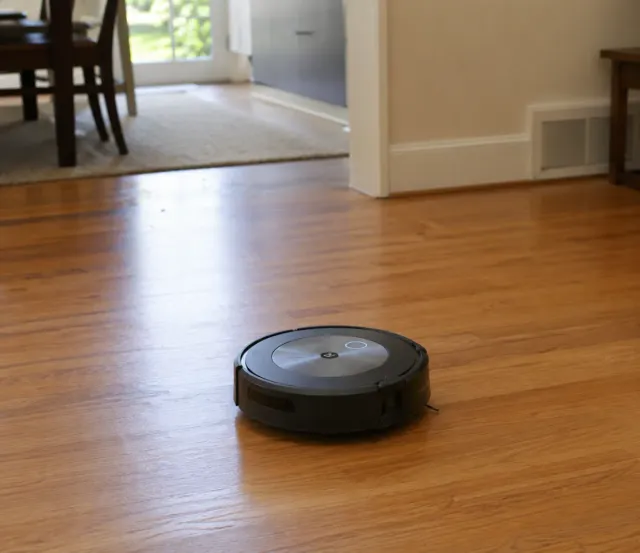
iRobot Roomba j7+
★★★★★ ★★★★★ 4.2The Roomba j7+ excels at hands-free daily cleaning in pet homes, but its app reliability and bag costs add friction over time.
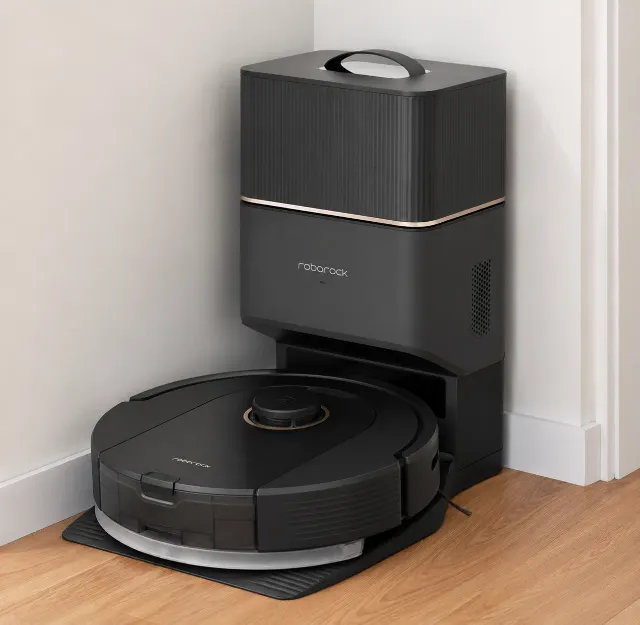
Roborock Q5+
★★★★★ ★★★★★ 4.2The Roborock Q5+ delivers premium LiDAR navigation and auto-empty convenience at a budget price, but completely lacks modern obstacle avoidance.
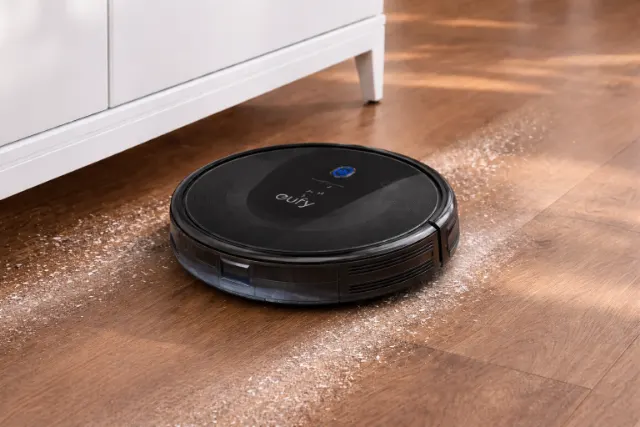
eufy RoboVac 11S
★★★★★ ★★★★★ 3.8The eufy RoboVac 11S is a quiet, ultra-slim budget robot vacuum for hard floors, but its random navigation makes it a frustrating choice for most homes in 2026.
More guides
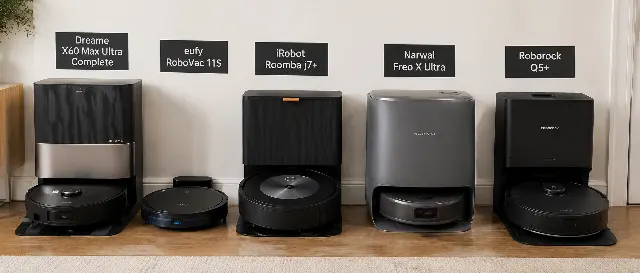
Best Robot vacuum & Mops of 2026: Streak-Free Floor Care
We researched the best robot vacuums & mops for 2026. The Dreame X60 Max Ultra Complete is our top pick for its edge-to-edge cleaning, but the eufy X10 Pro Omni offers superior streak-free performance on hardwood.
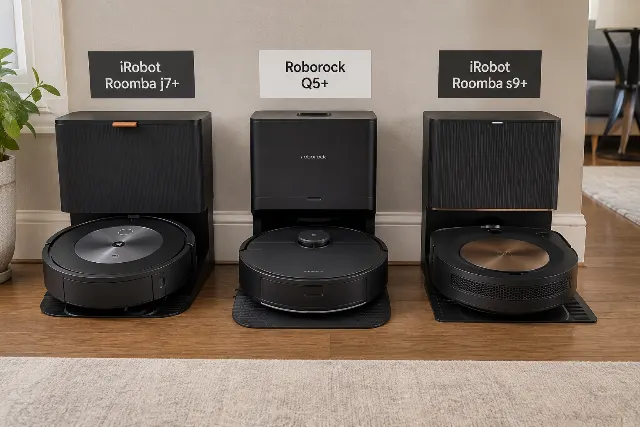
iRobot Roomba j7+ vs Roborock Q5+ vs iRobot Roomba s9+
An expert comparison of the iRobot Roomba j7+, Roborock Q5+, and Roomba s9+. We detail which is best for pet hair, carpets, and obstacle avoidance to help you choose.