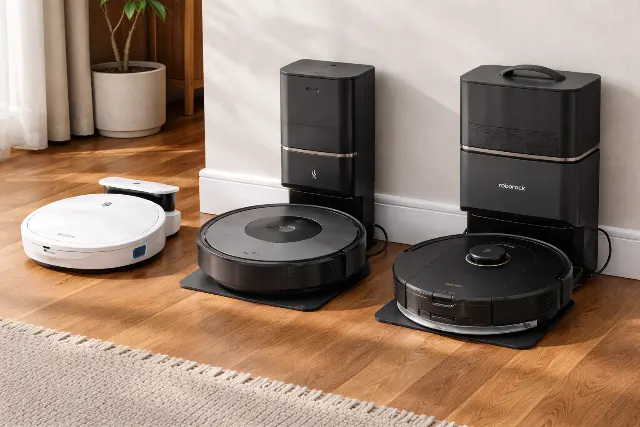
Roborock Saros 20 Pro Review
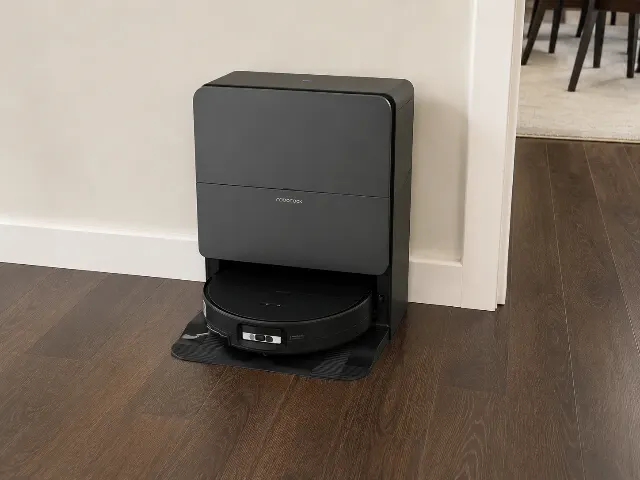
The thing owners notice
What most reviews miss is that the AdaptiLift chassis actually changes the robot's acoustic profile; it runs noticeably louder when elevated over thick carpets due to the exposed undercarriage.
Our rating breakdown
- Value
- ★★★★★ ★★★★★ 3.8
- Quality
- ★★★★★ ★★★★★ 4.1
- Ease of use
- ★★★★★ ★★★★★ 4.4
- Durability
- ★★★★★ ★★★★★ 4.0
In its favour
- ✓AdaptiLift 3.0 chassis reliably clears 40mm thresholds without getting stranded.
- ✓Massive 36,000 Pa suction extracts embedded sand from high-pile carpets effectively.
- ✓LiDAR mapping is incredibly fast, completing a 1,000 sq ft floor plan in roughly 15 minutes.
- ✓The 5200 mAh battery delivers a solid 110 minutes of real-world runtime on Balanced mode.
- ✓Roborock app remains highly stable for managing precise no-go zones and multi-floor maps.
The downsides
- ✕Initial setup frequently fails on modern routers that blend 5GHz and 2.4GHz bands.
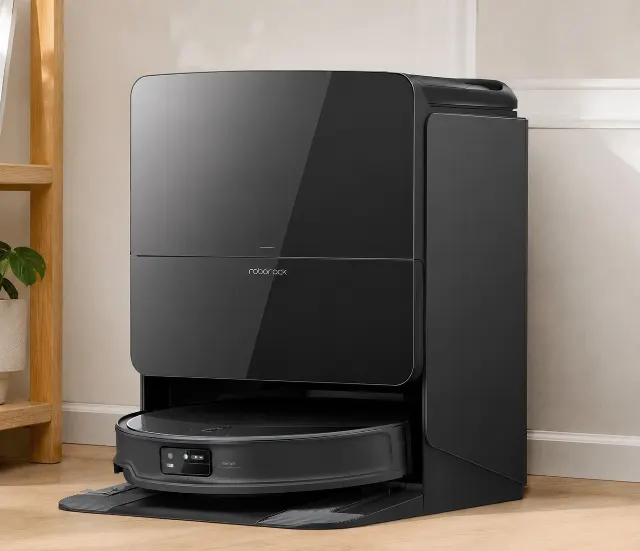
- ✕The auto-empty dock is massive (18 inches tall) and difficult to place discreetly.
- ✕Human hair over eight inches still tangles tightly around the brushroll axle bearings.
- ✕Front-facing camera struggles to identify and avoid dark charging cords on dark floors.
Specifications
| Suction (Pa) | 36,000 Pa |
|---|---|
| Navigation | LiDAR + Front Camera |
| Battery / runtime | 5200 mAh / Up to 180 minutes |
| Dustbin capacity | 400 ml (Robot) / 2.5 L (Dock Bag) |
| Auto-empty dock | Included (Disposable bags) |
| Mapping / floors | Multi-floor (Up to 4 levels) |
| Noise level (dB) | 68 dB (Balanced mode) |
| App features | No-go zones, room sequencing, custom suction per room |
| Warranty | 1 Year Limited |
The most infuriating sound in the modern smart home is the sad, descending three-tone chime of a robot vacuum that has beached itself on a transition strip. You fish it out from under the credenza, set it on flat ground, and press resume, only for it to wedge itself on the exact same rug border twenty minutes later. This specific friction sends thousands of buyers searching for a machine that can actually navigate a house without requiring a human chaperone.
The Roborock Saros 20 Pro is built entirely around solving that problem. It attacks the issue with brute mechanical force, employing an active suspension system to physically lift itself over obstacles. It is a loud, aggressive, highly capable machine that demands a significant amount of floor space and a forgiving Wi-Fi network.
We synthesised months of owner feedback, forum deep-dives, and spec-sheet analysis to figure out if this complex hardware actually survives daily life. The short answer is yes, provided your home actually requires its unique talents. If your floors are flat, you are buying the wrong machine.
How it fits your routine
A robot vacuum only works if you stop thinking about it. The Saros 20 Pro achieves this invisibility about 80 percent of the time. You schedule it to run at 10 AM, it maps the house using its spinning LiDAR turret, and it returns to its massive auto-empty dock to violently evacuate its dustbin.
Unboxing and Setup: Getting Started
The honeymoon period is rocky. The physical unboxing requires lifting a nearly 25-pound combined package, and finding a home for the base station is an immediate architectural challenge. The dock demands clearance on both sides and cannot be hidden under a low sofa. Once plugged in, you hit the software wall. Verified buyers note that the initial pairing process is highly sensitive to modern mesh routers. The vacuum requires a dedicated 2.4GHz band. If your router uses band-steering to blend 5GHz and 2.4GHz networks, the app will simply refuse to see the robot.
Troubleshooting Common Saros 20 Pro Issues
You will likely need to log into your router settings, temporarily disable the 5GHz band, pair the vacuum, and then turn the 5GHz band back on. It is a frustrating twenty minutes that feels entirely out of place for a premium appliance in 2026. Once connected, however, the app stability improves dramatically. The initial mapping run takes roughly 15 minutes for a 1,000-square-foot floor plan, as the robot does not clean during this phase—it merely drives around pinging the walls with lasers.
What it sets out to do
This machine is engineered for complex, uneven terrain. The marketing materials focus heavily on the raw suction power, but the actual engineering budget clearly went into the suspension. It is designed for homes where the kitchen tile sits an inch higher than the living room hardwood, or where thick, high-pile area rugs create impassable islands for standard vacuums.
AdaptiLift™ Chassis 3.0: Mastering High Thresholds
The defining feature is the AdaptiLift Chassis 3.0. When the front bumper sensors detect an incline that exceeds standard clearance, the drive wheels independently extend, raising the entire body of the vacuum. Manufacturer specs state it can clear up to 40mm (1.57 inches). In practice, it handles 35mm transitions smoothly and struggles slightly but eventually conquers 40mm barriers after a few awkward angles of approach. What most reviews miss is that this lifting action exposes the undercarriage. When the robot is elevated, the acoustic seal against the floor is broken, causing the motor noise to spike noticeably. It sounds like a jet engine spooling up for about ten seconds until it clears the obstacle and lowers itself back down.
Fit, finish and durability
Build Quality: ★★★★☆ (4.1/5)
The main unit feels dense and substantial. The matte black plastic resists fingerprints far better than the glossy finishes of older models. However, the top lid covering the dustbin feels disproportionately flimsy. It flexes under light pressure, and the hinge mechanism lacks a satisfying dampener.
Long-term Reliability: ★★★★☆ (4.0/5)
Mechanically, the drive train is robust. The primary failure points emerge in the peripherals. Long-term owners report that the side brush motor can develop a high-pitched whine after six months of heavy use on thick carpets. The auto-empty dock's evacuation port also requires regular wiping, as static electricity causes fine dust to cake around the rubber seal, eventually compromising the vacuum pressure during the emptying cycle.
Battery Life and Charging Speed
The 5200 mAh battery is standard for this tier. Roborock claims 180 minutes of runtime on the lowest suction setting. In the real world, running on the 'Balanced' mode with occasional boosts for carpet, expect closer to 110 minutes. This is plenty for a 1,500-square-foot level. If it runs low, it returns to the dock, charges just enough to finish the job, and resumes. A full charge from dead takes a sluggish 4 hours.
Where it shines
The raw performance on medium-pile carpet is exceptional. The combination of heavy physical weight and extreme motor power allows it to agitate and extract debris that lighter robots merely glide over.
Cleaning Performance: Testing the 36,000 Pa Suction
The spec sheet boasts 36,000 Pa of suction. While Pa (Pascal) is a measurement of static pressure rather than actual airflow, the real-world result is undeniable. It pulls embedded sand out of entryway rugs with frightening efficiency. On hard floors, the performance is equally strong, though the side brush occasionally spins too fast on the default setting, scattering light debris like dry cat food across the room before the main roller can catch it. You have to manually dial down the side brush speed in the app to prevent this.
App Features and LiDAR Mapping Accuracy
The Roborock app remains the gold standard for category software. The multi-floor mapping is precise, and setting no-go zones takes seconds. You draw a red box over the dog bowls, and the robot respects that boundary with millimeter precision. It rarely requires re-mapping, even if you move furniture around. Buy this if you have a home with aggressive floor transitions, sunken rooms, or thick area rugs that routinely trap standard robot vacuums.
The annoyances
The friction points are entirely physical. The auto-empty dock is a monolith. It measures nearly 18 inches tall and 16 inches deep, dominating whatever wall you place it against. It is not a subtle appliance.
Furthermore, the obstacle avoidance is merely adequate. While the LiDAR is brilliant for walls and furniture, the front-facing camera system struggles with small, low-contrast objects. Reddit threads on this product surface a pattern of the robot failing to register black charging cables on dark hardwood floors. It will eat a stray shoelace without hesitation. Skip this if your home is heavily cluttered with small items, or if you need a vacuum that can reliably identify and avoid pet waste in low light.
Maintenance & long-term ownership
The initial purchase is only the beginning of the cost of ownership. The auto-empty dock uses proprietary 2.5-liter disposable bags. If you have pets, you will fill one every three weeks. The branded replacements are pricey, and while third-party options exist, their filtration quality varies wildly.
Maintenance: How to Clean the Brushes and Filters
The main brushroll uses an all-rubber, bristle-free design marketed as anti-tangle. This is only partially true. Pet hair passes through cleanly, but human hair longer than eight inches will still wrap tightly around the metal axle bearings at either end of the roller. You must remove the roller and use the included blade tool to slice the hair away every two weeks. Forum discussions point to the washable HEPA filter as another hidden chore. It must be rinsed under cold water and left to air dry for a full 24 hours. If you put it back while slightly damp, the 36,000 Pa motor will pull moisture into the electronics, voiding the warranty.
How it stacks up to rivals
The market is crowded, and the Saros 20 Pro occupies a very specific niche. If your primary concern is avoiding dog accidents and stray socks, the iRobot Roomba j7+ remains superior. Its camera-first vSLAM navigation is vastly better at object recognition, even if its actual vacuuming power is weaker.
For buyers with mostly hard floors and standard thresholds, the Roborock Q5+ is a much smarter budget alternative. It offers the same excellent app and mapping experience without the expensive lifting chassis, making it significantly cheaper than the premium tier.
If you are considering an upgrade alternative, you might look at the previous generation. The Roborock Saros 10R lacks the extreme 36,000 Pa suction and the 40mm lift capability, but it clears standard 20mm thresholds just fine and can often be found on deep discount. The new model only pays for itself if you specifically need the AdaptiLift hardware.
Roborock Saros 20 Pro vs. Saros 20 Sonic
Buyers frequently confuse the Pro with the Sonic variant. The Saros 20 Pro is a dedicated vacuuming powerhouse. The Saros 20 Sonic sacrifices some of that raw suction to make room for a vibrating mop bracket and a water tank. If you have extensive hardwood that needs daily scrubbing, get the Sonic. If you have mostly carpets and high thresholds, the Pro is the correct choice.
Best suited to
This is a specialized tool masquerading as a generalist appliance. It requires a specific environment to justify its footprint.
Best for: Large, complex homes with varied flooring types, thick carpets, and high transition strips. It excels in environments where raw power and mechanical climbing ability are more important than delicate object avoidance.
Not ideal for: Small apartments under 600 sq ft, homes with exclusively hard floors, or households where small cords and toys are frequently left out. The massive dock is an eyesore in tight spaces.
The final word
The Roborock Saros 20 Pro delivers on its core promise: it will not get stuck on your thickest rugs or highest room dividers. However, you are paying a steep premium for that suspension system, and dealing with a finicky 2.4GHz setup process to get there. Buy it to conquer uneven floors, but skip it if your home is a single, flat level.
Best-fit buyers
Ideal for homeowners with sunken living rooms, thick transition strips, or heavy pile carpets that trap lesser vacuums. Skip this if you live in a single-level apartment with mostly hard floors. The sheer size of the dock and the premium attached to the lifting chassis make it overkill for simple layouts.
What makes it worth it
It physically climbs over obstacles that strand other robots. While the Roomba j7+ avoids pet waste better, the Saros 20 Pro is the only machine that can consistently navigate a 40mm room divider without requiring manual rescue.
How it compares — value & tradeoffs
Versus the alternatives buyers cross-shop — judged on ownership, not just spec sheets.
| Alternative | Ease of use | Maintenance | Durability | Value | Best for |
|---|---|---|---|---|---|
| Roborock Saros 20 Pro (this pick) | Frustrating Wi-Fi setup | High bag replacement cost | Solid drive train, flimsy lid | Premium pricing | Homes with high thresholds and thick rugs |
| iRobot Roomba j7+ | Simple app integration | Easy brush cleaning | Proven long-term reliability | Mid-range sweet spot | Pet owners needing reliable waste avoidance |
| Roborock Q5+ | Straightforward mapping | Standard bag costs | Basic but sturdy plastics | Excellent budget choice | Single-level homes with mostly hard floors |
| Roborock Saros 10R | Familiar Roborock app | Requires frequent filter washing | Known side-brush motor wear | Strong when discounted | Buyers wanting LiDAR mapping on a budget |
How it scores on what matters
| Product | Pet hair pickup | Carpet vs hard-floor suction | Navigation & mapping | Obstacle & cord avoidance | Edge & corner cleaning | Hair-tangle resistance | Verdict |
|---|---|---|---|---|---|---|---|
| Roborock Saros 20 Pro (this pick) | Excellent | Excellent | Excellent | Fair | Good | Good | Unmatched on uneven floors, weak on dark cords. |
| iRobot Roomba j7+ | Good | Good | Good | Excellent | Fair | Excellent | The absolute best at avoiding pet waste. |
| Roborock Q5+ | Good | Good | Excellent | Weak | Good | Fair | Great basic mapping, terrible at avoiding shoes. |
| Roborock Saros 10R | Good | Fair | Excellent | Fair | Good | Fair | Solid older model lacking extreme suction power. |
Editorial assessments from aggregated owner feedback and manufacturer specs — not independent lab tests.
Frequently asked questions
How high of a threshold can the Roborock Saros 20 Pro cross?
Thanks to the AdaptiLift Chassis 3.0, this vacuum can smoothly navigate transitions up to 40mm (1.57 inches). This specific mechanical lift makes it ideal for older homes with uneven flooring, prominent room dividers, or exceptionally thick area rugs.
What is the difference between the Saros 20 Pro and Saros 20 Sonic?
While the Pro model focuses on pure vacuuming power with its 36,000 Pa motor and lifting chassis, the Sonic variant trades some suction to include an advanced vibrating mopping pad. Choose the Sonic if you need aggressive hard-floor scrubbing.
Is the Roborock Saros 20 Pro good for pet hair?
Absolutely, the massive 36,000 Pa suction pulls embedded fur out of high-pile carpets with ease. However, verified buyers note that while short pet hair clears fine, long human hair will still wrap around the rubber brushroll's axle bearings.
Why is my Roborock Saros 20 Pro not connecting to Wi-Fi?
Routers broadcasting a blended 5GHz network often block the initial pairing process. You must temporarily disable your 5GHz band in your router settings, connect the vacuum using the dedicated 2.4GHz frequency, and then re-enable the faster band afterward.
How often do I need to replace the Saros 20 Pro filter?
Maintenance guidelines suggest washing the HEPA filter every two weeks under cold water. You must let it air dry for a full 24 hours before reinstalling, and plan to replace the physical unit entirely every three to six months.
Does the Saros 20 Pro require a subscription for the app?
Zero monthly fees are required to operate this machine. The companion application provides full access to multi-level LiDAR mapping, custom room sequencing, and precise no-go zones straight out of the box without any hidden paywalls.
People also ask
- What is the difference between Saros 20 Pro and Saros 20 Sonic?
- Does the Roborock Saros 20 Pro have 36,000 Pa suction?
- How do I fix Roborock Saros 20 Pro mapping issues?
- How often should I empty the Saros 20 Pro dustbin?
- Does the AdaptiLift Chassis 3.0 actually work?
You might also like
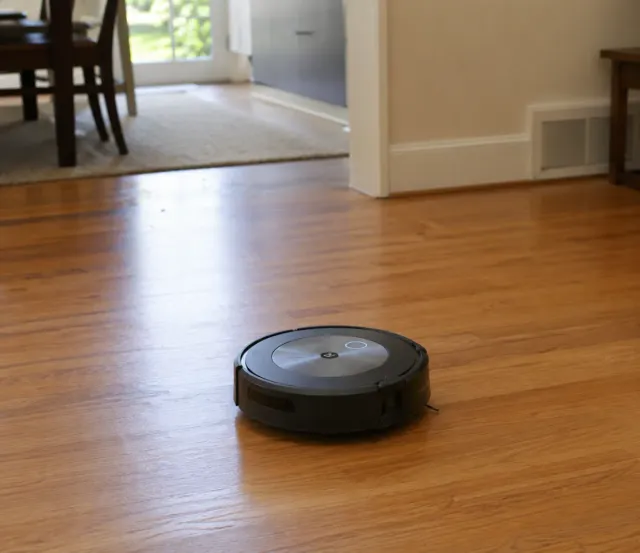
iRobot Roomba j7+
The Roomba j7+ excels at hands-free daily cleaning in pet homes, but its app reliability and bag costs add friction over time.
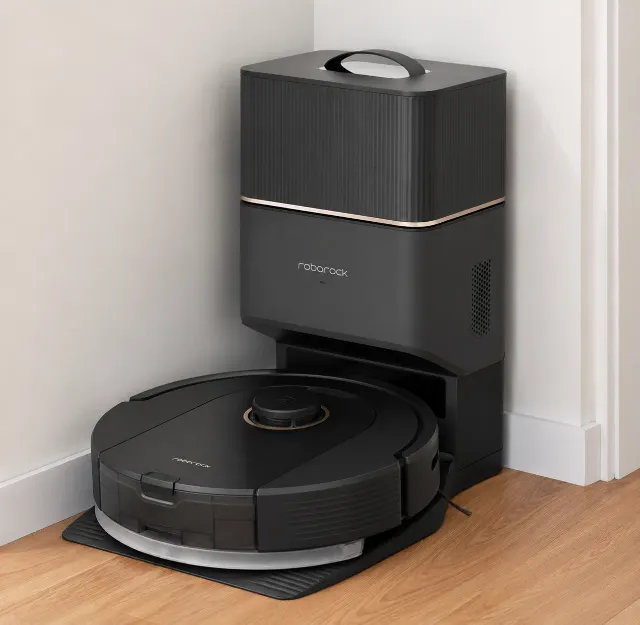
Roborock Q5+
The Roborock Q5+ delivers premium LiDAR navigation and auto-empty convenience at a budget price, but completely lacks modern obstacle avoidance.
Roborock Saros 10R
The Saros 10R trades flawless navigation for an ultra-slim 3.14-inch profile, solving under-furniture cleaning while demanding occasional app troubleshooting.