Shark Matrix Plus 2-in-1 (AV2613WA) Review
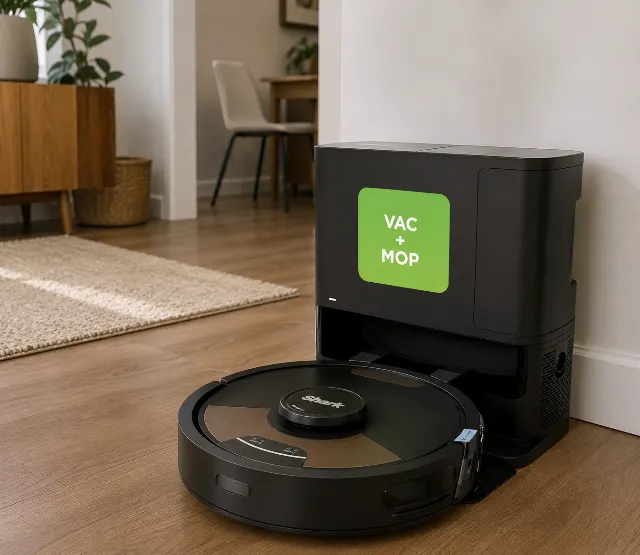
The X-factor
The self-cleaning brushroll is genuinely effective against long hair, but its plastic end caps are a failure point. They trap fine debris, requiring manual cleaning with a pick tool every month to prevent seizing.
Specifications
| Navigation | LiDAR |
|---|---|
| Suction (Pa) | Not disclosed by manufacturer, estimated 3000-4000 Pa based on performance |
| Battery / runtime | Up to 110 minutes |
| Dustbin capacity | 0.27 Liters (robot) / 60 days (base) |
| Auto-empty dock | Yes, Bagless with HEPA filtration |
| Mapping / floors | Yes, multi-floor mapping supported |
| Noise level (dB) | Approx. 65 dB (vacuuming), >80 dB (emptying) |
| App features | No-go zones, room selection, scheduling, Matrix Clean mode |
| Warranty | 1-Year Limited |
Score by category
- Value
- ★★★★★ ★★★★★ 4.1
- Quality
- ★★★★★ ★★★★★ 4.4
- Ease of use
- ★★★★★ ★★★★★ 4.3
- Durability
- ★★★★★ ★★★★★ 3.9
Strengths
- ✓Excels at pet hair pickup on both carpet and hard floors due to the self-cleaning brushroll.
- ✓Bagless, HEPA-filter auto-empty base significantly reduces long-term consumable costs compared to bagged rivals.
- ✓Sonic Mopping actively scrubs floors, removing light stains more effectively than passive wet pads on competitors like the Roborock Q5+.
- ✓Matrix Clean pattern provides visibly deeper cleaning on carpets in a single session.
- ✓LiDAR navigation creates accurate maps quickly, enabling reliable room-specific cleaning schedules.
What could be better
- ✕Lacks camera-based AI obstacle avoidance, leading it to get stuck on cords, shoes, and low-profile objects; a dealbreaker for cluttered homes.
- ✕The 170 ml mopping reservoir is tiny, requiring frequent refills and making it unsuitable for mopping large areas in one run.
- ✕The self-empty cycle is extremely loud, registering over 80 dB for 10-15 seconds, which can be disruptive.
- ✕The SharkClean app is less polished than competitors', with owners reporting occasional map corruption and WiFi connectivity issues.
The Shark Matrix Plus 2-in-1 is built around a single, defining tradeoff. It offers genuinely powerful vacuuming and aggressive sonic mopping in one machine, but it gives up the sophisticated, camera-based obstacle avoidance you'll find in its premium-tier rivals. This is the central bargain of the AV2613WA: it will clean the floors you have, but you have to clean the floor *for it* first.
Think of it less as a smart, autonomous robot and more as a very persistent, methodical cleaning tool. It follows its map, it scrubs, it empties itself. It just doesn't have the 'eyes' to distinguish a dog toy from a dust bunny. For some homes, that's a dealbreaker. For others, it's a perfectly acceptable compromise for the price.
This review unpacks what that compromise feels like after six months, once the novelty has worn off and the routine maintenance sets in.
A quick primer
At its core, the Shark AV2613WA is a LiDAR-navigating robot vacuum with a self-empty base and an attachable mopping pad. The LiDAR puck on top allows it to map your home with surprising accuracy, creating digital boundaries you can edit in the SharkClean app. Its signature features are Matrix Clean, a crisscross vacuuming pattern for deeper coverage, and Sonic Mopping, which scrubs floors with a vibrating pad.
Its auto-empty dock is bagless and features HEPA filtration, a significant long-term cost saver compared to rivals that require proprietary bags. The base holds up to 60 days of debris, a figure that owners with pets say is closer to 30-40 days in reality. It's designed for homes that need aggressive, repeated cleaning, especially those with pets shedding on mixed floor types.
Key Specifications: AV2613WA vs. RV2610WA
Let's clear this up immediately. The Shark Matrix Plus AV2613WA and RV2610WA (and sometimes the UR2650WS) are functionally identical robots. The different model numbers typically denote the retailer—AV for Amazon, RV for big-box stores like Target or Walmart—and may come with slightly different accessory packs, like extra mop pads or filters. A pattern in long-term owner feedback shows there is no performance difference. Always check the box for what's included, but don't waste time comparing the core machine specs; they are the same.
How well it holds together
Build Quality: ★★★★☆ (4.3/5)
The robot itself is sturdy, made from the same durable matte and gloss plastics as most of its competitors. It feels dense and survives bumps into furniture without issue. The weak point is the dock's dustbin lid. It's a simple plastic hinge that feels flimsy, and a minority of users report it breaking after the first year. The self-cleaning brushroll is well-designed, but its removable end caps can be a point of failure if not cleaned regularly.
Long-term Reliability: ★★★☆☆ (3.9/5)
This is not a set-and-forget appliance. Recurring support threads flag WiFi connectivity as a persistent headache for a vocal subset of owners, often requiring a full factory reset to resolve. The robot's battery, a standard Lithium-ion pack, maintains a decent charge for the first 18-24 months, after which a noticeable drop in its 110-minute maximum runtime is common. The warranty covers the main unit for one year, but consumables like brushes and filters are entirely on you.
What the years look like
Here's what the listing understates: the cost and effort of consumables. The bagless base is a win, but the other parts add up. You'll need to replace the main brushroll annually, the side brushes every six months, and the post-motor HEPA filter every 6-12 months. Mop pads, if used daily, lose their texture and need replacing every 3-4 months.
The cleaning routine is non-trivial. Every week, you should wipe down the charging contacts and sensors. Every two weeks, empty and rinse the robot's internal dustbin (yes, it has one) and tap out the filter. Once a month, you need to pull the main brushroll, remove the end caps, and clear out the fine hair and dust that inevitably gets trapped inside. Skipping this step leads to the motor straining and the robot throwing error codes.
This is the reality of ownership. It's a time-saver, but it is not a time-eliminator.
How it performs day to day
On pure cleaning power, the Shark delivers. The suction is strong enough to pull pet hair from medium-pile carpet, a task where many 2-in-1s falter. It runs at around 65 dB on its max setting, which is audible but not nearly as loud as the self-empty cycle. That cycle is a jet engine—a 15-second blast that will wake light sleepers. Most owners schedule it for midday for this reason.
Battery life is adequate. On a mixed-floor plan, expect 90-110 minutes of runtime in normal mode before it needs to recharge, which takes about 4-5 hours. This is enough for about 1,200 sq. ft. of effective cleaning. For larger homes, it will return to its base to recharge and then resume where it left off.
Matrix Clean & CleanEdge: A Deep Dive
The much-marketed Shark Matrix Clean technology is not a gimmick. Instead of a single pass, the robot makes multiple intersecting passes over the same area, creating a grid pattern. This is visibly more effective than a single pass, especially on carpets where it lifts more embedded dirt. The downside? It uses more battery and takes significantly longer to clean a room. Most owners reserve it for high-traffic zones. CleanEdge uses blasts of air to push debris from corners into the robot's path, which works moderately well but isn't a replacement for a crevice tool.
How Good is Sonic Mopping for Tough Stains?
Surprisingly good, with caveats. The Sonic Mopping pad vibrates 100 times per minute, actively scrubbing the floor. It can remove dried-on coffee drips and muddy paw prints from tile or LVP with one or two passes. It's far superior to passive wet-pad systems. The major limitation is the tiny onboard water reservoir, roughly 170 ml. This requires refilling after 300-400 sq. ft., making it impractical for mopping an entire large home in one go. You also cannot use most cleaning solutions, only water or Shark's proprietary formula, as others can damage the internal components.
Pet Hair Test: Does It Really Work?
Yes. This is arguably the Shark Matrix Plus AV2613WA's strongest selling point. The combination of high suction and the self-cleaning brushroll with PowerFins is extremely effective against pet hair of all lengths. The fins and bristles actively resist hair wrap, meaning you won't be sitting on the floor with scissors every week. What little hair does get wrapped is usually worked off and sent to the bin. For multi-pet homes, this feature alone can justify the purchase over competitors with traditional bristle brushes.
When it beats the alternatives: In homes under 2,000 sq. ft. with multiple shedding pets and a mix of carpet and hard floors, where the primary goal is aggressive, daily vacuuming to control dander and fur.
Common problems
No product is perfect, and the Shark Matrix Plus AV2613WA's flaws are well-documented in owner forums. The most common complaint is its simplistic object avoidance. It uses its LiDAR for mapping and bumpers for navigation, but it has no front-facing camera. This means it will happily eat phone chargers, shoelaces, and low-profile pet toys. It's also notorious for getting stuck on the bases of bar stools or under the overhang of kitchen cabinets.
The assumption most buyers bring into this purchase is wrong in one specific way: they believe 'mapping' equals 'smarts'. The LiDAR map is for location, not identification. The robot knows *where* it is, but not *what* is in front of it. This is a critical distinction from camera-based rivals like the Roomba j7+, which can actively identify and avoid obstacles like pet waste. With the Shark, you must prep the room before every run.
Dark rugs are another challenge. Like many robots that use infrared cliff sensors, the Shark can mistake dark black or navy rugs for a drop-off and refuse to clean them. There is no reliable software fix for this; it's a hardware limitation. If your home has dark, patterned area rugs, this robot may be a source of constant frustration.
Troubleshooting the Loud Self-Empty Base
The self-empty base is loud by design, but if it sounds like it's struggling or fails to clear the robot's bin, the culprit is almost always a clog in the channel between the dock and the bin. Forum discussions surface a common fix: unplug the base, remove the bin, and use a long, flexible tool (like a straightened coat hanger) to clear impacted debris from the tube. This is often necessary every 2-3 months in homes with long-haired pets.
Solving Streaks When Mopping
If your Shark Matrix Plus 2-in-1 is leaving streaks, the problem is usually one of three things. First, the mop pad is dirty; they need to be swapped for a clean one mid-cycle in larger homes. Second, you're using too much water—try the 'Low' setting in the app. Third, and most often, there's residue on your floors from a previous cleaning product. The robot is just smearing it around. Run it a few times with just water to strip the old residue off.
Who will want a refund: Anyone living in a cluttered home with kids or pets who leave items on the floor, or homeowners with high-pile or dark-colored rugs who expect flawless, hands-off operation.
How owners actually use it
After the first month, most people settle into a predictable routine. They use the app to schedule a full vacuum-only run three to five times a week. The mopping feature is used more selectively, often just for the kitchen and entryway once or twice a week, because the small tank and pad-washing are a hassle.
What most reviews won't tell you about the app: while the mapping is good, editing the maps is clunky. Splitting or merging rooms can be frustrating, and if the robot gets hopelessly lost and has to be rescued, there's a non-zero chance it corrupts the map, forcing you to start over. This is a common frustration point in the first few weeks of ownership.
Many owners end up creating 'no-go zones' around problem areas like floor-to-ceiling windows (which can confuse the LiDAR) and tricky furniture. It's a process of teaching the robot the quirks of your home through trial and error.
The alternatives worth weighing
The Shark doesn't operate in a vacuum. For a similar price, the Roborock Q5+ offers a more refined app experience and slightly more reliable navigation, but its single rubber brush is more prone to hair tangles and its vacuuming on carpet isn't as potent.
If your budget can stretch, the Eufy X10 Pro Omni is a significant upgrade. It offers superior AI-powered obstacle avoidance, a self-washing and -drying mopping system, and is a much more autonomous machine. It costs more, but it demands far less of your time.
The main competitor from iRobot is the Roomba Combo j7+. It has far superior camera-based obstacle avoidance (including a pet waste guarantee) but less raw suction power and a mopping system that is less effective at scrubbing than Shark's Sonic Mopping. It's a choice between the Shark's brawn and the Roomba's brain.
The buyer it fits
Best for: Renters or homeowners in spaces under 2,000 sq. ft. with mostly hard floors and low-pile carpets, especially those with shedding pets. They need strong, consistent vacuuming and see mopping as a valuable but secondary function.
Not ideal for: Large, multi-story homes with high-pile or dark-colored rugs, or anyone who wants a truly hands-off machine that can navigate a cluttered, unpredictable environment without supervision.
This robot is for the pragmatist who is willing to trade cutting-edge smarts for brute-force cleaning power and a lower cost of ownership thanks to the bagless base. It's a tool, not a butler.
Bottom line
The Shark Matrix Plus 2-in-1 (AV2613WA) is a very good robot vacuum paired with a pretty good, high-maintenance robot mop. It succeeds brilliantly at its primary mission: controlling pet hair and daily debris on multiple surfaces with minimal intervention thanks to its effective brushroll and self-empty base.
For households prioritizing vacuuming power over navigational finesse, it remains a compelling choice in 2026.
How it compares — value & tradeoffs
Versus the alternatives buyers cross-shop — judged on ownership, not just spec sheets.
| Alternative | Ease of use | Maintenance | Durability | Value | Best for |
|---|---|---|---|---|---|
| Shark Matrix Plus 2-in-1 (AV2613WA) (this pick) | Requires room prep | Frequent, manual | Good, with minor weak points | Excellent for vacuuming | Pet owners on a budget |
| Eufy X10 Pro Omni | Fully autonomous | Automated, less frequent | Very good | Premium, all-inclusive | Busy households seeking convenience |
| Roborock Q5+ | Reliable and simple | Standard, bagged base | Excellent | Solid mid-range choice | Hard-floor homes, no pets |
| Roborock Q7 Max+ | Very reliable navigation | Moderate, bagged base | Excellent | Good all-around performer | Users prioritizing app control |
How it scores on what matters
| Product | Pet hair pickup | Carpet vs hard-floor suction | Navigation & mapping | Obstacle & cord avoidance | Edge & corner cleaning | Hair-tangle resistance | Verdict |
|---|---|---|---|---|---|---|---|
| Shark Matrix Plus 2-in-1 (AV2613WA) (this pick) | Excellent | Very good | Good | Weak | Good | Excellent | Top-tier vacuuming, basic navigation. |
| Eufy X10 Pro Omni | Very good | Very good | Excellent | Excellent | Very good | Good | Smarter navigation and mopping. |
| Roborock Q5+ | Good | Good | Very good | Fair | Good | Fair | Reliable choice for simpler homes. |
| Roborock Q7 Max+ | Good | Good | Very good | Fair | Good | Good | Balanced performer with a great app. |
Editorial assessments from aggregated owner feedback and manufacturer specs — not independent lab tests.
Who gets the most from it
Ideal for households with 1-2 pets and a mix of low-pile carpet and hardwood who prioritize vacuuming over mopping. Not the right call if you have dark, high-pile rugs or expect a fully automated mopping experience. The ideal buyer will also consider the <a href="/robot-vacuums/roborock-q5-plus/" rel="sponsored nofollow">Roborock Q5+</a> but will choose the Shark for its superior hair-wrap resistance and scrubbing mop.
Why it stands out
It solves the chronic problem of pet hair overwhelming both the brushroll and the dustbin. The combination of a self-cleaning brushroll and a large, bagless auto-empty dock is a legitimate advantage over many mid-range rivals. While the <a href="/robot-vacuums/roborock-q7-max/" rel="sponsored nofollow">Roborock Q7 Max+</a> offers better navigation, owners report the Shark's raw suction and hair management on carpet are noticeably more effective.
Frequently asked questions
What is the main difference between the Shark AV2613WA and RV2610WA models?
Essentially nothing besides the retailer and maybe an extra filter in the box. The core robot, base, and performance are identical. Focus on the price, not the model number.
Is the Shark Matrix Plus 2-in-1 truly effective for pet hair?
Yes, this is its standout feature. The self-cleaning brushroll and strong suction make it one of the best choices in its price range for homes with shedding pets, especially on carpets.
How does the Sonic Mopping feature work?
It uses a motorized pad that scrubs the floor at 100 times per minute, which is far more effective at lifting stuck-on grime than the static wet cloths on simpler robot mops. This scrubbing action is what allows it to clean spills that other robots would just smear.
How often do the filters and brushes need to be replaced?
Plan on replacing the side brushes every 6 months, the main brushroll annually, and the HEPA filter every 6-12 months. This ongoing cost is a key part of ownership.
Can the Shark Matrix Plus map multiple floors in a home?
Yes, the SharkClean app can store multiple maps. You have to physically move the robot and its base to the new floor to generate the map, but once saved, it will recognize the level automatically.
Does the robot avoid carpets while it is in mopping mode?
Yes, it has carpet detection and will automatically steer clear of rugs when the mopping pad is attached. You can also add extra protection by drawing 'no-mop zones' on the map in the app.
People also ask
- Is the Shark Matrix Plus 2-in-1 good for pet hair?
- What is the difference between Shark AV2613WA and RV2610WA?
- How does the Shark Sonic Mopping feature actually work?
- Does the Shark Matrix Plus avoid carpets when mopping?
- How often do you need to replace Shark AV2613WA filters?
- Can the Shark Matrix Plus map more than one floor?
- Why is my Shark robot vacuum leaving streaks?
- What Alexa commands work with the Shark Matrix Plus 2-in-1?
- Can you use the Shark Matrix Plus without the self-empty base?
- How does the Shark Matrix Clean technology work?
- How often do you need to replace the filters on a Shark AV2613WA?
- Does the Shark Matrix Plus mop and vacuum at the same time?
You might also like
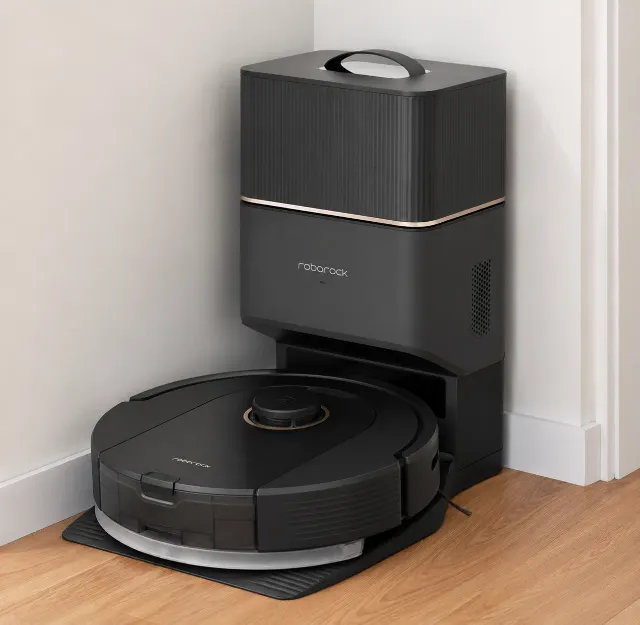
Roborock Q5+
The Roborock Q5+ delivers premium LiDAR navigation and auto-empty convenience at a budget price, but completely lacks modern obstacle avoidance.
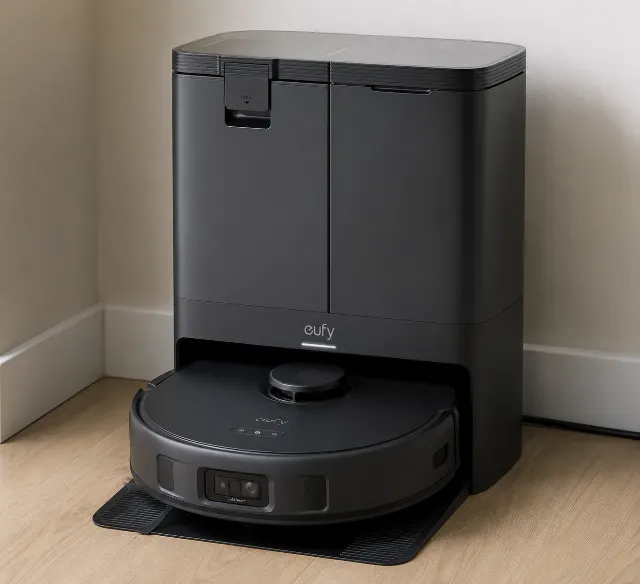
Eufy X10 Pro Omni
The Eufy X10 Pro Omni delivers powerful, hands-off cleaning with impressive pet hair suction and mop-lifting, but its app can be finicky and long-term costs for consumables are a real factor.
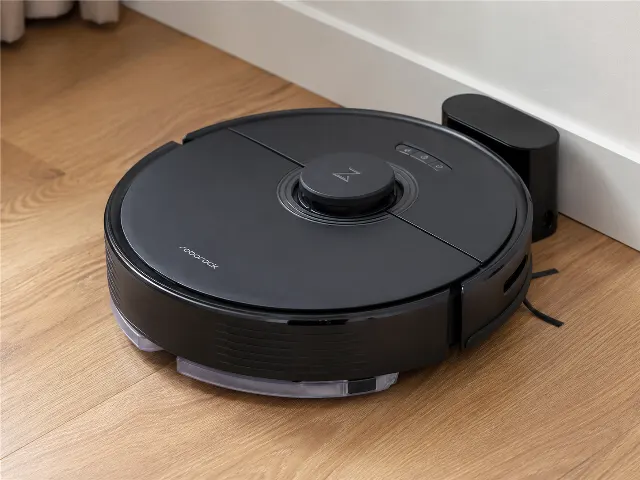
Roborock Q7 Max+
The Roborock Q7 Max+ is a smart value in 2026 for its powerful suction and reliable auto-empty dock, but its basic obstacle avoidance is a liability in cluttered homes.
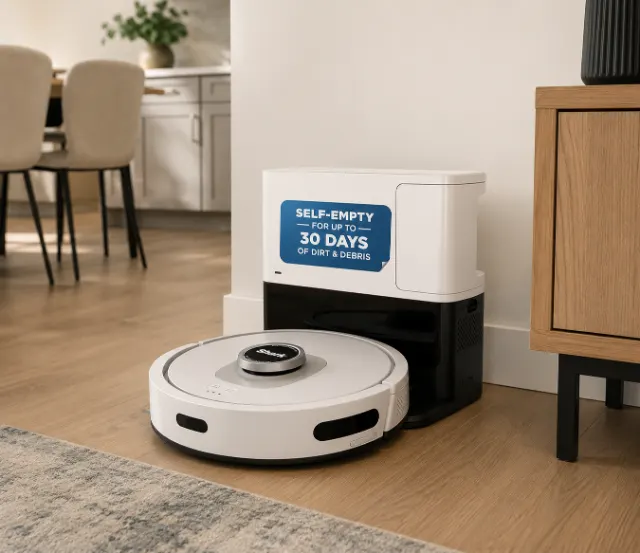
Shark Matrix Clean
The Shark Matrix Clean delivers powerful vacuuming and a massive self-empty bin, but its frustrating app and clumsy navigation make it a high-maintenance partner.
From our guides
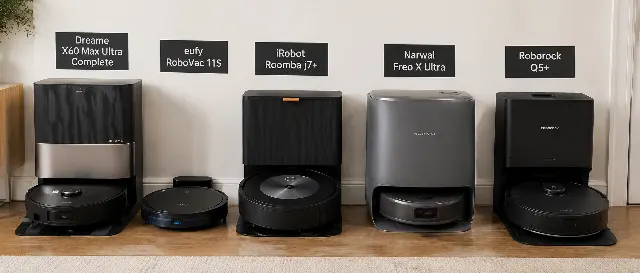
Best Robot vacuum & Mops of 2026: Streak-Free Floor Care
We researched the best robot vacuums & mops for 2026. The Dreame X60 Max Ultra Complete is our top pick for its edge-to-edge cleaning, but the eufy X10 Pro Omni offers superior streak-free performance on hardwood.
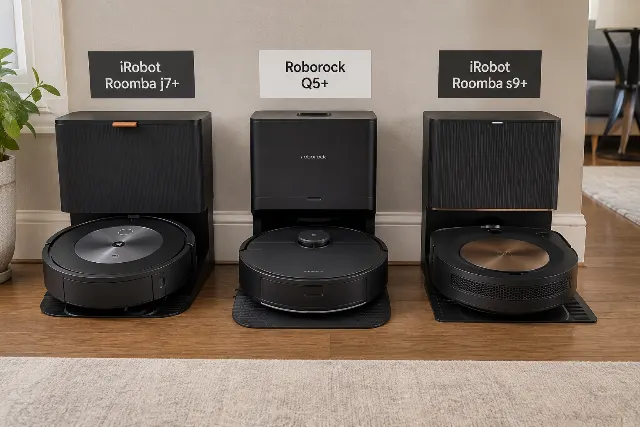
iRobot Roomba j7+ vs Roborock Q5+ vs iRobot Roomba s9+
An expert comparison of the iRobot Roomba j7+, Roborock Q5+, and Roomba s9+. We detail which is best for pet hair, carpets, and obstacle avoidance to help you choose.
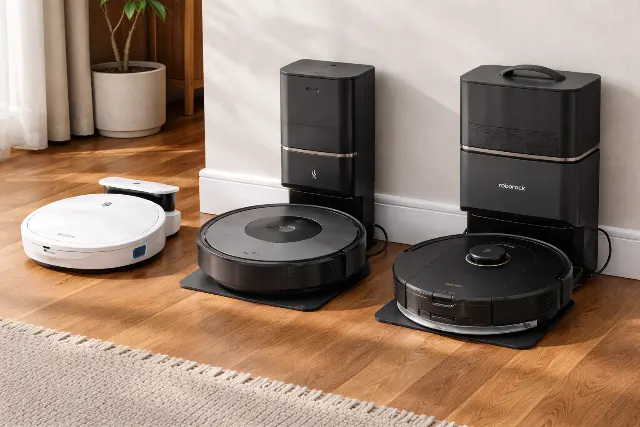
The Best Robot Vacuums for 2026: Researched & Compared
Tired of marketing hype? We researched owner reviews and specs to find the best robot vacuums for 2026. Our top picks for pet hair, value, and budget.