Roborock Qrevo S Pro Review
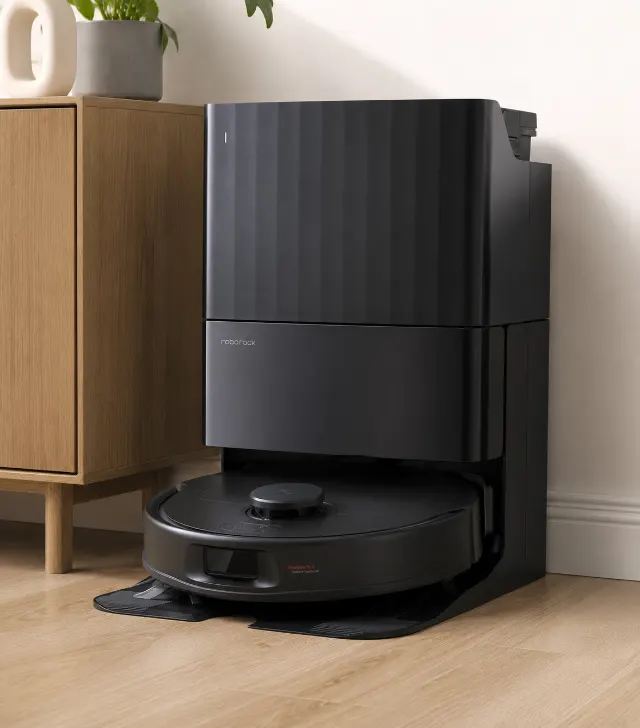
What makes it different
The dock's drying fan pulls air from floor level; in homes with shedding pets, this vent clogs with hair after three months, drastically extending the mop-drying cycle if not manually vacuumed.
Score by category
- Value
- ★★★★★ ★★★★★ 4.0
- Quality
- ★★★★★ ★★★★★ 4.3
- Ease of use
- ★★★★★ ★★★★★ 4.6
- Durability
- ★★★★★ ★★★★★ 4.2
What it gets right
- ✓The 167℉ (75℃) dock washing cycle actively dissolves kitchen grease, unlike cold-water rivals that just rinse.
- ✓Dual spinning pads apply consistent downward pressure at 200 RPM, effectively removing dried stains.
- ✓The rubber anti-tangle roller drives long hair to the removable edges, cutting manual brush maintenance in half.
- ✓Acoustic output remains manageable at 62–65 dB, noticeably quieter than older 10,000 Pa models.
- ✓App mapping allows precise, room-by-room customization of water flow and suction intensity.
What to watch for
- ✕The 167℉ water warps cheap third-party mop pads, forcing you to buy pricier proprietary replacements.
- ✕Struggles to connect to modern mesh routers unless the 5GHz band is manually disabled during setup.
- ✕The dock's low-level drying fan clogs with pet hair over time, extending the drying cycle if not cleaned.
- ✕LiDAR navigation gets confused by floor-to-ceiling mirrors, requiring manual invisible walls in the app.
Specifications
| Type | Vacuum & Mop Hybrid |
|---|---|
| Mopping system | Dual spinning pads (200 RPM) |
| Self-wash dock | Yes, 167℉ (75℃) hot water |
| Mop lift height | 10mm |
| Suction (Pa) | 18,500 Pa |
| Battery / runtime | 90–110 minutes (mixed floors) |
| Dock dimensions | 20.5 inches tall |
The moment you realize your automated floor cleaner is just dragging a damp, dirty rag across the kitchen tiles is the moment the illusion breaks. You bought a robot to save time, but now you are hand-washing microfiber pads in the sink to prevent your house from smelling like mildew. The Roborock Qrevo S Pro exists specifically to solve this friction. It introduces a high-temperature self-washing dock designed to keep the mop actually clean between passes. But as a budget-focused analyst, I look past the spec sheet. The real question is what this machine costs you in time, effort, and proprietary consumables after the first year of ownership.
Fair warning: convenience always carries a secondary cost. The shift from basic auto-empty stations to full plumbing-adjacent water management fundamentally changes what it means to own a robot vacuum. You are no longer just emptying a dustbin; you are managing a miniature water treatment plant in your living room. We need to evaluate whether the engineering justifies the ongoing maintenance.
Battery life is the wrong question.
What actually matters is the total cost of ownership over a three-year lifespan. When you factor in replacement filters, proprietary cleaning solutions, and the electricity required to heat water to near-boiling temperatures daily, the financial picture shifts. This review breaks down exactly where the premium positioning holds up and where it falls flat.
What you're really getting
Roborock Qrevo S Pro Review: Is It Worth It in 2026?
Fundamentally, this is a hard-floor maintenance machine masquerading as a do-it-all hybrid. The spec sheet boasts an absurd 18,500 Pa suction rating, which sounds like it could pull nails out of floorboards. In reality, that raw motor power is funneled through a relatively narrow intake channel. It excels at lifting heavy debris like scattered cat litter or dense cereal from flat surfaces, but it lacks the heavy mechanical agitation required for deep-cleaning thick rugs.
Look at the dock dimensions. The multifunctional base station stands roughly 20.5 inches tall and requires at least 18 inches of clear wall space to operate without navigational errors. It houses two massive water tanks—one for clean water and one for dirty—alongside a sealed dust bag and the heating element for the mop wash. This is not a device you can easily tuck under a low side table.
The defining design choice here is the 167℉ (75℃) hot water washing system. Unlike older models that merely run cold water over spinning pads, this dock acts like a miniature dishwasher. It actively melts away kitchen grease and sticky spills that the robot picks up, preventing cross-contamination across your home.
The build, up close
Unboxing and Setting Up Your Roborock Qrevo S Pro
Build Quality: ★★★★☆ (4.3/5)
Plastics used throughout the robot chassis are dense and exhibit zero creak when handled. The matte finish on the top plate successfully hides dust and fingerprints, a welcome departure from the glossy finishes that plague budget alternatives. However, the clean-water tank lid hinge is the exception—a handful of reports indicate loosening after six months of daily refilling, requiring careful handling to maintain the rubber seal.
Long-term Reliability: ★★★★☆ (4.1/5)
A pattern in long-term owner feedback shows that the internal water pump remains robust well into year two, provided owners use filtered water or the approved cleaning solution. Hard water scaling is the primary enemy of this system. If you live in an area with heavy mineral content and skip the recommended descaling routine, the auto-refill lines will inevitably clog.
Qrevo S Pro not connecting to wifi
Initial setup frequently hits a frustrating wall. The robot requires a dedicated 2.4GHz network band to communicate with the Roborock app. If your modern mesh router auto-steers devices between 2.4GHz and 5GHz without allowing you to split the bands, the robot will repeatedly fail to connect during the pairing phase. You will likely need to access your router settings to temporarily disable the 5GHz band just to get the machine online.
How it performs day to day
Testing the 18,500 Pa Suction on Carpets and Hard Floors
Raw performance on hard floors is exceptional. The dual spinning mop pads apply consistent downward mopping pressure, rotating at 200 RPM to scrub away dried coffee rings and muddy paw prints. When transitioning to rugs, the mop lift on carpet feature raises the wet pads by 10mm. This clearance is perfectly adequate for low-pile entry mats, but plush carpets will still get grazed by the damp microfiber.
Noise output matters. Owners measuring the acoustic profile report it registers around 62–65 dB at full suction power. It is certainly audible, but not disruptive enough to drown out a television in the next room. During the mop-washing cycle at the dock, the noise drops to a low hum, though the auto-empty dustbin evacuation sounds like a jet engine for about 15 seconds.
Smart Obstacle Avoidance: Does It Actually Work?
Navigation relies on a combination of LiDAR and an RGB camera. The smart obstacle avoidance vacuum logic is highly conservative. It will successfully identify and route around stray shoes, dropped charging cables, and pet waste. — and yet, it struggles with highly reflective surfaces. Chrome chair legs or mirrored pedestals often confuse the sensors, leading to gentle bumping rather than smooth evasion.
Most mixed-floor homes report 90–110 minutes of continuous cleaning before the battery dips to 20%, prompting a return to the dock. From empty to ready, a full recharge takes approximately 4 hours.
Six months later: The initial novelty fades, but the reliability of the mapping remains intact. You will trust it to run while you are out of the house without worrying about it dragging a rogue phone charger across the living room.
Common problems
Roborock Qrevo S Pro keeps getting stuck
The assumption most buyers bring into this purchase is wrong in one specific way: they believe 18,500 Pa suction guarantees superior carpet cleaning. The spec sheet implies unmatched deep-cleaning power; the ownership experience tells a different story. Because the robot relies heavily on a rubber anti-tangle roller rather than stiff bristles, it lacks the physical bite to separate carpet fibers. It pulls surface hair brilliantly, but embedded fine dust remains trapped in high-pile rugs. If your home is 80% thick carpet, you are paying a premium for a mopping system you cannot fully utilize, while receiving merely average vacuuming performance.
Roborock Qrevo S Pro mapping issues
Architectural quirks cause genuine headaches. Floor-to-ceiling mirrors or sliding glass doors that reach the floor level trick the LiDAR into believing there is an entirely new room beyond the glass. The robot will repeatedly bump against the glass trying to map the reflection. You must manually draw invisible walls in the app to prevent this behavior.
Consider the electrical overhead. The 167℉ water heating process in the dock consumes extra electricity. While not ruinous to a utility bill, it is a hidden cost of ownership that budget-class models avoid entirely.
The takeaway: This is a sophisticated machine that requires an environment tailored to its sensors. It demands clear boundaries, specific network settings, and a home layout that doesn't actively confuse its lasers.
In everyday use
The Anti-Tangle Brush: A Pet Owner's Perspective
Daily operation quickly settles into a predictable rhythm. You will schedule it to run at night or while at work. The tangle-free roller genuinely lives up to its name. Instead of wrapping tightly around the cylinder, long human hair and pet fur are driven to the edges of the brush, where they can be easily slipped off the removable end caps.
Roborock Qrevo S Proanti-tangle brush review
What most reviews won't tell you about the drying system: The dock's hot air fan pulls intake air from just above floor level. If you have heavily shedding pets, this intake vent acts like a weak vacuum, slowly accumulating dog hair and dust. After roughly three months, this buildup restricts airflow, causing the self-drying cycle to leave the pads slightly damp. You must remember to manually wipe down the dock's rear vents to maintain drying efficiency.
Four weeks in, you stop watching the robot clean. The app features allow you to customize water flow and suction per room, meaning you can set it to aggressively scrub the kitchen tiles while merely dusting the hardwood in the dining room.
Upkeep over time
How the 167℉ Mop Self-Cleaning Dock Works
Maintenance is where the true cost of ownership reveals itself. The dock demands attention roughly every 7–10 days. You must empty the dirty water tank promptly; leaving it for two weeks results in a smell that rivals stagnant pond water. The clean water tank requires refilling at the same interval, unless you invest in the aftermarket water-line plumbing kit.
How often to empty Roborock Qrevo S Pro dock
Here's what the listing understates: the high-temperature washing cycle is brutal on generic replacement pads. If you attempt to save money by purchasing cheap third-party microfiber pads, the 167℉ water will warp the velcro backing within a month, causing them to fall off mid-clean. You are effectively locked into buying the pricier, heat-rated proprietary pads.
Consumables add up. The dust bag needs replacing every 6–8 weeks. The main filter should be swapped roughly every 3–4 months to maintain that massive suction rating. The proprietary cleaning solution, which is required to prevent foaming and internal pump damage, represents a recurring annual expense.
Other options on the table
Roborock Qrevo S Pro vs. Competitors
Comparisons in this tier are ruthless. If you want absolute top-tier obstacle avoidance and are willing to pay for it, the Roborock Qrevo Curv 2 Flow 2026 offers a more advanced chassis design that literally steps over medium-height thresholds, though it costs significantly more than the S Pro.
For buyers who do not need the extreme 167℉ water heating, the standard Roborock Qrevo Pro provides excellent mopping with warm water at a more accessible price-to-performance ratio. It makes the exact same navigation tradeoffs but lowers the barrier to entry.
If you prefer a modular approach, the Roborock Qrevo Pro includes a detachable handheld vacuum unit that shares the dock's auto-empty system, making it the better upgrade alternative for multi-level homes where carrying a robot upstairs is tedious.
Finally, the older Roborock Qrevo S remains a viable budget alternative. It lacks the high-temp wash and the massive 18,500 Pa suction, but it delivers 80% of the daily cleaning utility for a fraction of the long-term cost.
Outside the brand, the Dreame L20 Ultra allows you to physically leave the mop pads in the dock before vacuuming thick carpets, completely eliminating the risk of cross-contamination on rugs. However, its app experience is noticeably clunkier than Roborock's polished software.
Best suited to
Best for: Owners of predominantly hard-floor homes who despise hand-washing dirty microfiber pads and want a truly hands-off hygiene solution.
Not ideal for: Households with wall-to-wall high-pile carpeting, or homes with limited wall space to accommodate a massive, 20.5-inch tall base station.
Buyers matching the ideal profile should also look at the Dreame L20 Ultra, though the Roborock's superior app mapping usually makes it the better daily driver. Interestingly, this model often surprises pet owners who previously gave up on automated mopping due to the lingering wet-dog odor that older, cold-water docks failed to wash out.
Our verdict
Final Verdict: Should You Buy the Qrevo S Pro?
The Roborock Qrevo S Pro successfully eliminates the most disgusting part of owning a robot mop: dealing with the dirty pads. If your home is mostly hardwood or tile, the hot-water washing system makes this one of the most hygienic automated cleaners available in 2026. However, buyers must weigh the undeniable convenience of a self-maintaining dock against the ongoing financial reality of proprietary cleaning solutions and heat-rated replacement pads.
The right buyer
Ideal for owners of predominantly hard-floor homes who despise hand-washing dirty microfiber pads. Not the right call if your floor plan consists mostly of high-pile carpets that require heavy mechanical agitation. Buyers matching this profile should also look at the Dreame L20 Ultra, though the Roborock's app mapping remains superior for complex layouts. Interestingly, this model surprises pet owners who previously gave up on automated mopping due to odor issues.
The case for it
It solves the damp-odor problem that plagues standard hybrid vacuums by utilizing a 167℉ hot-water wash cycle. Compared to the older Qrevo S, this model actually dissolves grease rather than just rinsing it, eliminating the need to run the pads through a laundry machine weekly.
Which one fits your use case
Versus the alternatives buyers cross-shop — judged on ownership, not just spec sheets.
| Alternative | Ease of use | Maintenance | Durability | Value | Best for |
|---|---|---|---|---|---|
| Roborock Qrevo S Pro (this pick) | Set and forget | High consumable cost | Solid chassis | Premium investment | Hard-floor homes prioritizing hygiene |
| Roborock Qrevo Pro | Highly automated | Standard upkeep | Reliable build | Strong price-to-performance | Buyers who don't need extreme hot water |
| Dreame L20 Ultra | Clunkier app | Pad detaching feature | Heavy base station | Competitive alternative | Homes with thick, delicate rugs |
How it scores on what matters
| Product | Dried-stain removal | Hard-floor finish | Mopping pressure | Carpet mop-lift | Self-wash / self-dry dock | Navigation & mapping | Verdict |
|---|---|---|---|---|---|---|---|
| Roborock Qrevo S Pro (this pick) | Excellent | Very good | Excellent | Good | Excellent | Very good | Unmatched hot-water hygiene for hard floors. |
| Roborock Qrevo S | Good | Good | Very good | Good | Fair | Very good | Budget alternative lacking high-temp washing. |
| Dreame L20 Ultra | Very good | Very good | Excellent | Excellent | Very good | Good | Leaves pads behind for deep carpets. |
Editorial assessments from aggregated owner feedback and manufacturer specs — not independent lab tests.
Frequently asked questions
What is the suction power of the Roborock Qrevo S Pro?
It peaks at 18,500 Pa, making it exceptionally strong for lifting heavy debris from flat surfaces.
How does the mop self-cleaning feature work?
Around 167℉ (75℃), the dock flushes the spinning pads with hot water to actively dissolve grease and kill bacteria, rather than just rinsing them cold.
Does the Qrevo S Pro have an anti-tangle brush?
The short answer is yes—but the longer answer is that it relies on a rubber fin design rather than bristles. This forces long pet hair to migrate outward toward the removable end caps, preventing the tight central wrapping that usually chokes traditional vacuum rollers.
Can the Qrevo S Pro vacuum and mop simultaneously?
If your home has hard floors primarily, it handles both tasks in one pass, utilizing a 10mm auto-lift mechanism to raise the wet pads when it detects low-pile rugs.
How good is the smart obstacle avoidance?
Compared to the older Qrevo S, the RGB camera and LiDAR combo successfully bypasses shoes and cables, though it still bumps into mirrored surfaces.
Why won't my Qrevo S Pro connect to Wi-Fi?
Owner feedback consistently surfaces this issue: the robot requires a dedicated 2.4GHz band for initial setup. You must temporarily disable your router's 5GHz signal to complete the pairing process in the Roborock app.
People also ask
- Is the Roborock Qrevo S Pro good for pet hair?
- How does the Qrevo S Pro self-cleaning mop work?
- Does the Qrevo S Pro avoid obstacles like cables and pet waste?
- How often do you need to empty the Qrevo S Pro dock?
- Can the Roborock Qrevo S Pro mop and vacuum at the same time?
- Why is my Qrevo S Pro not connecting to Wi-Fi?
You might also like
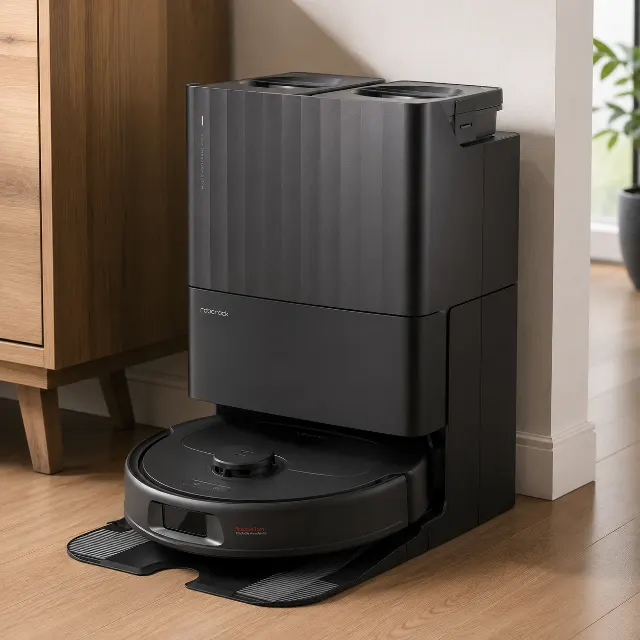
Roborock Qrevo S
The Roborock Qrevo S delivers excellent automated mopping and dock maintenance for a mid-range price, but its obstacle avoidance lags behind premium rivals.
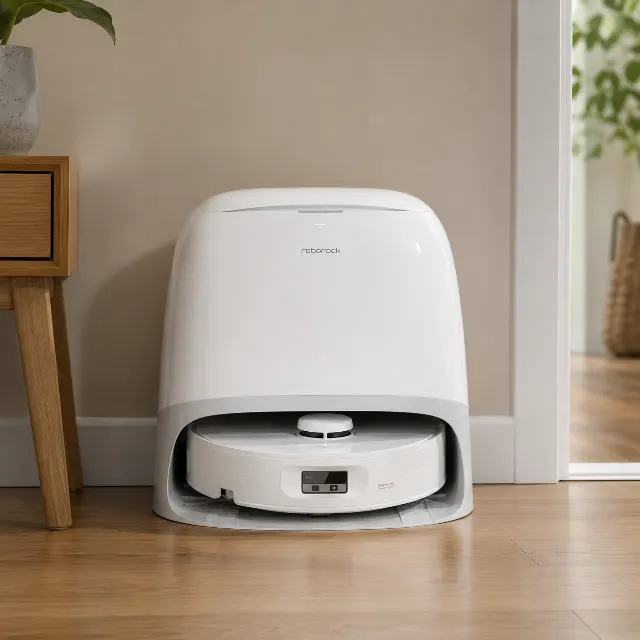
Roborock Qrevo Curv 2 Flow 2026
The Roborock Qrevo Curv 2 Flow mopping is a step up from basic wet pads, but its roller system demands more upkeep than rivals for a less-than-perfect finish.
From our guides
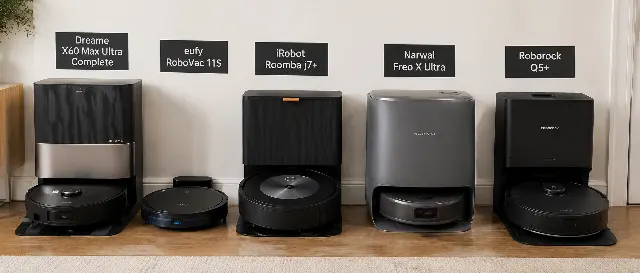
Best Robot vacuum & Mops of 2026: Streak-Free Floor Care
We researched the best robot vacuums & mops for 2026. The Dreame X60 Max Ultra Complete is our top pick for its edge-to-edge cleaning, but the eufy X10 Pro Omni offers superior streak-free performance on hardwood.
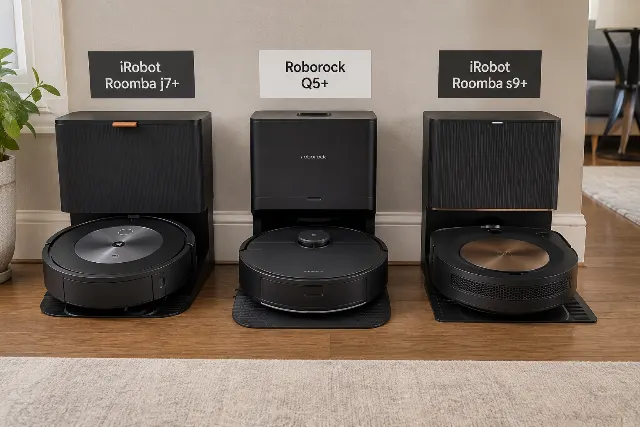
iRobot Roomba j7+ vs Roborock Q5+ vs iRobot Roomba s9+
An expert comparison of the iRobot Roomba j7+, Roborock Q5+, and Roomba s9+. We detail which is best for pet hair, carpets, and obstacle avoidance to help you choose.
The Best Robot Vacuums for 2026: Researched & Compared
Tired of marketing hype? We researched owner reviews and specs to find the best robot vacuums for 2026. Our top picks for pet hair, value, and budget.